

How Rent Control and State-of-Emergency Rent Caps Affect Mobile Home Parks in Santa Rosa, California
July 8, 2026

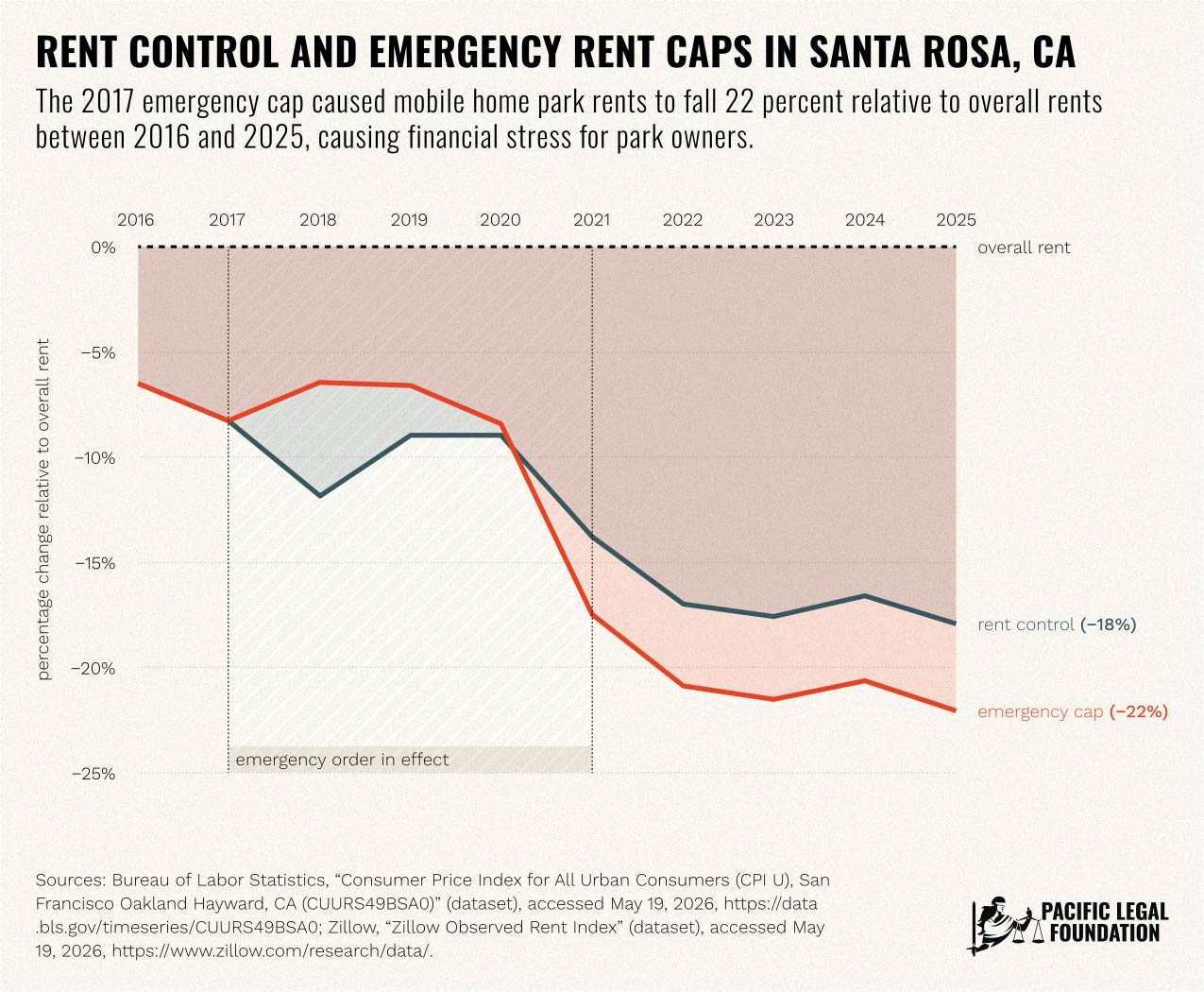
For more than three decades, Santa Rosa, California, has regulated rents in mobile home parks, limiting annual rent increases to a share of inflation and, during the 2017–2021 wildfire-related state of emergency, imposing an additional rent cap that prevented many increases altogether. This policy explainer examines how Santa Rosa’s rent control ordinance and emergency price-gouging restrictions affected mobile home park revenues, finding that the combined policies substantially reduced rents relative to both inflation and the broader rental market, creating financial challenges for park owners.
Key Findings:
- The emergency cap caused mobile home park rents to fall 22 percent relative to overall rents in Santa Rosa between 2016 and 2025.
- Even without the lingering effects of the emergency cap, rent control alone would have caused mobile home park rents to decline nearly 18 percent relative to overall rents during the same period.
- Long-term rent restrictions can significantly reduce park earnings: one Santa Rosa mobile home park was earning almost 25 percent less in nominal terms in 2023 than in 1997, prompting the owner to seek a substantial rent increase to maintain operations.
- By keeping rent growth below inflation and market rents, the policies weaken the financial viability of mobile home parks and may contribute to broader housing supply constraints identified in the economic literature on rent control.
Policy Implications:
- Allowing mobile home park rents to adjust with inflation and market conditions—including permitting recovery from temporary emergency-era restrictions—can help maintain the long-term financial sustainability of existing parks while supporting investment in housing supply.
Download the PDF here.
How Rent Control and State-of-Emergency Rent Caps Affect Mobile Home Parks in Santa Rosa, California
July 8, 2026