

Washington Targets Longtime Family Ranch With Criminal Probe, Crushing Juryless Penalties
PLF challenges state tribunal to restore jury trial rights
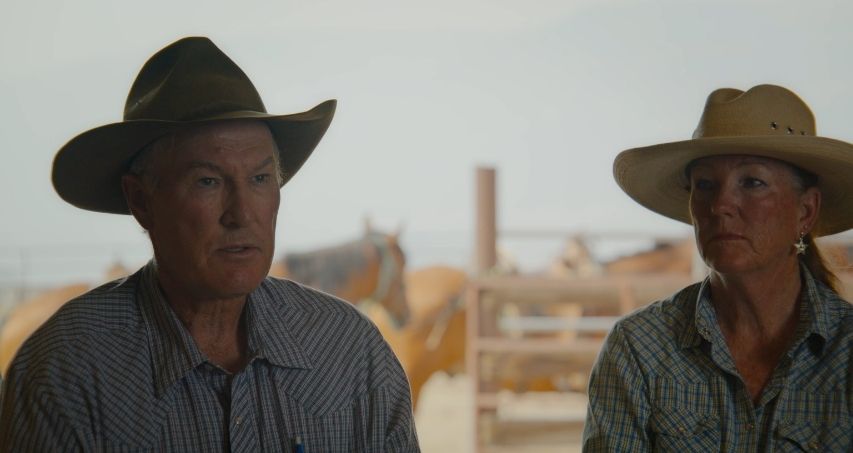
“We never dreamed that it would be our government that would be the hardest fight of our lives.”
—Teresa King
Enforcers closing ranks. A criminal probe unfolding in secret. An unsuspecting worker hauled behind closed doors and grilled about his boss. Crushing punishment.
This isn’t the government zeroing in on a mob family or a Sopranos plotline. This is Wade and Teresa King, Washington ranchers in the state’s crosshairs for doing something utterly ordinary: tending stockwater ponds.
“I’m fourth generation here because my great-grandfather came from Tennessee in the early 1900s,” explains Wade. “The government wanted people to come out here and settle the West, make it productive land, make use of the natural resources of the land. And that’s still ingrained in us today.”
In rugged, arid eastern Washington, making productive use of the land depends on water. The Kings raise cattle on land they own and lease from the government where the only water source is stockwater ponds. Maintaining them is a normal and essential part of ranching—and longstanding agricultural activities like these are protected under both state and federal law.
Yet in early 2021, a tip about “ground disturbing work” on government land reached the state Fish and Wildlife Department, which alerted the Department of Natural Resources. DNR investigated and found no violation.
Or so the Kings thought.
Two days before Christmas 2021, DNR suddenly ordered them to stop working on their stockwater ponds. The Kings asked why and were told to file a public records request.
What came back revealed an interagency frenzy they knew nothing about. Seizing on the initial tip, a Department of Ecology official immediately fired off an email to co-workers, DNR, and the Attorney General’s office with the subject line, “Gnarly wetland disturbance on fed lands…help!”
Buried in the exchange was something even more sinister: “I think it is a great case for state criminal,” wrote one Ecology official, flagging the Kings for the AG’s Environmental Protection Division.
Wade and Teresa now knew what went on behind their backs. Fourteen months later, the hammer dropped in plain view.
In early 2023, Ecology accused the Kings of damaging wetlands, fined them $267,540, and ordered sweeping restoration. DNR piled on, canceling their 13,000-acre grazing lease. Restoration alone would cost upwards of $3.7 million, grant government access to their land, and require ten or more years of monitoring.
Ecology and DNR even trumpeted their enforcement in a news release still displayed on Ecology’s website.
“They got way out ahead of us and painted us as very bad people,” Wade says .”We’re really being disparaged by what the state is doing to us.”
That stung a family that for generations has paid taxes, fed thousands, supported its community, and cared deeply for both their own and government land.
But the state was still keeping one secret: the criminal investigation.
That bombshell came a month later when the Attorney General’s office dragged their only ranch employee into a secret court proceeding typically used to investigate organized crime. Tipped off by his mother, the Kings showed up at a hearing and learned the employee wasn’t the target. They were.
“And they wouldn’t tell us what it was for. You just get chills,” Teresa shudders. “So we not only had to have a civil attorney, we had to have a criminal attorney.”
The effect was paralyzing.
“It was just to silence us,” she says. “To gain an advantage in the civil cases because we couldn’t speak out.”
Even the terms of their defense weren’t theirs to choose.
The Kings deny Ecology’s accusations—their ponds aren’t regulated wetlands under state law. But to contest the orders and penalties, the Kings can’t go to a regular court and ask a jury to decide the facts. They must defend themselves before the Pollution Control Hearings Board, a state tribunal with no jury and whose members are appointed by the governor.
“They don’t like us,” Wade says of the bureaucrats. “They really would like us off the land, period.”
Forced to choose between surrender and a government tribunal with no jury, Wade and Teresa are fighting back. Represented free of charge by Pacific Legal Foundation, they’re asking the courts to protect a right Washington’s constitution says must “remain inviolate”: trial by jury.
The Kings’ fight also exposes unfinished constitutional business for all Americans. The Seventh Amendment protects the right to a civil jury—but unlike nearly every other protection in the Bill of Rights, it still doesn’t apply to the states.
“When state agencies can impose hundreds of thousands of dollars in penalties without a jury, the threat of unchecked power extends far beyond the Kings to anyone, anywhere facing administrative enforcement,” explains PLF senior attorney Oliver Dunford. “The right to a jury trial isn’t trivial; it’s the last line of defense between an American citizen and a government that answers to no one.”
The constitutional stakes are enormous. The personal stakes have been building for generations.
“We wouldn’t be the first ranch that’s lost our operation, our property, and our legacy to the government. And we’re willing to go that far because we don’t see any other option,” Wade says.
“As ranchers, we deal with weather, cattle, diseases, birthing problems, so many things,” adds Teresa. “We never dreamed our government would be the hardest fight of our lives.”
Government cannot rewrite the rules when it enforces the law
Americans are entitled to a fair trial in a real court of law, before a neutral judge and jury of their peers. Civil monetary penalties are no exception. When the government investigates, prosecutes, and adjudicates in administrative tribunals rather than real courts, it undermines the ancient right of trial by jury.
To our donors:
The story doesn’t end here. In PLF’s new documentary, Wade and Teresa King share—in their own words—how their dispute over stockwater ponds became a years-long battle for their ranch, their family’s legacy, and their constitutional rights.
Watch our new short documentary: Water & Punishment.
Donate
PLF is proud to receive a four-star rating from Charity Navigator, America’s premier independent nonprofit evaluator. A top rating recognizes PLF’s commitment to responsible stewardship of the resources our donors generously provide.