

A federal agency prosecuted an Oklahoma baby product company for four years and came up empty

In 2015, a daycare worker left an infant unsupervised with a bottle in his mouth for 45 minutes, flouting daycare policy, state regulation, and the explicit warnings on the product the baby was placed in. Tragically, the infant died. The daycare lost its license and shut down.
Three years later, another infant was placed on an adult bed, in between the infant’s parents, along with an infant lounger, bedding, and pillows. Another tragedy ensued.
These incidents, while deeply troubling, do happen. According to the American Academy of Pediatrics, approximately 3,500 infants die in their sleep every year in the United States.
To address concerns surrounding such unimaginable tragedies, the Consumer Product Safety Commission (CPSC) launched an investigation into those infant deaths. After that two-year investigation, the Commission came out with a statement in 2022, pointing fingers not at the daycare or the caregivers but at the lounger the infants were placed in, a product called a Podster. After the CPSC filed its complaint, a third infant death was discovered, also involving caregiver misuse.
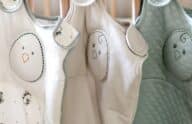
If the Podster were advertised as a safe place for infants to sleep unsupervised, the accusation may have made sense. But the Podster, manufactured by a company called Leachco, came with explicit instructions and warnings for use only with awake and supervised infants. It’s meant so a caregiver can, say, cook dinner while watching their infant lounge in the kitchen beside them. It is not a sleep product, nor was it designed or advertised as such.
But the CPSC had found its culprit, and blaming Leachco made for a cleaner story than reckoning with the harder truth that tragedies happen even when products work as designed. Plus, an enforcement action was proof that the agency was on the case.
What followed was a yearslong fight for a small family business to clear its name.
The woman behind the Podster
Leachco is an Oklahoma-based family business founded by Jamie Leach, a registered nurse and mother. Jamie started the company in 1988 after her seven-month-old son nearly tumbled out of a restaurant highchair. She improvised with a purse strap that day, then went home and fashioned a safety wrap from dental floss, tape, and a kitchen hand towel. That homemade contraption, which she called the “Wiggle Wrap,” became the seed of Leachco, Inc., which she and her husband, Clyde, built from scratch into a company with 40 employees, including their three now-adult children.
So, when the CPSC came for the Podster, it was more than just a legal threat.
“My whole professional adult life had been devoted to healing and improving and safety and help,” Jamie said. “That’s what nurses do. That’s what my training taught me. That’s who I was. And that this happened … it was heartbreaking, and I’m a different person now.”
When “reasonably foreseeable” becomes unreasonably absurd
The CPSC’s case rested on the theory that the Podster was “defective” because it was “reasonably foreseeable” that parents and caregivers might ignore the product’s express warnings and misuse the product.
The agency’s position assumes that consumers can’t be trusted to read a warning label, follow instructions, or exercise basic judgment, and they must be protected from their own incompetence.
By that logic, a ladder is defective because someone might fall off it, and a space heater is defective because someone might leave it on overnight. Any product used irresponsibly becomes a threat to public safety.
The numbers make the CPSC’s theory even harder to defend. The Podster’s incident rate, calculated across 180,000 units sold, amounts to less than two one-thousandths of one percent. Meanwhile, infants continue to die in products the CPSC itself endorses for a “safe sleep” environment.
The agency that is judge, jury, and prosecutor—and “court” of appeal
How did an argument this thin survive in court for four years? The answer has less to do with the merits than with the system that was hearing it.
The Commission filed an administrative complaint in February 2022 and assigned an Administrative Law Judge (ALJ)—a government employee who presides over disputes within a federal agency, not an independent member of the judiciary—to hear the case.
The hearing itself was held at CPSC headquarters in Bethesda, Maryland, inside the building of the agency doing the prosecuting. Pacific Legal Foundation represented Leachco in the administrative proceeding and filed a separate federal lawsuit arguing that the agency’s entire structure violated Leachco’s constitutional right to due process: a fair hearing before an independent judge and jury. Courts denied injunctive relief at every turn, and the Supreme Court declined to take up the case.
But the administrative proceeding told a different story. The ALJ ruled completely in Leachco’s favor in July 2024, finding that the CPSC had not proven the Podster was defective and had not shown that any alleged defect created a substantial risk of injury to the public.
The CPSC’s enforcement lawyers promptly appealed—to the Commission itself, the same entity that authorized the lawsuit in the first place.
Finally, on March 16, 2026, the Commission issued its final order, dismissing the complaint against Leachco. But the Commission was quick to state that the dismissal “does not constitute a determination on the merits,” and it vacated the ALJ’s ruling in Leachco’s favor—specifically to prevent it from being used as precedent against the Commission in future cases.
The case is finally over
The agency that had pursued Leachco for four years closed the case not with a ruling, but with a shrug—deciding the fight was no longer worth the resources.
Jamie never had that option. She had to fight, for the sake of her family, her business, and her life’s work. She endured for four long years—eight, when you include the Commission’s investigation—and, in the end, she finally won.