

A secret deadline might cost this family their farm
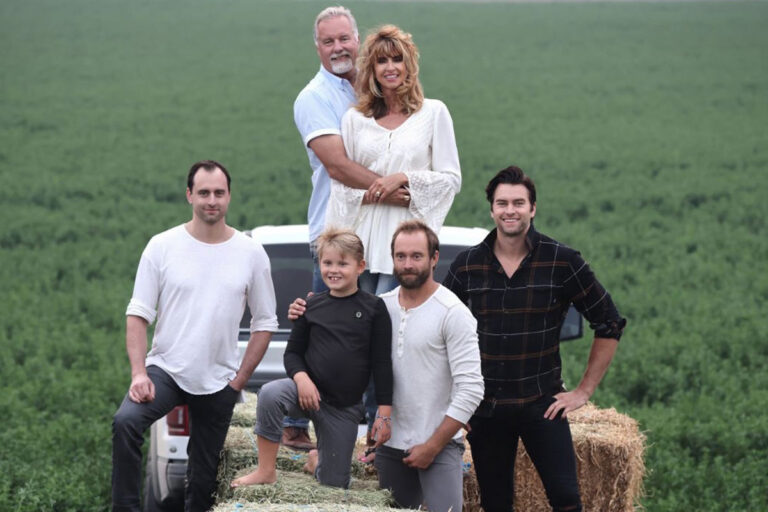
Ron Fodé never planned to be a farmer. But in 1984, his father suffered a brain aneurysm and could no longer run the family’s farm in Grant County, Washington. Ron packed up his life as a student at Washington State University and came home to help.
The learning curve was steep. He had to teach himself how to grow potatoes, onions, wheat, and sweet peas—an endeavor that no amount of studying could have prepared him for.
“Textbook farming, there’s no way you could do it,” Ron said. “You have to have practical experience, hands-on.”
Once he and his wife, Robin, started having children on the farm—raising them in the very same house Ron grew up in—the couple realized they were there to stay.
Fodé Farms
At its height, Fodé Farms covered 4,000 acres. Ron and Robin grew crops, cared for livestock, operated an animal rescue, and raised four children on the property.
Ron learned that farming in Central Washington depends on one thing above all else: water. So, like many farmers, Ron regularly worked with the State to ensure his irrigation complied with Washington’s complex system of water rights and seasonal transfers.
In 2017, when he learned that he didn’t have adequate water rights on a parcel he was leasing to grow potatoes, he immediately tried to find a lawful solution. Ron had been working with Washington’s Department of Ecology—the agency responsible for administering the State’s water-rights laws—for years and believed he had a good working relationship with them. He certainly did not expect that trying to do the right thing would ultimately put his family’s livelihood on the line.
A secret deadline
Washington law provides a way for farmers to resolve problems like this. A seasonal water rights transfer allows a farmer to temporarily adjust water use to stay within legal limits while keeping crops irrigated. It’s a standard tool, and it was Ron’s path forward.
But when Ron applied, Ecology refused to accept his application. They cited an internal “office deadline” of February 15, after which the agency simply would not process seasonal transfer applications. The deadline had never been published, opened to public comment, or adopted as a formal rule. It was, by any reasonable measure, a secret rule.
“[These are] the people that we pay to help us comply with the law,” Ron says. “And I didn’t want to be out of compliance … but they always were misleading.”
Water laws in Washington
Washington’s water rights system is notoriously complex, particularly for farmers operating across multiple leased parcels, where gaps can open up in ways that aren’t obvious until they’re a problem.
The state legislature recognized this. In 2002, it enacted a law requiring the Department of Ecology to seek voluntary compliance before imposing penalties and, critically, requiring Ecology to provide written “technical assistance” identifying lawful ways for a water user to resolve a violation. The bill’s text was explicit: Achieve compliance first through education and assistance, and only resort to enforcement if those fail.
Ecology’s version of “technical assistance” for Ron Fodé was telling him he was in violation and had to stop irrigating immediately. The consequences of this would include his potatoes dying in the ground. Instead of helping him find a lawful solution, Ecology ultimately imposed more than $618,000 in civil penalties.
With few options left, Ron challenged Ecology’s decision through Washington’s administrative appeals process before taking his case to the courts.
“A one-to-two-hour meeting would resolve the whole thing,” Ron says. “But here we are, 10 years later.”
The legal battle
An administrative appeals board reduced the penalty to approximately $260,000 but otherwise upheld Ecology’s enforcement action. The Washington Court of Appeals sided with Ecology in December 2025, ruling that the agency had satisfied its legal obligations by notifying Ron of his violation, and that the February 15 deadline was not a “rule” requiring public rulemaking.
Ron petitioned the Washington Supreme Court. On June 3, 2026, the court agreed to hear the case, and Pacific Legal Foundation stepped in to represent him free of charge.
Both sides filed supplemental briefs in July, laying out competing views of what “technical assistance” requires under Washington law. Additionally, PLF argues the deadline that shut Ron out of the process should have gone through public rulemaking, while Ecology maintains the deadline was a flexible internal policy, not a rule.
The Washington Supreme Court is expected to hear oral argument this fall, nearly a decade after Ron’s first call with the Department of Ecology about a deadline he never knew existed.