



Austin American-Statesman : Yes to women in sports. No to rigid quotas in Title IX enforcement
A recent piece in the Austin American-Statesman asked: "Who decided girls don't really want to compete?" But no serious commentator disputes that plenty of women enjoy competing, even at the highest levels of sport. The real policy question is: Who should decide how athletic opportunities are allocated? Should federal bureaucrats impose a stifli ...

National Review : A Colorblind Constitution Is Not Just a Partisan Pet Project
"Our Constitution is color-blind, and neither knows nor tolerates classes among citizens," Supreme Court Justice John Marshall Harlan famously wrote in his dissent in the 1896 case Plessy v. Ferguson. It would take decades to dismantle the Jim Crow system of racial segregation challenged in that case. Through those years, Harlan's vision of colorbl ...
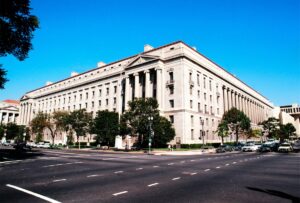
Reason : DOJ Says Equal Opportunity Officials Pressured Employers Into Race-Based Discrimination
The 14th Amendment of the Constitution guarantees that all Americans are treated as equal individuals, not as members of a racial group. Yet for decades, the federal Equal Employment Opportunity Commission (EEOC), using a legal theory known as disparate impact, pushed employers to do the opposite. Under disparate impact theory, an employer may be l ...
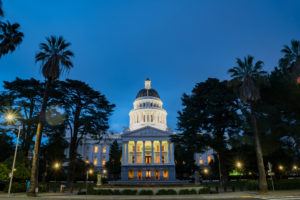
Orange County Register : California lawmakers try to revive racial discrimination with ACA 7
A number of California legislators are looking to ask the public: "When should racial discrimination be encouraged?" A constitutional amendment currently pending, ACA 7, would authorize a referendum to peel back the California Constitution's strong prohibitions on discrimination in public education. The bill, which has passed the state Assembly, ...

Law school accreditation shouldn’t promote discrimination
Law schools are desperately changing hiring and admissions policies to increase diversity—not because of their own internal objectives, but because of pressure from accrediting agencies. New research from Pacific Legal Foundation reveals how the American Bar Association (ABA) pressures public law schools to adopt race- and sex-based hiring and ...

What was the impact of AB5 on California’s marginalized communities?
A few years ago, Jennifer Butler unexpectedly became a single mom to two young kids. At that time, she was working only a few hours a week while homeschooling them. But as an independent contractor, she was quickly able to pick up projects and cobble together meaningful work, following a schedule that suited her needs, so that she could continue ho ...

The Dispatch : Amy Coney Barrett Is Doing Her Job
"She's a big problem" blared a tweet featuring a photograph of Supreme Court Justice Amy Coney Barrett. Given the opposition she faced from Democratic senators and the broader left during her confirmation hearings in 2020, one might suspect that the post came from a progressive critic. But the post, which has been liked more than 117,000 times, w ...

The Dispatch : How competitive high schools get away with race-based admissions
"Eliminating racial discrimination means eliminating all of it," Chief Justice John Roberts wrote for a majority of the Supreme Court in last summer's Students for Fair Admissions opinions, which held that affirmative action policies at Harvard and the University of North Carolina violated the Constitution. While colleges can no longer use race a ...

Discourse : The Constitution’s Overlooked Road Map for an Accountable Bureaucracy
The Constitution grants executive power to the president, but presidents cannot do all the work of the executive branch alone. They need subordinates to help them carry out their work: cabinet secretaries, undersecretaries and thousands of other political appointees throughout the federal government. But the Constitution also promises a government ...