

North Carolina needs nurses
not government roadblocks.
“We’re looking for nurses who are ready to fight back.”
—Donna Matias, PLF attorney
Rural communities in North Carolina desperately need healthcare access. Nearly 70 of North Carolina’s 80 rural counties are considered medical deserts and the state has one of the worst nursing shortages in the country. That’s no surprise, given North Carolina’s restrictions on advanced nurses.

Marcy Markes, a nurse practitioner represented by PLF.
Across the country, over 20 percent of Americans live in rural areas but only eight percent of doctors practice there. Advanced nurses—nurses with graduate degrees, including nurse practitioners and nurse midwives—have historically filled this gap. Back in the 1920s, when families in the Appalachian Mountains were struggling to access healthcare, a nurse midwife founded the Frontier Nursing Service and changed people’s lives.
Today, advanced nurses in North Carolina want to provide essential care in healthcare deserts. But bad state laws are preventing them.
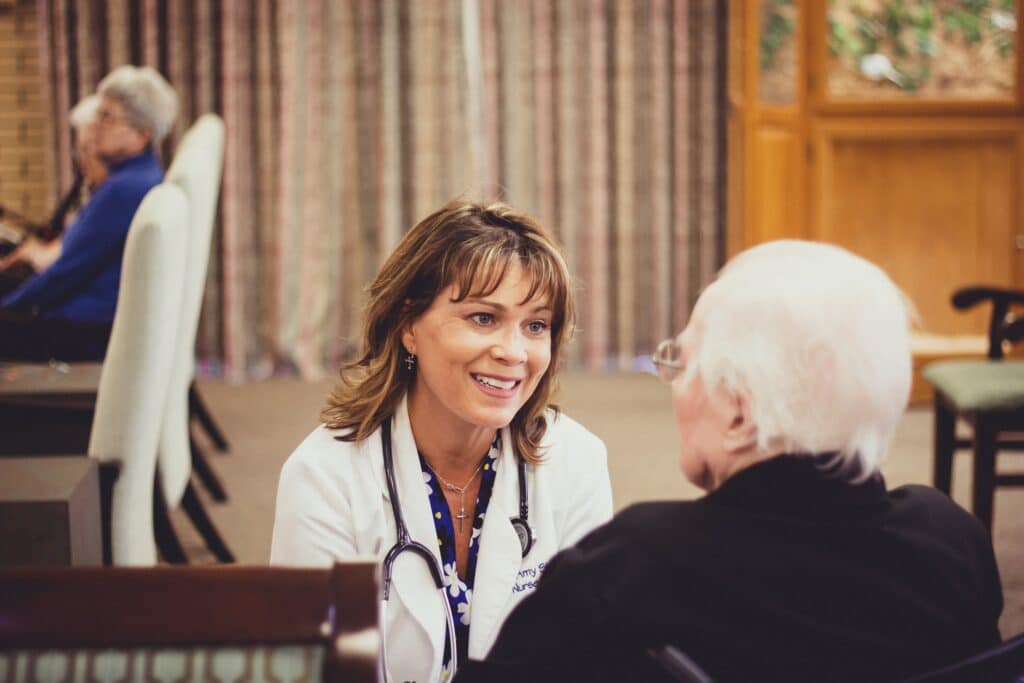
Amy Siple, a nurse practitioner represented by PLF.
The first problem in North Carolina is collaborative practice agreements. North Carolina is one of only 13 states that require advanced nurses to maintain an agreement with a supervising physician in order to practice independently. The agreement has a price tag: Nurses must pay the physician, even though the physician isn’t treating patients.

From the 2025 PLF report, “Restrictions to Care.”
The second problem affecting nurses—and other healthcare professionals in North Carolina—is the state’s certificate of need laws. To build a new hospital, increase bed capacity, establish home healthcare, or even purchase CT scanners, North Carolina providers must get regulators’ approval. Existing providers can often object to the construction of new facilities, which creates a “competitor’s veto.” This leads to fewer healthcare providers in North Carolina.
Pacific Legal Foundation is working to defeat bad healthcare laws in North Carolina and across the country. If you or someone you know is an advanced nurse in North Carolina, you can submit your case to our attorneys.
States shouldn't stop qualified nurses from serving their communities.
Pacific Legal Foundation is a national public interest law firm that fights for our clients’ constitutional rights in court, free of charge. We currently represent nurse practitioners in several states, including California, Missouri, and Kansas. We’ve been fighting for freedom for over 50 years and have won landmark cases at the U.S. Supreme Court. If you think you have a case, we’re interested in hearing your story.
Submit a case
PLF is proud to receive a four-star rating from Charity Navigator, America’s premier independent nonprofit evaluator. A top rating recognizes PLF’s commitment to responsible stewardship of the resources our donors generously provide.