

PLF files amicus brief against Louisiana’s attempt to take private land for profit
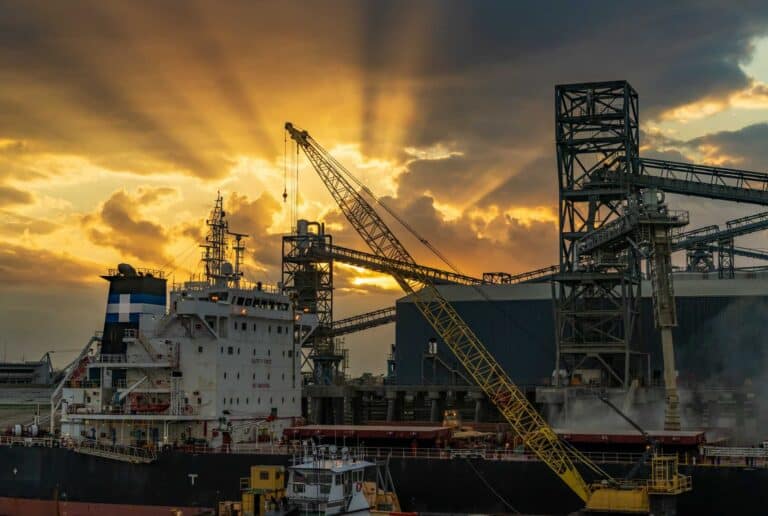
In 2024, the Plaquemines Port Harbor & Terminal District—a political subdivision of the state of Louisiana—launched a troubling campaign against a property owner by attempting to seize private land on the cheap via eminent domain, lease it to a private company, and pocket the profit.
On December 5, Pacific Legal Foundation filed an amicus brief urging the Louisiana Supreme Court to uphold a lower court’s decision blocking the taking.
A willing seller, an unnecessary taking
Tuan Nguyen owns property that liquefied natural gas company Venture Global wants to use. From the start, Mr. Nguyen has been willing to sell or lease his land—meaning that Venture Global is free to move forward through normal, voluntary negotiations.
But instead, the Port is trying to take Mr. Nguyen’s land and then lease it to Venture Global for the company’s exclusive use. The land will not be open to the public, and it will not function as a traditional public port facility. It will be a private, fenced-off operation controlled by a single private company.
The Constitution puts real limits on takings—especially in Louisiana
The U.S. Constitution’s Fifth Amendment requires that private property can be taken only for a valid “public use” and only when “just compensation” is paid to the owner. It is meant to stop exactly this kind of abuse, where government takes property from one private party and hands it to another.
After the U.S. Supreme Court’s 2005 decision in Kelo v. City of New London, which allowed a city to condemn homes for a private project in the name of “economic development,” Americans were rightly outraged and many states responded by tightening their private property protections.
Louisiana went further than most, narrowing what counts as a “public purpose” and forbidding takings in the name of economic development. The Port’s claim that its involvement might generate economic benefits therefore carries no constitutional weight. In fact, it is precisely the kind of reasoning Louisiana’s post-Kelo amendments were written to reject.
Government profit is not a public use
As PLF’s brief states, “What the Port seeks is not the project’s advancement, but the project’s revenue.”
This case is not a case about public necessity; Mr. Nguyen is willing to make the deal. This is a case about whether government can step into private negotiations and weaponize expropriation to take private land for private use where the only public benefit is capturing revenue that rightfully belongs to the property owner.
If the court deems such actions permissible, no property owner is safe. Eminent domain would stop being a narrow exception to protect the public and become a tool for “municipal thuggery.”
Louisiana’s Constitution draws a clear line against that kind of abuse. It’s time for the Louisiana Supreme Court to enforce that line, proving that in Louisiana, property rights—and the rule that government must abide by the Constitution—still matter.
Oral arguments will take place on January 6.