

SCOTUS hears oral arguments in tariff challenges—PLF legal experts weigh in on hearing
Yesterday morning, a global audience tuned in to the U.S. Supreme Court’s livestream to listen to oral arguments in the lawsuits over President Trump’s “Liberation Day” tariffs.
Attorneys for the government presented arguments supporting the Trump administration’s rationale for enacting the tariffs, while two sets of attorneys asked the Court to end the tariffs on behalf of several U.S. states and a series of small businesses.
Pacific Legal Foundation filed a separate lawsuit in April on behalf of 11 American small businesses. That case is Princess Awesome v. United States Customs and Border Protection. The Court of International Trade put PLF’s case on hold while the Supreme Court considers the issues. But on behalf of Princess Awesome and its other clients, PLF filed a friend-of-the-court brief with the Supreme Court and urged the Court to rule that the president exceeded his authority by imposing these sweeping tariffs.
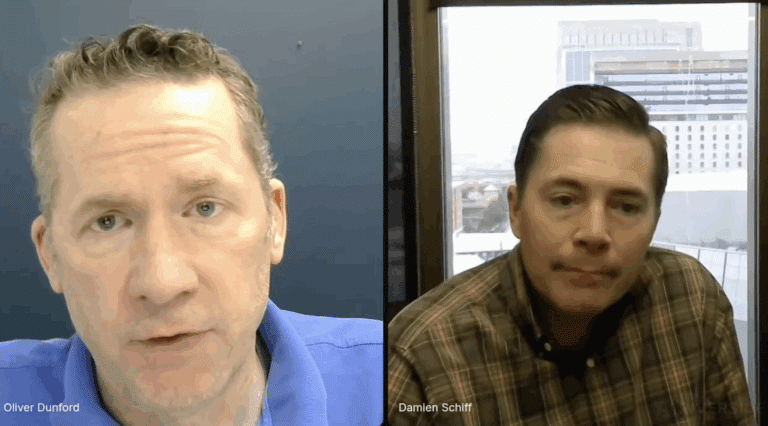
Oliver Dunford, one of the PLF attorneys litigating Princess Awesome, listened to the Supreme Court oral arguments and discussed them in a livestream with colleague Damien Schiff yesterday.
The challengers argued that the tariffs exceed the president’s authority and that the International Emergency Economic Powers Act (IEEPA) does not convey the broad powers the administration claims it does. Responding to the two parties’ conflicting interpretations of the statute, the justices closely probed the meaning of various terms in IEEPA.
Dunford highlighted pushback from Justice Elena Kagan on one such argument by the Solicitor General.
The Solicitor General kept arguing that in addition to ‘regulate,’ there are all these other capacious verbs [in IEEPA], and therefore the president’s power should be seen as virtually unlimited. But as Justice Kagan said, if that were the intent, why did Congress remove so many powers from [the predecessor statute when it adopted] IEEPA? I don’t think that’s the full answer or the full response to the government’s argument, but I do think it’s persuasive that Congress clearly did not give the president a blank check.
Dunford also noted that, although many of the arguments did focus on particular language within the IEEPA, the justices seemed to press the challengers for arguments relying on legal theories broader than just the statute’s text.
Justice [Neil] Gorsuch at one point asked [Neal] Katyal … the representative of the challengers, whether they needed the major questions doctrine to prevail. In other words, Gorsuch is suggesting that the plain language of the statute does support the president and without some sort of interpretive gloss like the major questions doctrine or the non-delegation doctrine that the president should prevail. I’m not sure.
Meanwhile, attorneys for the government argued that there is historical precedent for presidentially enacted tariffs, citing Presidents Lincoln and Nixon, who each imposed limited surcharges under different statutes. Dunford wasn’t convinced by this appeal to history.
Nixon didn’t [initially] rely on [IEEPA’s] predecessor statute. He relied on other statutes to impose an across the board 10% ad valorem [surcharge on certain products] to address a balance-of-trade problem. But soon after that, Congress effectively retroactively authorized that action, so the president does have authority now to address balance of payments problems by adjusting tariffs. I’m not sure how far the Nixon example gets the government.
A key takeaway for Schiff was the Court’s emphasis on the major questions doctrine and the nondelegation doctrine.
I think it would be very difficult for the Court to, on the one hand, say these are sweeping, broad, major policy decisions given to the president, and at the same time that neither the major questions doctrine nor the nondelegation doctrine are at play.
The Court’s focus on the nondelegation doctrine also seemed to color the justices’ questions about the tariffs’ financial implications.
“I think the government was very much aware of that, and that’s one reason why it emphasized so much that the revenue raising aspect of the tariffs is supposedly incidental,” Schiff observed.
According to the government, the key point of the president’s tariffs is their use as leverage for arguably better trade deals. Schiff continued:
The Solicitor General more than once said these policies would actually achieve perfection if they never raised a dime. And I think that is a… strong point that distinguishes [the tariffs case from] Consumers’ Research [a case involving a tax on telecommunications carriers imposed by the FCC]. Because the point is if the FCC couldn’t actually collect any of that money from the carriers, it wouldn’t be a universal service program. It had to collect money. The whole point of the system was it had to pay for it. But as the Trump administration defends the tariffs, ideally there would never be any money collected because immediately all of the countries would essentially take the leverage.
Schiff also highlighted a moment of levity during the hearing.
I will give credit to Mr. Gutman [in his arguments for the state challengers] for one of the funnier comments of the morning, where Justice [Brett] Kavanaugh was asking about how you have the IEEPA, which gives the power to embargo—to completely cut off—trade, yet you’re saying that the president can’t do something more tailored. That basically leaves a big donut hole in the statute. And he [Mr. Gutman] says, no this is an entirely different pastry.
Ultimately, Dunford anticipates a close ruling with no majority opinion.
I’m not sure we’ll see a majority opinion in this case. I think the next-most likely consensus, even though it won’t be a majority, will be on the major questions doctrine.
And then I think there might be, as [Schiff] suggest[s], an opinion or two on non-delegation. And maybe… Justice Kagan re-ups her points from [her] Consumers’ Research [opinion] to some extent and says there’s no cap on this tax [i.e., on the tariffs] and that’s the problem. Even if the statute means a tariff, there’s no cap [like there was in the Consumers’ Research case] and therefore non-delegation applies.
Schiff delved into further predictions of where individual justices might fall in the ruling.
I think they’re in the camp of affirming. Justice Kavanaugh’s main theme was the Yoshida case from the 70s where, under [IEEPA’s] predecessor statute, the tariffs were upheld… while Justice [Amy] Barrett I think, you know, by emphasizing the licenses [which the president may impose under IEEPA], and how nobody was telling her that licenses are meaningfully different from tariffs, I think that indicates where she’s going. Justice Gorsuch was basically saying—I mean, he wanted the challengers to acknowledge that you need something besides the text…
The chief justice, I’m not so sure about. The major questions doctrine is by and large a product of his jurisprudence. And he also said that he thought this was essentially a tax… that falls mainly on foreign entities rather than domestic. So he’s kind of the wild card.
Although the Supreme Court has not announced when it will issue a decision, many expect a ruling before the end of the year.