

Wall Street Journal: Government Steals Land in the Name of Birds and Frogs
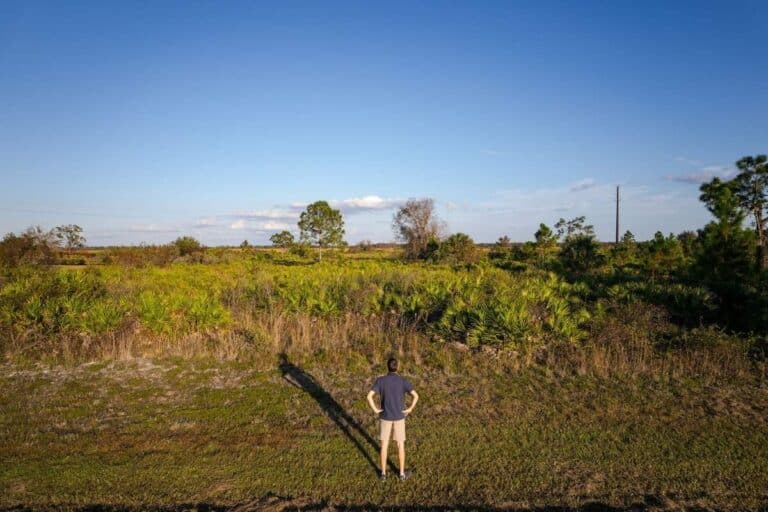
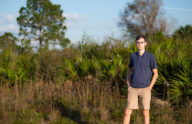
Michael Colosi wants to build a home on his property in Charlotte County, Fla. But because the U.S. Fish and Wildlife Service has designated the land a habitat for a threatened bird—the Florida scrub jay—Mr. Colosi must either forfeit the use of his land, agree to expensive mitigation measures, or pay a nearly $140,000 fee to the county that helps fund a “habitat conservation plan.”
Habitat conservation plans often amount to uncompensated property seizures. From Florida to California, the Fish and Wildlife Service is telling landowners that they may use their properties only if they agree to permanent restrictions dictated by the service at great expense. These diktats shouldn’t be enforceable unless the government pays the landowner for the lost use of his property.
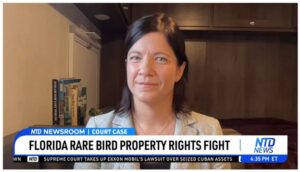
I saw a similar problem in Weyerhaeuser v. U.S. Fish and Wildlife Service (2018). I represented a Louisiana family whose timberland was declared “critical habitat” for the dusky gopher frog. No dusky gopher frogs lived on their property, and the species couldn’t survive there without drastic alterations. Yet the federal government effectively barred my clients from developing their land, even while admitting that they would lose tens of millions of dollars in value because of the regulation. The Supreme Court unanimously rejected that overreach, reminding the agency that it is bound by reason and law.
The Takings Clause of the Fifth Amendment was written to prevent exactly this kind of government action. In Armstrong v. U.S. (1960), the Supreme Court explained that the Takings Clause exists “to bar Government from forcing some people alone to bear public burdens which, in all fairness and justice, should be borne by the public as a whole.” That principle applies whether the government formally takes ownership of land, regulates it into worthlessness, or compels “conservation” concessions without paying for them.
Legal scholar Richard Epstein has long argued that the government must compensate property owners for property restriction. His argument points to a fundamental truth: Government’s regulating property into uselessness or imposing strict use conditions without compensation is effectively outright seizure.
That is why President Trump should issue an executive order declaring that environmental regulations that reduce property use should be treated the same as property seizure.
The president has an independent duty to interpret and enforce the Constitution. That responsibility includes directing federal agencies to honor the Takings Clause. The administration should instruct agencies either to scale back regulations restricting property use or to compensate the owners. The goal isn’t to halt conservation efforts—it is simply to ensure that their cost is spread across the public fairly rather than disproportionately imposed on some Americans. Such guidance would signal that the president is serious about aligning environmental regulation with constitutional protections for private property.
This op-ed was originally published in The Wall Street Journal on September 25, 2025.