

Washington activist continues legal challenge to unpayable fines
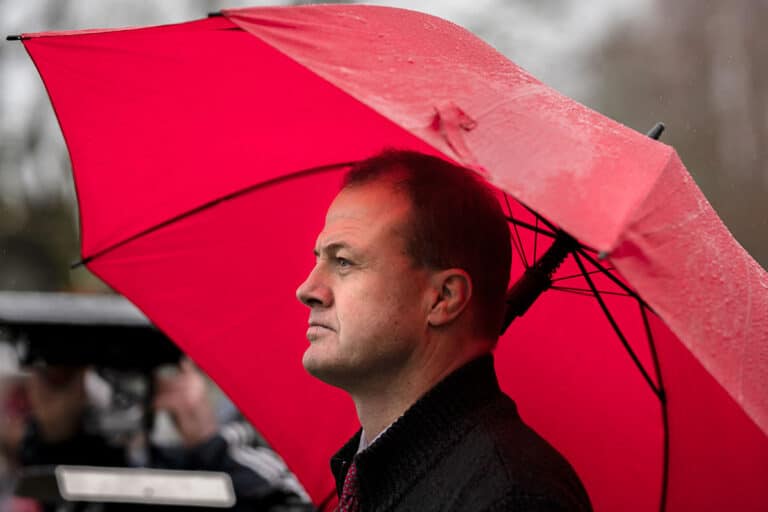
Tim Eyman is trapped by an unpayable debt that’s growing daily. Between fines, attorney fees, and ever-increasing interest, the State of Washington expects him to find and turn over $8 million. Since he can’t, the State is adding $700,000 to that total every year.
Eyman has been fighting this unconstitutionally excessive fine in the Washington courts since 2021. Now, his case is before the Washington Court of Appeals for the second time.
Eyman was a citizen activist in Washington for decades before a court order ended his career. He sponsored 17 statewide ballot initiatives that aimed to save taxpayers hundreds of millions of dollars. They also made him a political target.
The State sued him for campaign finance reporting violations in 2017. As litigation continued, the court banned him from financial roles in politics and ordered him to pay millions. Forced out of work, he made payments on some of the court-imposed fees for as long as he was able. In the fall of 2021, he ran out of money.
Eyman appealed the lower court’s ruling to the Washington Court of Appeals, arguing among other things that the fines he faced were unconstitutional under the Eighth Amendment’s Excessive Fines Clause. The appeals court agreed that the trial court failed to properly consider his excessive fines claim and ordered the lower court to reassess the fines, given his inability to pay.
But when the lower court heard his case again, it relied on the brief period in which he pulled together monthly payments, before the money was gone, to hold that he had the ability to pay $8 million in fines and fees.
Legally, he was back where he started. Financially, things had only gotten worse. Eyman sold everything—even his home—to pay a fraction of his debt to the State and only saw the total climb higher.
Now, he is once again before the Washington Court of Appeals to ask for the lower court’s ruling to be overturned. Represented by Pacific Legal Foundation, Eyman recently filed a brief that highlights the specific flaws with the lower court’s reasoning and the State’s argument on appeal. His brief argues that the court misapplied Washington Supreme Court precedent by basing its assessment of his finances on just the three months in which he managed monthly payments toward the debt.
Citing City of Seattle v. Long—a 2021 case holding that the court must consider one’s ability to pay when assessing whether a fine is excessive—the brief argues,
“Nowhere does Long suggest that the ability-to-pay inquiry should be restricted to a prejudgment snapshot. Rather, Long demonstrates that courts should consider the realistic impact of the fine, the size of the fine compared to income, and whether the fine creates or perpetuates destitution. Turning a blind eye to the impact of a judgment—as the lower court did—flouts Long’s practical approach.”
Eyman is also asking the court to strike down the order banning him from working in political finance. He argues that the order is illegal because it exceeds the limits of the Fair Campaign Practices Act (FCPA), which the lower court relied on to impose the ban.
“Tellingly, the State does not defend the injunction’s terms as falling within the FCPA’s authority. It does not because it cannot. The injunction goes well beyond simply ‘preventing violations,’ instead imposing restrictions for the rest of Eyman’s life that violate the limits imposed under the FCPA.”
Eyman’s brief concludes by asking the court to “hold the State to the limits of the law” by restoring his ability to work and either eliminating the punitive fines or reducing them to a payable sum.
Ultimately, his lawsuit argues that when courts impose massive fines, they must consider the defendant’s actual ability to pay—not impose unpayable, punitive fines or drive defendants into destitution by citing timelines before litigation destroyed their finances.
The court is expected to set a date for oral argument soon.
