

What Joe Rogan’s hemp conversation reveals about Washington picking winners
On a recent episode of The Joe Rogan Experience, Sen. Rand Paul surprised listeners (and the host) by explaining why some marijuana businesses have sided with the alcohol and pharmaceutical industries in lobbying Congress to crack down on hemp products.
The reason isn’t public safety. It’s competition.
Hemp and marijuana are variants of the same plant species, but the law has historically treated them very differently. “Hemp” as defined in the 2018 Farm Bill contains only small amounts of THC and is commonly used for pain relief, seizure disorders, aiding sleep, and other therapeutic purposes, as well as textiles and biofuels. The Farm Bill legalized hemp nationwide, allowing businesses to sell hemp products across state lines.
Marijuana, meanwhile, remains federally illegal and is regulated through costly, state-by-state systems that restrict where and how products can be sold.
“You really can’t make a marijuana product in Colorado and sell it in Kentucky,” Paul explained. “It can’t go across state lines. The hemp, because it was legalized nationally, they were selling it across state lines. So we have big companies now that sell the hemp gummies. You can order them through the mail, across state lines, until this [new] law came about.”
The new law at issue is a provision quietly added to the omnibus bill passed in November to reopen the government. The provision dramatically tightens the definition of hemp, imposing ultra-low THC limits that effectively neutralize these products’ beneficial effects. The measure, set to take effect in late 2026, will wipe out much of the hemp market that Congress legalized in 2018—welcome news for the marijuana, alcohol, and pharmaceutical industries that compete for the same customers.
If Congress’ goal was to protect the public, it could have narrowly targeted bad actors. Instead, it uprooted an entire industry filled with responsible businesses. By sticking this destructive provision into a “must pass” spending bill during the longest government shutdown in history, Congress sacrificed an industry worth over $1.5 billion with no meaningful debate, depriving entrepreneurs and employees of their livelihoods, taking free choice away from consumers who have come to depend upon these products, and leaving hemp’s competitors to absorb the market.
This kind of protectionism is exactly what Pacific Legal Foundation challenges in court.
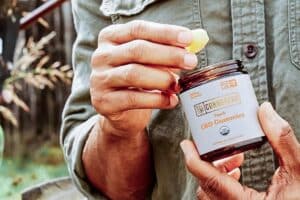
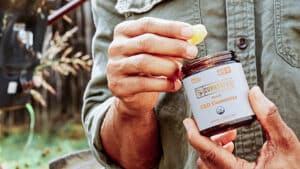
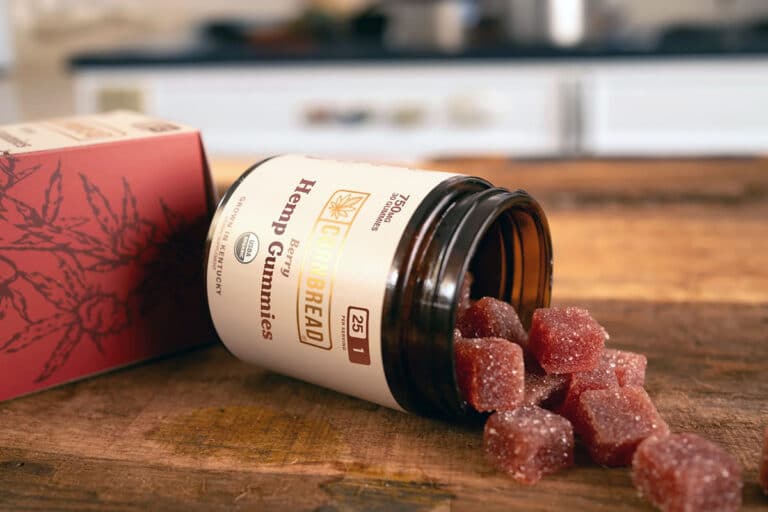
PLF represents Cornbread Hemp, a Kentucky-based hemp company founded by cousins Jim Higdon and Eric Zipperle. They sell hemp products that are USDA-certified organic and independently tested for purity, and they have cultivated a loyal customer base through direct-to-consumer shipping. Sixty percent of their customers are over 66 years old and rely on hemp products to relieve chronic pain.
But when Higdon and Zipperle tried to sell to customers in Tennessee, the state intervened. To reach Tennessee consumers, the state now forces Cornbread Hemp into an outdated three-tier distribution system, a framework created after Prohibition and justified only by the Constitution’s Twenty-First Amendment. It requires products to go from producers to wholesalers to retailers before reaching consumers, banning direct sales and forcing out-of-state sellers to either route their products through in-state middlemen or bear the expense of becoming in-state businesses.
Higdon and Zipperle’s complaint, filed in U.S. District Court for the Middle District of Tennessee in September 2025, alleges that Tennessee’s law is a violation of the Dormant Commerce Clause, which protects the free flow of interstate commerce against state laws that discriminate against out-of-state businesses in favor of in-state businesses.
But after Congress passed its hemp crackdown, Cornbread Hemp’s case was voluntarily dismissed. The provision’s ban on Cornbread’s products did not bode well for a state law challenge, because a constitutional victory would not have provided any meaningful time to restart sales before the date that hemp products will be criminalized.
Despite the shift in the legal landscape, PLF remains undeterred, as legislative efforts are underway to save the hemp industry, which would clear a pathway to challenge Tennessee’s discriminatory law.
“The fight against Tennessee’s three-tier system is not dead, but merely on hold as we wait for the legislative situation in Congress to crystalize,” said PLF attorney David Hoffa. “If the dust settles in favor of hemp products, we will be there to immediately bring this case back and fight for a holding that a three-tier system outside of the alcohol context is inherently discriminatory against interstate commerce and thus repugnant to the Dormant Commerce Clause.”
Paul noted in his conversation with Rogan that the ban would impact many who rely on hemp products to treat real pain and medical conditions. Meanwhile, pharmaceutical drugs like Valium, Xanax, and Ambien remain widely available and aggressively marketed, despite their well-documented risks. The question, then, is not whether government should approve of hemp use but whether adults are capable of weighing risks and benefits for themselves. As Paul put it, Washington too often operates under the “presumption that we know what’s best for everyone.”
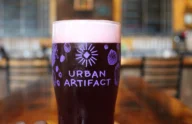
Hemp is the latest example, but governments engage in protectionism and deprive consumers of free choice across industries, from rideshare transportation and beer brewing to law and dentistry. PLF works to ensure the Constitution’s promise of fair competition applies to all of them.
Whatever the product, the principle is the same: Entrepreneurs deserve a fair shot to compete, and consumers should decide which products and which businesses succeed.