

Why rescinding the Roadless Rule empowers environmental innovation

Editor’s note: On February 25, 2026, Representative Harriet Hageman introduced legislation to nullify the 2001 Clinton Roadless Rule. Hageman’s press release cited PLF attorney Frank Garrison, who said passing the bill would be “a major win for sound forest management, local communities, and the productive use of our public lands.”
2025 marks a quarter of a century since more than one million Americans made their voices heard in Washington and broke the record for comments written to a federal agency on a proposed regulation. The recipient? The United States Forest Service. And the subject? The Roadless Area Conservation Rule.
The Roadless Rule, a product of the waning days of the Clinton administration, was eventually adopted; it banned infrastructure construction or maintenance, as well as timber harvesting, in nearly 60 million acres of national forestland. Yet from its earliest days, the Rule’s status was fraught with intense debate, with fiery legal battles traversing the courts. Eventually, as each presidential administration changed, so did the fate of the Rule—presidents took turns rescinding and reinstating the Rule, term after term.
But fast-forward twenty-five years, and Secretary of Agriculture Brooke Rollins has proposed rescinding the Rule once and for all—potentially opening up millions of acres of national forestland for Americans’ productive use. Some are decrying the Forest Service’s move, claiming that the Rule is effectively the only thing standing between America’s forestlands and total destruction. But this outlook is grounded in an outdated version of environmentalism—a pessimistic view that any human interaction with the environment is necessarily harmful to it. Yet as shown in one of PLF’s current cases, this “hands-off” view of conservation—including the Roadless Rule—is the real culprit of stymying not only environmental, but also human, progress.
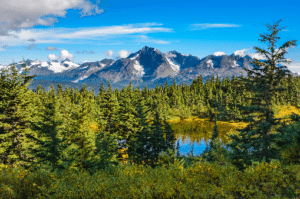
PLF is representing the electric utility for 2,400 Native Alaskans who live on remote islands within Tongass National Forest, the nation’s largest public lands forest, which covers a sprawling 16.7 million acres in southeast Alaska. Currently, the only way for these Americans to receive power is diesel, an incredibly expensive avenue—forcing some of the poorest Alaskans to pay the highest electricity costs in the state. Their utility company, Inside Passage Electric Cooperative (IPEC), wants to offer cheaper electricity for its clients through harnessing geothermal and hydroelectric power—a common-sense solution, particularly for people living on islands.
But the Roadless Rule prohibits these possibilities. Even though IPEC has a plan for developing a clean energy option, they have been barred from pursuing it because of the lack of roads in the area. Without roads, IPEC would have to use helicopters to create and maintain the infrastructure for green energy projects, costing Alaskans millions of dollars through regulatory costs (one project that would cost $17.5 million with roads, for example, would cost $65 million if it had to be done with helicopters).
Rather than helping these Native Alaskans develop new energy solutions, the Roadless Rule has kept them reliant on costly and outdated diesel energy—and has effectively barred clean energy development in the area. On behalf of our clients, PLF recently submitted a public comment, outlining the reasons why the Roadless Rule is illegal, as well as highlighting the plight of energy innovators like IPEC and how their progress is harmed by the Roadless Rule.
At PLF, we believe that the best way to protect our environment is to unleash human innovation—the best tool we have to come up with new ideas for preserving our way of life. The Roadless Rule, born out of a misguided view of human progress, halts our ability to responsibly use our land for the betterment of humanity and the planet. Unburdened by the Roadless Rule, Americans will be freed to innovate, steward, and protect our country’s great resources.
Read our public comment on the Roadless Rule.