

The woman who sued to enforce the Declaration’s promise of equality
The Declaration of Independence’s bold proclamation that “all men are created equal” was the foundation on which the pillars of American ethos were built. Its principle endured, later shaping the Fourteenth Amendment’s guarantee of equality before the law.
Self-evident as this truth may be, how these words would be lifted from the parchment and put into practice was anything but.
While philosophers and statesmen wrestled with the meaning of equality, one Massachusetts woman refused to wait for an answer. She heard the words and simply asked, if all men are born equal, why not me?
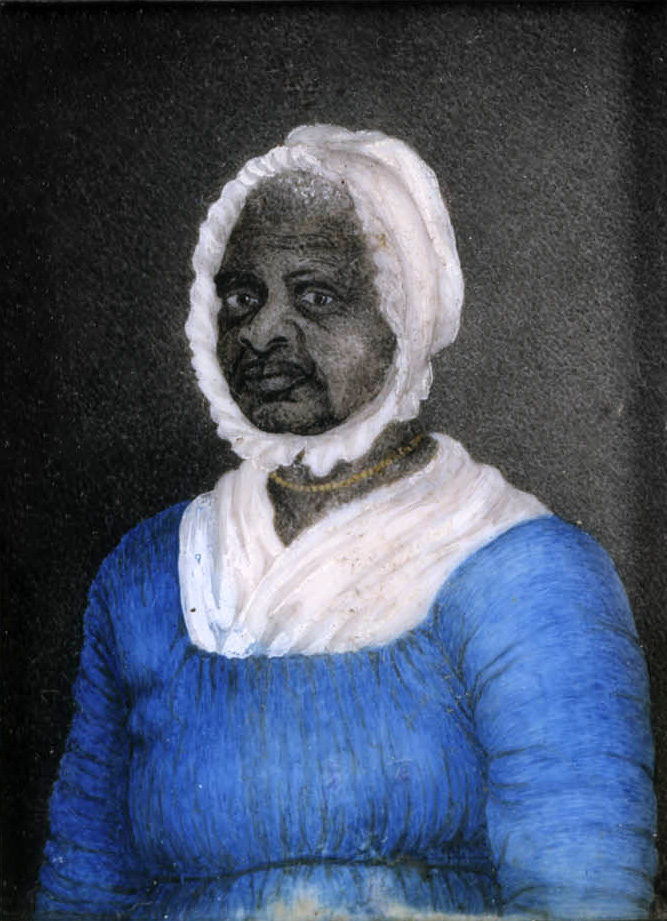
Mum Bett
Mum Bett was born into slavery about thirty years before the Declaration of Independence was signed. She and her sister, Lizzie, grew up working on a plantation in New York for a Dutchman, Pieter Hogeboom. When Hogeboom’s daughter married, the Bett sisters were given to the newlywed couple, Colonel and Mrs. Ashley, and moved to Massachusetts.
Despite her lack of formal education, Mum was known for being clever and outspoken. Legend has it that she once stepped in front of her sister to protect her from being beaten with a heated kitchen shovel by Mrs. Ashley. It is said that the attack left Mum with a gruesome scar on her arm that she refused to cover, always keeping it visible as a reminder of the cruelty of slavery. To others, the scar was a testament to her bravery.
In 1781, Mum showed her courage once again when she sued for her freedom.
Colonel Ashley was a judge of the Berkshire Court of Common Pleas and was heavily involved in local politics. His home was a regular meeting place where important resolutions and documents were read and discussed out loud. It was at one of these gatherings where Mum overheard something she couldn’t ignore.
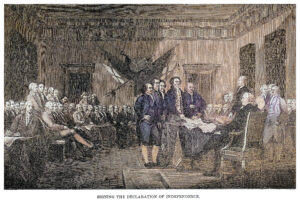
History is torn as to whether it was a reading of the Declaration of Independence in 1776, or the 1781 Massachusetts Constitution that sparked Mum’s quest for freedom. One thing that is for certain, the Massachusetts Constitution was inspired heavily by the Declaration, with John Adams being deeply involved in both.
Whether Declaration or Massachusetts Constitution, both conveyed the same universal truth: All men are born free and equal.
Mum was struck by these words. If America was built on the premise that all human beings were born equally entitled to their life and liberty, then this promise applied to her as well. It wasn’t a radical argument; it logically followed that if Massachusetts law said all men were free and equal, then slavery was illegal.
Living up to her reputation as a fearless and fiery woman, Mum decided to use the law to sue for her freedom. Mum sought help from attorney Theodore Sedgwick. While we don’t know for sure why she picked Sedgwick specifically, some accounts suggest that he was an abolitionist. Others say he had a penchant for taking cases that dealt with serious constitutional questions. What we do know is that he was well-respected and lived nearby—making it easier for Mum to visit him.
Sedgwick, with his partner Tapping Reeve, agreed to take on Mum’s case, along with an enslaved man known only as “Brom.”
The consequence of taking on such a controversial case was surely not lost on Sedgwick. The suit would be an important test case in determining if slavery was compatible with the state’s new constitution.
Sedgwick filed a “writ of replevin,” which ordered Colonel Ashley to release both Mum and Brom. Colonel Ashley, who was no doubt shocked that words spoken at his own gathering had resulted in a lawsuit, refused to release Mum and Brom. The case made its way to court, where the legality of slavery in Massachusetts was put on trial.
Elizabeth Freeman
Going against most stereotypes of the founding era, a Massachusetts jury heard the case and concluded that slavery was incompatible with the state constitution’s proclamation that all men were born free and equal.
The court ordered Colonel Ashley to release Mum and Brom, pay them 30 shillings, and cover the cost of the legal fees. Colonel Ashley appealed to the Supreme Judicial Court, but later dropped the suit, which some speculated was due to the outcome of a 1783 case where an enslaved man, Quock Walker, also sued successfully for his freedom.
After Mum was freed, she changed her name to Elizabeth Freeman and she went on to live a full and rich life. Colonel Ashley had offered to hire her as a paid servant, but she refused, choosing instead to work for wages in the Sedgwick home. She also went on to become a respected nurse and midwife.
Many of the facts of her life outside of the trial are speculative, but there is strong evidence to suggest that she was reunited with a daughter she had given birth to years earlier and even owned property purchased with her wages.
Mum was laid to rest in the Sedgwick family plot, which was completely unheard of at the time. Her headstone reads: “She was born a slave and remained a slave for nearly thirty years. She could neither read nor write, yet in her own sphere she had no superior or equal.”
The promise of equality before the law
Every word in the Declaration of Independence was crafted with intention. It is no mistake that the first self-evident truth listed says that “all men are created equal, that they are endowed by their Creator with certain unalienable rights, that among these are life, liberty, and the pursuit of happiness.”
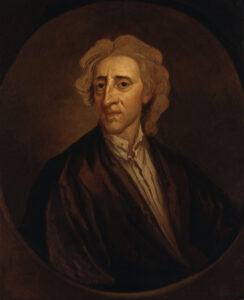
The 17th-century philosopher John Locke defined a self-evident truth as something that was so “infallibly true,” it required neither proof nor formal education to comprehend. Mum Bett could not even read, but that did not stop her from immediately comprehending that the Declaration’s proclamation applied to every human born upon this earth. Her insistence that this principle be accurately interpreted and upheld signaled the inevitable downfall of slavery in Massachusetts.
Her victory would not abolish slavery overnight—it wasn’t followed by any official statute or declaration. But slave owners now understood that slavery was legally indefensible under the state constitution and that enslaved people could successfully sue for their freedom. Mum had disrupted the system in a way that was irreparable—even if the complete demise took time.
All this because one woman considered the Declaration’s words and asked, “Why not me?”
Mum would later say, “Any time while I was a slave, if one minute’s freedom had been offered to me, and I had been told I must die at the end of that minute, I would have taken it—just to stand one minute on God’s airth [sic] a free woman—I would.”
When the Fourteenth Amendment was ratified nearly 100 years later, the Constitution reinforced what the Declaration had conveyed, solidifying into law that all people have a legal right to life, liberty, and the pursuit of happiness.
Inspired by the Declaration of Independence and heroes like Mum Bett, today Pacific Legal Foundation continues to fight for equality in courts across the country.