

Ahead of Independence Day, homeowners are warned against flying American flags
On July 4, 1776, a group of patriots mutually pledged their lives, fortunes, and sacred honor when they signed the Declaration of Independence. The document signaled the official severing of ties with Britain and the establishment of a new nation, where individuals were free to enjoy their rights to life, liberty, and the pursuit of happiness.
Few places in America did more to ignite the Revolution than Massachusetts. It was home to defining moments like the Boston Massacre and the Boston Tea Party. It was where the “shot heard ’round the world” at the Battles of Lexington and Concord forever changed history.
Yet, as we prepare to celebrate our country’s 250th birthday, one Massachusetts town is reminding us that protecting our rights is as important today as it was in 1776.
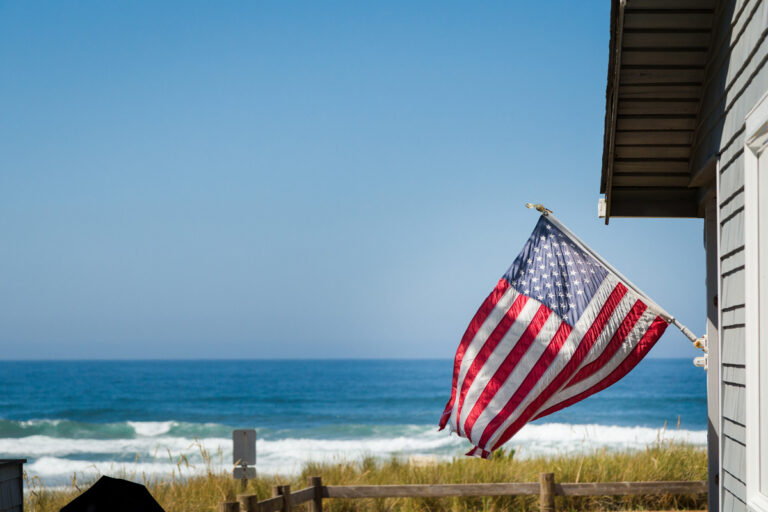
Just 40 minutes outside of Boston, the city dubbed the Cradle of Liberty, Plum Island homeowners are being warned that flying American flags on their property could violate state and federal law.
Marc Sarkady owns a home on Plum Island in the Town of Newbury, where he has lived for 30 years. In anticipation of Independence Day, Sarkady placed seven small American flags in the sand on his own property. Shortly thereafter, Sarkady, along with some of his neighbors, received a notice stating that displaying flags, Mylar streamers, and reflective materials are potential violations of the Massachusetts and federal Endangered Species Acts.
Why? Because the Town warned that such displays are not patriotic expression but rather an attempt to deter shorebirds—specifically piping plovers and least terns—from using their property as nesting sites.
As the letter states, these displays “may be viewed as harassment or disruption of normal feeding, nesting, or migratory behavior,” and “carry significant regulatory and financial penalties.”
The notice also states that “Non-compliance may result in state or federal enforcement actions and, thus, the town urges residents to comply with applicable state and federal wildlife protection laws.”
This did not sit well with Sarkady. Dictating what property owners may display on their own property goes against the very spirit of the Revolution our nation is celebrating.
Mark Miller, director of Environment and Natural Resources litigation at Pacific Legal Foundation, said that the Town’s actions “would have been unthinkable to the Founding Fathers. It should be unthinkable today.”
On behalf of Marc Sarkady, Pacific Legal Foundation sent a letter to the Town, demanding that it clarify whether residents face legal liability for celebrating Independence Day on their own property. In the letter, Miller explains that no court has ever found a homeowner liable under either law for displaying decorative items on private property and demands that the Town identify any legal authority supporting its position.
Americans living near protected habitat retain both the right to use and enjoy their land and the right to free speech.
The Town quickly responded, claiming that its letter was “intended to be informational by reciting the applicable provisions of the law and the Town is not asserting any threat of legal liability—merely reminding property owners that they live in a very special place which comes along with certain responsibilities and considerations.”
In PLF’s response to the Town, Miller asks Newbury to “retract its letter to Marc and any other recipients, place a litigation hold on all communications and documents related to the letter, and refrain from sending such letters in the future.” Because, as Miller writes, “the Constitution demands nothing less.”
What is happening in Newbury reminds us that protecting our individual rights is an ongoing battle. While trespasses on our liberty don’t always require revolution, they do require constant vigilance.
As the great Massachusetts man, John Adams said, “Property must be secured, or liberty cannot exist.”