


Wall Street Journal: Don’t Write Plymouth’s History by Ancestry
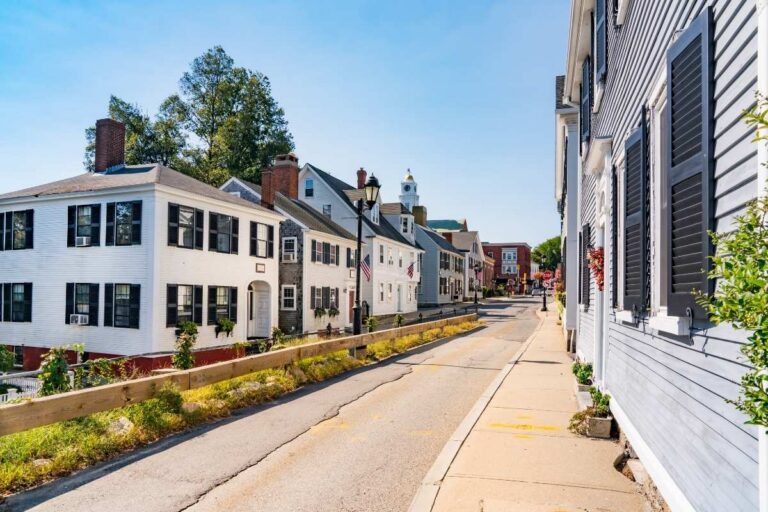
Millions visit Plymouth, Mass., to see the birthplace of American self-government. Yet today the town decides who participates in that government based on their ancestry.
Plymouth occupies a singular place in the American story, with a rich history of the Pilgrims, the Wampanoag people and their complicated relationship. The town has chosen to preserve that past by reserving two seats on its Historical Commission for Herring Pond Wampanoag Tribe members—a move that’s deeply flawed and unconstitutional.
The government wants to ensure that Native voices are heard in decisions about the town’s historic resources. But the Constitution subjects race or ancestry quotas to an extraordinarily high level of judicial scrutiny. The Supreme Court has repeatedly said bloodline mandates are permissible only in a narrow set of circumstances, like remedying specific instances of government discrimination, and that general appeals to diversity or inclusion aren’t enough.
Some might object that tribal membership is a political, not racial, classification. There are circumstances in federal Indian law where that is true. Congress has constitutional authority in its government-to-government relationship with federally recognized tribes.
But Plymouth isn’t Congress, and a municipal historical commission isn’t administering federal Indian affairs. When localities decide who may serve on a public board, they’re offering residents the opportunity to participate in local government. Under the 14th Amendment’s Equal Protection Clause, they must do so without regard to bloodline.
Take Iowa, which for nearly 40 years required all appointive boards and commissions—from county library boards to licensing bodies—to maintain balance between the sexes. Following a civil-rights lawsuit challenging the quota as it applied to the state judicial nominating committee, a federal court ruled in 2024 that whatever justification may have existed for the quota in the 1980s no longer supported excluding qualified applicants based solely on sex. The quota discriminated against both men and women (the plaintiffs in the case were a woman and a man who would be excluded from the committee in different years). It was still discrimination.
Arkansas, Montana and South Carolina voluntarily repealed racial quotas for public bodies after lawsuits based on the Equal Protection Clause. Tennessee in 2025 eliminated racial set-asides for its medical licensing boards after litigation.
A pattern has emerged: Once states are forced to take a hard look at race- or sex-based quotas, or any law based on immutable characteristics, many conclude they are constitutionally indefensible—and repeal them before the courts do.
Plymouth’s rule suffers the same constitutional flaw. Imagine the town had instead reserved two commission seats for descendants of the Mayflower’s passengers. Public office can’t be conditioned on bloodlines, whether they trace to Plymouth Rock or to those who were here before the Pilgrims arrived.
This op-ed was originally published in Wall Street Journal on August 17, 2026.