

John Carbin spent his career working on complex machinery. As a federally certified aircraft mechanic and former Black Hawk crew chief, he was qualified to inspect, maintain, and overhaul airplane engines—high-stakes projects where failure was not an option.
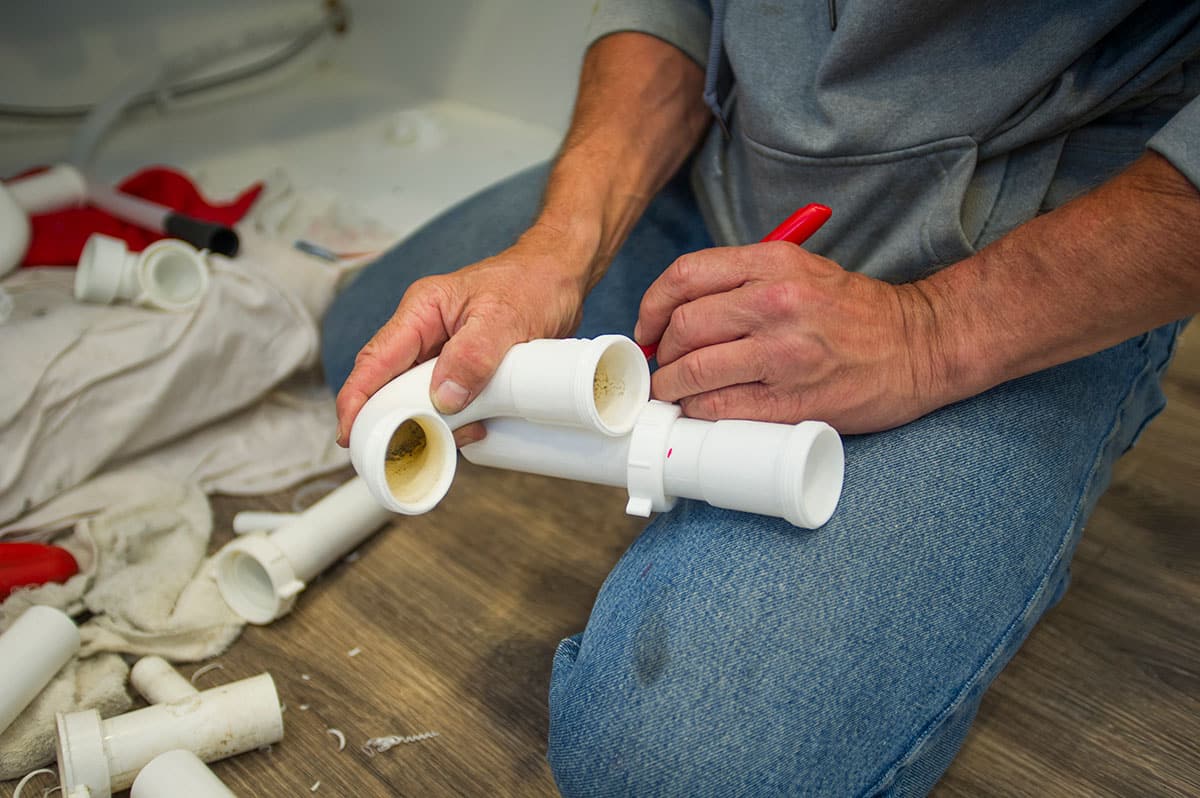
When John began building his dream retirement home in rural Massachusetts, he expected to handle much of the work himself. Instead, he ran into a surprising barrier: Massachusetts law prohibited homeowners from performing their own plumbing work unless they held a state-issued plumbing license. (Every other state allowed homeowners to do their own plumbing, subject to permits and inspections.)
John requested authorization from the Town of Savoy governing body, but the answer was no.
Facing a choice between hiring a licensed plumber or abandoning his plans altogether, John turned to the courts, arguing that the ban violated his fundamental right to repair his own home.
A federal district court ruled that the right John asserted was not “fundamental” because it was not explicitly listed in the Constitution and had not been previously recognized by the Supreme Court. It accepted the state’s generalized claim that the license requirements promoted health and safety and dismissed John’s challenge—without actually addressing his allegations. The U.S. Court of Appeals for the First Circuit later affirmed the decision without briefing or oral argument.
Represented by Pacific Legal Foundation at no cost, John asked the U.S. Supreme Court to review his case.
His petition argued that Supreme Court precedent, including the 2022 Dobbs v. Jackson Women’s Health Org. decision, made clear that fundamental rights are not limited to those explicitly enumerated in the Constitution. Courts must instead examine whether a claimed right is deeply rooted in the nation’s history and tradition and essential to a free society—an analysis the lower courts never performed.
It also asserted that simply invoking “health and safety” in the abstract was not enough to satisfy the rational basis test, a notoriously ambiguous legal framework that asks if a law is rationally related to a legitimate government interest. To pass, the government would have to explain what the risk to the public was and how the regulation addressed it to justify such a restriction.
At stake was more than one man’s plumbing project. If courts recognized only those rights explicitly enumerated in the Constitution, many longstanding liberties—rooted in history and daily life but never written down—would be left unprotected.
Unfortunately, in March 2026, the Supreme Court denied John’s petition.
What’s At Stake?
- The government cannot violate a fundamental right simply because it’s not enumerated in the Constitution or previously recognized by the Supreme Court. Courts must consider whether the right is rooted in the nation’s history and tradition, and whether it’s essential to a free society.
- The government cannot violate a fundamental right by invoking public safety in the abstract; it must articulate a legitimate interest and explain how its regulation rationally furthers that interest.