


Minnesota’s batty restriction on timber operations
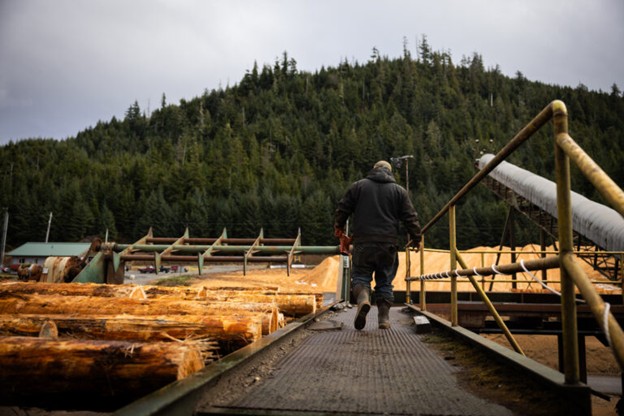
Over a third of Minnesota is forested, and the state’s forest products industry ranks as its fifth-largest manufacturing sector by payroll employment. Citizens’ ability to use these resources, however, has been unconstitutionally restricted by a state and federal government scheme to protect three bat subspecies. Two of these species were listed as endangered by the Fish and Wildlife Service only in late 2022, and one remains unlisted.
Timber workers and landowners who own land within a quarter-mile of places where bats were observed between late fall and early spring seemingly cannot alter the habitat without risking massive penalties or applying for the State’s habitat conservation plan. However, the State’s habitat conservation plan merely delays the imposition of the excessive fine. The State charges applicants to the plan subjective amounts of compensatory mitigation. Previously approved projects received varied mitigation based on one of at least ten factors. This gives state environmental officials room to target disliked projects and, at will, slow the timber industry.
Fortunately, the Constitution protects against such corruption. In Sheetz v. County of El Dorado (2024), the U.S. Supreme Court held that state and local government exactions must have both “rough proportionality” with and an “essential nexus” to the harm being caused. Otherwise, the government violates the Fifth Amendment by unlawfully seizing property through a permitting system. This violation, labeled an unconstitutional condition, forces states to justify their habitat conservation fees by linking them to the harm caused by the developer.
Minnesota cannot establish either nexus or proportionality. Independent research, surveys, and population monitoring arguably fail to relate to the legislative aims outlined in the relevant environmental statutes. Most importantly, the fees are too arbitrary and inconsistent to be proportionate. Even if the State used the sole valuation method that may be determinable—the restitution value of the bats—they would still treat all mammals and birds as having the same value. Such a fee structure lacks the individualized assessment needed for proportionality.
Unless Minnesota wants to violate the law, it needs to go back to the drawing board and create a structure that’s fair to developers and that directly benefits the bats. Its current scheme does neither.
Fortunately, there is an option for those being oppressed by this regime. Pacific Legal Foundation, has represented thousands of Americans free of charge in protecting their constitutional rights. We have been counsel of record in many of the biggest unconstitutional conditions cases, including representing the Sheetz family before the Supreme Court. We have led the charge against habitat conservation plans, recently persuading a federal judge to rule that those restricted by them are harmed and can challenge the government in federal court. We are continuing this fight in Minnesota to allow its citizens to avoid government fines and benefit from its natural resources, but we need a client to move forward.
If you or anyone you know is interested in fighting back against this unconstitutional restriction, please reach out to me at or 202.585.1625.