

‘Mountain man’ continues legal battle challenging government bait-and-switch
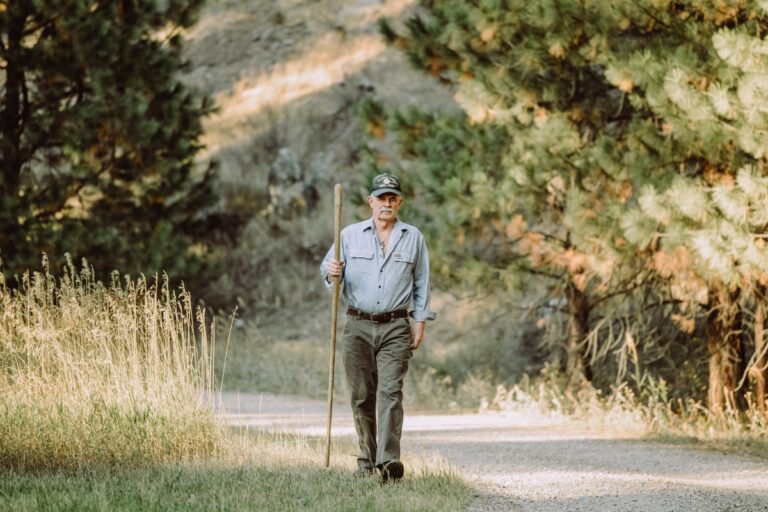
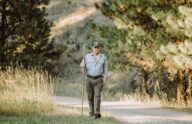
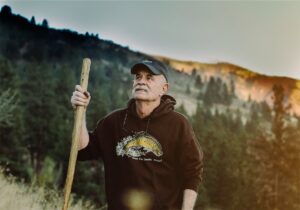
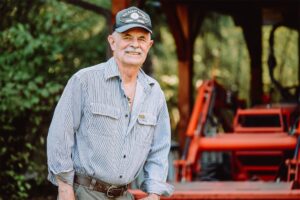
Veteran and cowboy poet Wil Wilkins has lived in the Montana mountains his entire life. The “mountain man” generally spends his days working as a stonemason and blacksmith to create detailed, artisan pieces sought out by interior designers. He also devotes his energy to combatting government abuse—including the bait-and-switch that opened his home in the Bitterroot National Forest to violent trespassers with government approval.
In late December, the Ninth Circuit Court of Appeals issued a ruling in his legal challenge to that bait-and-switch, claiming that Wil should have sued the government years before it took his property.
In June 2018, Wil Wilkins filed a lawsuit against the U.S. Forest Service to restore his own property. The agency had attempted to change the terms of a decades-old “easement,” a contract formally granting the government access to an individual’s private property for a defined, limited purpose. In Wil’s case, a 1962 easement allowed the Forest Service to drive on a private road on his land to harvest timber. But in 2006, the agency decided that the terms of that agreement now entitled the government to turn Wil’s road into an unrestricted public commodity.
The Forest Service did not ask for Wil’s permission to make the road public or even inform him of the change. He found out because out-of-state strangers began using and abusing his property.
Since the Forest Service arbitrarily decreed Wil’s road public, he has endured a litany of intrusive and dangerous activity, including strangers trespassing on his property, hunting on his land without permission, starting fires, shooting his cat (who survived the ordeal), and speeding over the road so quickly that they maimed one of his neighbors’ dogs and killed another. Every intrusion exacerbates the PTSD Wil developed during his years of service.
Wil and his neighbors objected to this violation of their property rights and sought answers from the Forest Service. The agency assured them that the road would soon be decommissioned and once again closed to the public—Wil just had to wait.
But after eight years of bureaucratic hemming and hawing, the agency made a final decision that contradicted its former assurances. The government declared that the road was officially public.
When Wil asked the agency to stop violating his peace and his property rights, a ranger laughed at him and said he’d have to sue before the government would honor the original easement. Wil took them at their word and joined with Pacific Legal Foundation to defend his home.
In court, the government used administrative technicalities to keep Wil from arguing his case. The court dismissed his lawsuit, claiming Wil should have sued years before the government finalized its decision to take his property. The dismissal claimed that the clock on the statute of limitations started ticking when “a reasonable landowner should have known of the government’s position that its easement allowed for public use of the road.”
But when would a “reasonable landowner” have known? After all, the agency did not even inform Wil when it decided to reinterpret the 1962 easement. He found out that they’d declared his road public because the public was using the road freely. Did the clock start when the sign was posted, when the first vehicle sped through his property, or at another random benchmark?
The decision punished Wil for attempting to resolve the matter with the agency before heading to court. When Wil talked with government employees at the Forest Service, they told him the road was going to be decommissioned and closed to the public shortly. He spent eight years acting in good faith, waiting for them to uphold that assurance. According to the dismissal, however, Wil should have gone to court—knowing the government would renege on its assurances—before they had even been made.
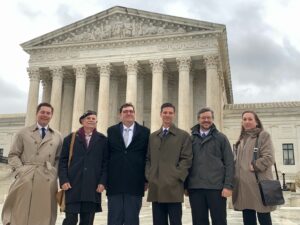
Wil knew these arguments didn’t hold water and pushed ahead. He petitioned the U.S. Supreme Court to hear his case and overturn the lower court’s ruling. In March 2023, the Supreme Court agreed. The Court held that the government could not manipulate procedure to prevent citizens from suing when their rights are violated. The ruling allowed Wil and his neighbors to plead their case.
Now, the government is once again using administrative hurdles to deny Wil justice.
In a decision issued on December 29, the Ninth Circuit Court upheld the decision that the Supreme Court had vacated and sent the case back down for rehearing. The decision repeats the assertion that Wil should have sued when the government first claimed his road for public use—years before he knew whether he’d need to take legal action.
“The Ninth Circuit Court erred in its ruling in Mr. Wilkins’ case. The government cannot lock Americans out of the courtroom by simply asserting that their time’s up or enacting other arbitrary administrative barriers,” said Jeffrey McCoy, an attorney at Pacific Legal Foundation and counsel for Wil Wilkins. “We look forward to working with Wil to vindicate his property rights in court, up to the Supreme Court again, if needed.”