

National Review: A Monumental Tug-of-War
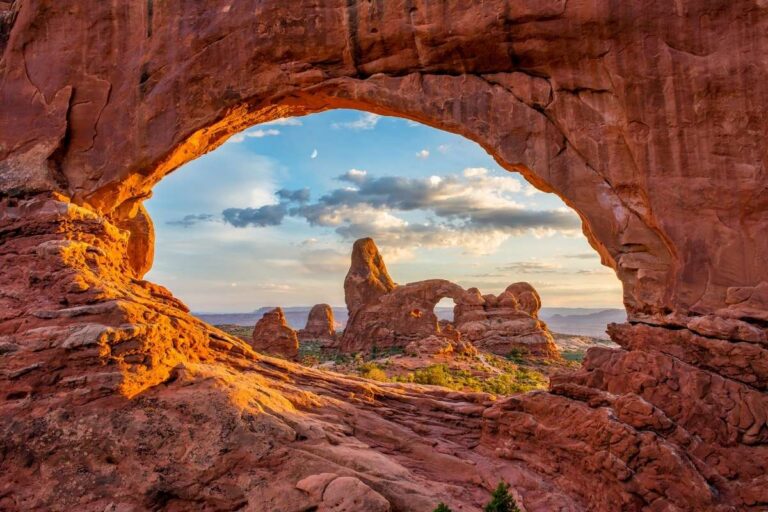
Earlier this month, President Trump shrank two national monuments in Utah by 90 percent each, about 3 million acres in all. This is just the latest pull in the endless tug-of-war between presidents over public lands. The regulatory whiplash that has become the only reliable pattern in federal land management makes an elegant case for why the federal government should not be the nation’s largest landlord.
Under the Antiquities Act, signed into law by President Theodore Roosevelt in 1906, presidents can declare historic landmarks on federal land to be national monuments. The act was a response to the looting of ancient ruins, but it has long since surpassed these humble origins. Presidents routinely blanket vast swathes of land as “national monuments.” President Barack Obama, for instance, designated a chunk of ocean off the New England coast the size of Connecticut as a national monument. Two national monuments in Utah, Bears Ears and Grand Staircase-Escalante, follow a similar pattern, covering millions of acres of the state.
Monument proclamations rope off the designated region from many uses, often ravaging locals’ livelihoods. The New England ocean monument, for instance, banned commercial fishing across regions that locals had fished for decades. For Utah, the creation of national monuments limits certain recreational and economic uses of the land, controlling access and locking up precious natural resources like oil, gas, uranium, and coal.
But, thanks to President Trump’s recent proclamations, that will change. For now. This isn’t the first time the president has shrunk these monuments. He did so in 2017 as well. Then, President Joe Biden expanded them in 2021. The most recent shrinkage may not last long, depending on who claims the White House in a few years.
Regardless of how one feels about a particular president’s approach to these lands, this monumental tug-of-war has shown that the federal government is not the ideal steward of these lands. Stewardship should rest in the hands of state leadership accountable to the people who live, work, and play on the land.
Elevating the president as the nation’s largest land baron is not just bad policy — it’s also unlawful. The Antiquities Act limits the president’s authority to protecting “objects” of scientific or historic interest and must limit the protected area to “the smallest area compatible” with protection of the landmark. Neither of the Utah “monuments” satisfies this language. An area of land that exceeds the size of a fifth of all nations on the planet — the size of both monuments combined — is not an “object” that the president can protect, nor is it the “smallest area” needed to ensure any actual landmarks within that region receive federal protection.
In recent litigation over the Utah monuments, a federal appeals court in June held that these are genuine limits on the president’s power that courts can and should police. While the court did not address whether the creation of the Utah national monuments in fact exceeded those limits, it reasoned that “the President does not have unchecked discretion to decide what objects or landmarks fall into those categories.”
When and if the federal courts do clarify the reach of the president’s power under the Antiquities Act, they should also consider the balance between federal and state power. When interpreting federal statutes, courts avoid overriding traditional state authority where possible. Some presidents’ aggressive interpretation of the act leads to conflict with state control over lands within a state’s jurisdiction. Ironically, this federal usurpation of state management mirrors one of the core grievances in the Declaration of Independence: the British government’s centralized control from afar over colonial growth in the territories. In similar fashion, presidential abuse of the Antiquities Act has broken down a core tenet of our federal structure — that the concentration of power in the national government is a grave threat to liberty.
But even if the Antiquities Act does allow the president to place entire regions of the country within his personal control, the act would still violate the Constitution, which vests “legislative power” in Congress alone. The president is then tasked with simply executing Congress’s will. Congress holds the scepter of lawmaking, and the president holds the sword of enforcement. Under the “non-delegation doctrine,” the legislature cannot delegate its legislative power to the president by granting discretion so broad that it is tantamount to a lawmaking power.
The act, as presidents have interpreted and wielded it, does just that. It places both the scepter and the sword in the president’s hands. By unilateral dictate, the president can shut off lands from productive and recreational uses. As Chief Justice John Roberts put it a few years ago when the Supreme Court declined to consider the legality of the New England ocean monument, the modest power to cordon off landmarks for federal protection “has been transformed into a power without any discernible limit to set aside vast and amorphous expanses of terrain above and below the sea.” By dint of aggressive use of the Antiquities Act, the president has ascended to the throne of a feudal lord with all federal lands his fiefdom. Such awesome power belongs only with Congress, which can designate national parks if it so chooses.
The wild policy swings over the past several administrations have confirmed the wisdom behind this constitutional design. We now have federal land policy that flips every four to eight years. This perpetual tug-of-war is bad for everyone: Businesses can’t plan ahead, environmentalists can’t achieve lasting reform, and locals can’t build stable communities. We can temper this whiplash if we return land management to legislative bodies that are slower to shift course and more aware and responsive to local needs. Presidential abuse of the Antiquities Act has resurrected a political model that itself belongs to antiquity — one in which local life is beholden to the whims of a distant ruler. That is not a historical object worth preserving.
This op-ed was originally published in National Review on July 24, 2026.