

New York artists ask Supreme Court to hear lawsuit challenging $100-per-square-foot exactions
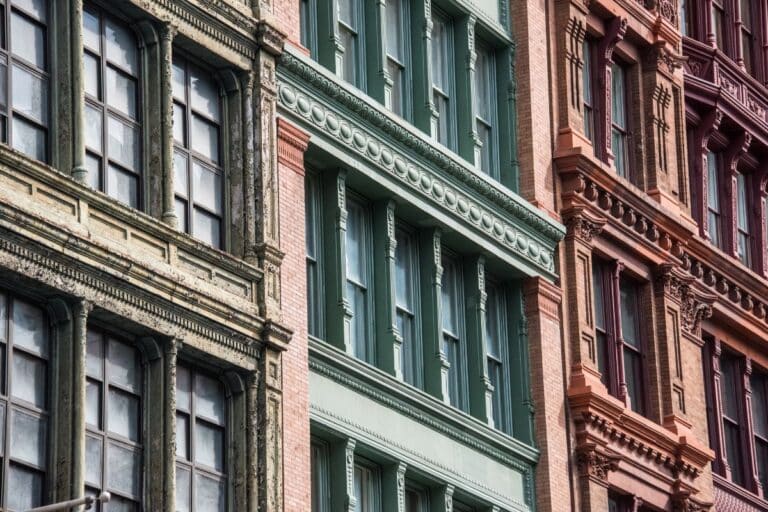
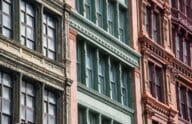
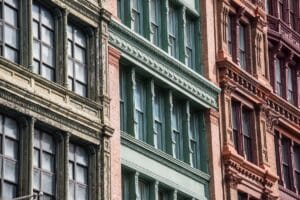
SoHo and Noho, New York City’s once-vibrant artist quarters, are now the site of a legal challenge making its way to the U.S. Supreme Court.
Pacific Legal Foundation filed a petition for a writ of certiorari yesterday asking the Court to hear a lawsuit challenging a controversial rezoning law that forces New York artists to pay more than $100 per square foot to convert the outdated zoning of their artist-restricted housing to general residential use. Unless they agree to pay for the zoning conversion, current residents remain in their homes only by the grace of the state legislature. They cannot sell or bequeath their home to anyone but a City-certified artist without paying the fee—about $250,000 for the average loft.
In 1971, New York kickstarted a revitalization project that allowed city-certified artists and their families to turn abandoned industrial buildings into homes and studios. SoHo and NoHo established roughly 1,600 of these “joint live-work quarters for artists,” or JLWQAs. But the cracks in the plan began to show quickly. The City certified fewer and fewer artists each year, repeatedly granted exceptions for retail developments in the area, and effectively abandoned the project over the decades. The program became officially defunct when the City’s Mayor enacted an expansive zoning reform in 2021.
The reform allowed unlimited residential use in SoHo and NoHo to everyone—except for the residents of the JLWQAs. New York demanded each of those artists pay for “conversion” permits to rezone their homes at a rate of over $100 per square foot, to be paid into a City-administered “Arts Fund.” Essentially, the City ordered JLWQA residents to fund public art in exchange for permission to use their property the way everyone else under the rezoning can use theirs by right.
The City didn’t have any constitutional justification for its demand. The JLWQA homes are already fit for residential use, with certificates of occupancy and decades of family memories to prove it, and conversions to residential use don’t have any negative impact the City might otherwise want to mitigate through fees. For the City, the rezoning would only change paperwork. But for the residents, it was extortion.
A coalition of JLWQA residents across SoHo and NoHo filed a federal lawsuit to challenge the City’s demand as an illegal permitting condition, or exaction. New York’s intermediate appellate court unanimously agreed, ruling in the residents’ favor. But the state’s highest court, the Court of Appeals, reversed and ruled in the City’s favor. Yesterday, represented at no cost by Pacific Legal Foundation, the residents filed a petition asking the U.S. Supreme Court to take up their case.
The petition highlights several key shortcomings in the appeals court’s ruling. The primary mistake lies in the appeals court’s treatment of relevant Supreme Court precedent limiting the government’s power to abuse property owners. The appeals court held that St. Johns River Water Management District v. Koontz, a landmark 2013 case also fought by PLF, only protects homeowners if the government issues a monetary demand “in lieu of” a demand for real property. Based on this reasoning, the appeals court decided Koontz did not protect the JLWQA residents from extortion because New York City simply demanded their money.
The residents’ Supreme Court petition argues that this ruling is flawed because the protections in Koontz apply to property owners far more broadly—as Judge Garcia similarly noted in a pointed dissent from the rest of the appeals court’s January ruling.
Arguing on behalf of the residents, PLF’s property rights attorneys dispel the notion that Koontz only applies to monetary demands made “in lieu of” demands for land.
“Put simply, the connection between the monetary demand and the use and ownership of the burdened property exists whether the demand is for money or real property. Both are subject to the coercive, extortionate demands that the unconstitutional conditions doctrine protects against.”
The petition concludes that the Court of Appeals’ misapplication of Koontz led it to issue a ruling that “threatens to eviscerate the Fifth Amendment’s protections for land-use permit applications and upend decades of precedent” by opening the floodgates to government demands for homeowners’ money. These issues provide a critical opportunity for the Supreme Court to strengthen protections for property owners’ rights and prevent future abuses of government power.
Even one Court of Appeals judge who agreed with the majority’s decision to uphold the fee admitted that the residents’ constitutional claims are convincing. Judge Halligan noted that Judge Garcia’s dissent has “some merit” and “may well eventually prevail.” As they await the Supreme Court’s decision on whether to grant their petition, residents of artist-restricted housing in SoHo and NoHo remain cautiously hopeful that their arguments will do just that.