

Remembering Gordon S. Wood and the idea of America

This week, America lost one of the foremost historians of the American Founding with the passing of Brown University professor Gordon S. Wood.
For half a century, Wood helped shape how scholars and ordinary people understood the Revolution, the Founding Fathers, and the ideas that united 13 British colonies into one nation.
Through his work, he inspired generations of students, writers, constitutional lawyers, and historians to not only study the American Founding, but to continue its legacy.
I had neither the privilege of meeting Professor Wood nor the pleasure of sitting in an audience when he spoke. Our acquaintance was one-sided, limited to my consumption of YouTube speeches, articles, and of course, his wonderful books. Strangers though we were, he is the reason I ended up working on a communications team for a constitutional law firm like Pacific Legal Foundation.
“If you want to understand the Constitution, you must read Gordon S. Wood.” This was the instruction given by my college professor on the first day of our Foundations of American Constitutionalism course.
For most of my undergrad classmates, the course was just another box they had to check to obtain their political science degrees. After the semester ended, they would move on with their lives until eventually, the content of the course settled into that special section of the brain reserved for long-forgotten college lectures.
But not for me. That class is where I was introduced to Professor Wood and his mentor, Harvard historian Bernard Bailyn, both of whom cultivated in me a deep appreciation and reverence for the ideas on which this country was founded and the men and women who brought those ideas to life.
It feels like a cruel twist of fate to have lost a scholar who dedicated his life to explaining the significance of the Founding just one month shy of the Declaration of Independence’s 250th birthday.
Why the American Founding matters
What compels a person to dedicate their life’s work to the study of the American Founding? After all, there have been countless struggles for independence throughout the course of human history. What makes the American Revolution such a profoundly unique event?
In Wood’s own words:
My preoccupation with the Revolution comes from my belief that it is the most important event in American history, bar none. Not only did the Revolution legally create the United States, but it infused into our culture all of our highest aspirations and noblest values. Our beliefs in liberty, equality, constitutionalism, and the well-being of ordinary people came out of the Revolutionary era. So too did our idea that we Americans are a special people with a special destiny to lead the world toward liberty and democracy. The Revolution, in short, gave birth to whatever sense of nationhood and national purpose we Americans have had.
Unlike other nations that base their identity and purpose on shared ancestry, ethnicity, language, religion, or culture, Wood believed America is exceptional because it is a “creedal nation.” Only in America are such different people drawn together through their commitment to a set of principles, which among them are equality, liberty, and the pursuit of happiness.
“The Revolution and its Declaration of Independence offered us a set of beliefs that through the generations has supplied a bond that holds together the most diverse nation that history has ever known,” he said.
To Wood, “To be an American is not to be somebody but to believe in something.”
That the Second Continental Congress chose the name “United States of America” was itself very telling. In the 18th century, the word “state” was understood to mean “sovereign political entity.” Indeed, these 13 colonies were distinct and sovereign, but through their allegiance to a creed—and not a government—they became Americans.
Over the next two and a half centuries, individuals from all over the world would flock to America not for her purple mountain majesties or amber waves of grain, but because of the principles she embodied.
Preserving the idea of America
In his book, The American Revolution: A History, Wood wrote, “For the aim of the Revolution had become not simply independence from British tyranny, but also the prevention of future tyrannies.”
Warding off future tyrannies was not a task intended for the Founders alone.
After the Declaration was signed and the Revolution won, our Framers wove the American creed into our U.S. Constitution. While the Constitution created safeguards against abuse, the Founders entrusted future generations with the task of preserving those safeguards.
Today, the U.S. Constitution remains the oldest continuous constitution. But continuity does not equal perfection. Since its ratification, government has, on numerous occasions, failed to live up to the tenets of its creed.
If America is held together by a creed rather than a common ancestry, then constitutional rights are more than legal guarantees—they are mechanisms for holding government accountable to the nation’s Founding principles and guarding against the very tyrannies the Revolution sought to prevent.
The Father of the Constitution, James Madison, once advised that “In framing a government which is to be administered by men over men, the great difficulty lies in this: you must first enable the government to control the governed; and in the next place oblige it to control itself.”
Professor Wood spent his remarkable life preserving the American creed through scholarship. Pacific Legal Foundation preserves that creed through the courts, fighting to protect individuals’ constitutional rights and carrying forward the founders’ project of checking power.
Wood’s emphasis on America as an idea and not a place feels particularly poignant as we approach our country’s 250th birthday.
Physical nations can be conquered, occupied, and destroyed, but ideas are bulletproof. So long as there are people who remember, cherish, uphold, and defend our Founding principles, the “Idea of America” will live on.
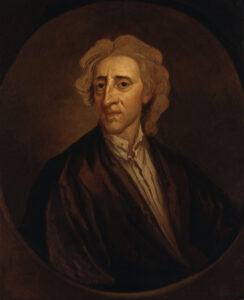
*Image credit: Gordon S. Wood photograph by Roanoke College, licensed under CC BY 2.0, via Wikimedia Commons.