

Removing barriers to homebuilding can help solve our homelessness crisis
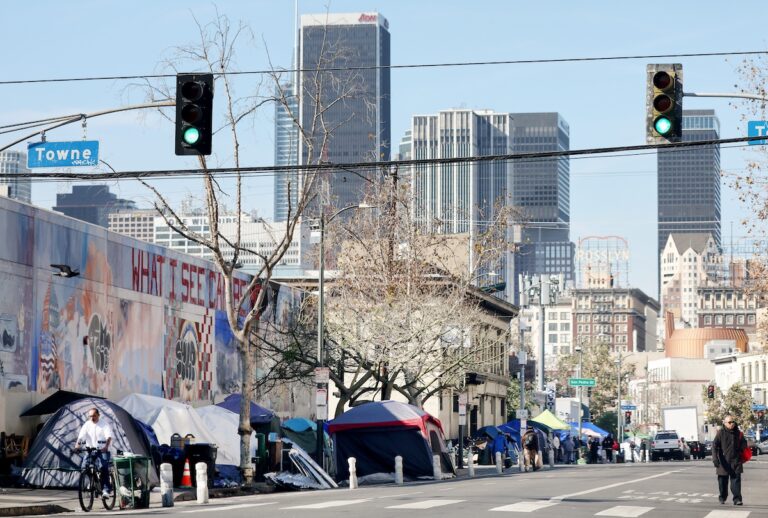
The United States is facing a homelessness crisis—and the situation is worse than ever before. At the end of 2024, the U.S. Department of Housing and Urban Development calculated a total of 770,000 total homeless people, which was an 18 percent increase from the beginning of the year.
To address the impending crisis, Pacific Legal Foundation published a new research brief: Addressing Homelessness Through Housing Reform. In the report, Kyle Sweetland, Megan Jenkins, and Mark Miller assert that the current homelessness crisis is primarily the result of longstanding housing policy mistakes. While there is a common perception that mental health or drug and alcohol abuse problems cause people to become homeless—and they can at an individual level—these factors do not explain differences in homelessness across the country.
“By addressing the lack and unaffordability of housing in their communities through reforms in the law, state leaders can ensure that current and future generations will not fall into the trap of homelessness,” the report says.

Roughly two in every three homeless people live in either an emergency shelter or transitional housing, facilities with supportive services designed to help the homeless find permanent housing within two years.
Most homeless individuals find shelter in emergency shelters or transitional housing. Even though we may see people on the streets living in tent encampments or wrapped in blankets on park benches, that is only a small percentage of the homeless population within each state.
“In many cases, it requires nothing more than removing barriers to allow more housing to be built. Research points to land-use regulations as a major impediment to building more housing in America,” Sweetland, Jenkins, and Miller said.
While the U.S. currently has roughly 770,000 homeless people, the numbers are not equally distributed from state to state. California, New York, Washington, Florida, and Texas have the largest homeless populations, with California and New York exceeding 150,000 each.
PLF’s research revealed that “[t]he 27 states that saw homelessness increase from 2007 to 2024 provided more than $98 billion in funding, or more than $9,000 per homeless person on average. However, the 24 states that saw homelessness decrease provided less than $20 billion, or slightly less than $6,400 per homeless person.”
This doesn’t make intuitive sense: If certain states are proportionally giving more money to reduce homelessness, then why are their homeless numbers increasing? It is because spending more money does not solve this public policy problem. Rather, these states face several longstanding issues, including zoning laws that make housing more expensive.
James S. Burling poignantly articulates the problems we face in his recent book, Nowhere to Live: The Hidden Story of America’s Housing Crisis. He notes that we need “pro-growth, pro-family, pro-community housing reform policy,” which Pacific Legal Foundation is actively working toward through litigation, research, and policy work.
“Zoning severely limits what property owners can do with their property. If there is a huge pent-up demand for more affordable multi-family housing, chances are it cannot be built where it is needed. And where it can be built, chances are that there will be years of delay through permit applications, hearings, denials, and appeals,” Burling says.
Referencing Gregg Colburn and Clayton Aldern’s research, Sweetland, Jenkins, and Miller assert that “[s]tructural factors, such as housing affordability and housing availability, are much stronger predictors of homelessness… For example, Charlotte, North Carolina, has kept its vacancy rate high (greater than 8 percent, as of 2019) and its homelessness low (1.4 per 1,000 people) by building enough homes to serve its growing population. Cities such as San Francisco, however, have a low vacancy rate, a high cost of living, and a high rate of homelessness (9 per 1,000 people).”

Homelessness has centralized in states that have allocated more money to treat homelessness problems, rather than less. California and New York dedicated the most money to attempting to solve the crisis between 2007 and 2024—each exceeding $34 billion in funding—and yet, they have the highest homeless populations and the biggest increases over this time period. While they have dedicated the most money, they fall within the bottom tier of housing production.
These trends are significantly problematic, and if housing availability does not improve, we will continue to experience drastic increases in homelessness. To mitigate the crisis, PLF suggests four state-level solutions:
- Establish by-right development of housing projects.
- Ensure timely decisions for permit applications.
- Limit or prohibit third-party challenges to building permits and expanded uses of private property.
- Ban impact fees that are disconnected from, or disproportionate to, real impacts.
By removing unnecessary barriers, shortening permit review processes, and limiting fees, states can expedite the homebuilding process and limit overhead costs, allowing more Americans to have less costly housing. The existing permit processes and impact fees create additional costs that eventually burden homeowners—and this needs to stop. If we want to solve the housing crisis, we need to address the structural problems that persist—and until these barriers are removed, the U.S. housing crisis will remain.
State leaders play an integral role in implementing these reforms with legislation. Through PLF’s strategic research and model policy—such as Restoring the Right to Build, Third-Party Challenges to Development Permits Act, The Permitting Approval Timeliness Act, The By-Right Housing Development Act, and the Fair Zoning Act—states can address these pressing policy issues accurately.