

Reparations Roundup: May-June 2025
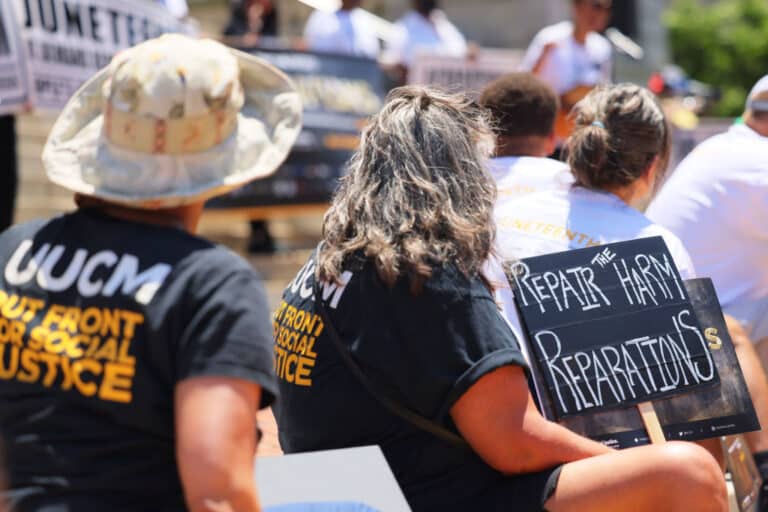
Lawmakers across the country are proposing reparations to black Americans for slavery and America’s history of racial discrimination. Proposals have included direct cash payments, grants, formal apologies from the government, and government programs with race-based eligibility.
Because certain reparations proposals would inevitably advantage and disadvantage individuals based on their race and ancestry—in violation of the Constitution—PLF is tracking the development of these policies at state and local levels. See the previous roundup here.
Here is what has happened the past two months:
New Yorkers must wait
Instead of releasing its report of findings and recommendations this summer as scheduled, the New York State Community Commission on Reparations Remedies now has until early 2027 after the state legislature gave it an 18-month extension.
The state established the Commission in 2023. It tasked it with examining the historical impact of slavery and racial discrimination and recommending appropriate remedies and reparations for that impact. The Commission must submit a report of its findings and recommendations to the legislature for consideration.
The delay will allow lawmakers to dodge politically risky votes on the Commission’s anticipated recommendations that could endanger their re-elections in the 2026 midterms. But some legislators cite California’s experience as the reason for extending the Commission’s completion date. State Senator James Sanders noted: “In California this work took two years…an additional 18 months is both prudent and necessary to ensure this process is thorough, credible and impactful.” They should add “constitutional” to that list of aspirations.
Olympia, Washington, lowers expectations for immediate payments
In 2024, Olympia, Washington, asked a consulting firm to research reparations for descendants of enslaved persons. The firm is set to present its findings to Olympia’s City Council, which includes recommendations for cash payments, down payment assistance for homebuyers, free childcare for black families, and grants for black-owned businesses.
But descendants won’t be seeing payments anytime soon. Olympia Mayor Dontae Payne advised, “This is long-term work that I see, and it’s not all going to get done in my time as mayor here.” For now, the city is just “planting seeds” to promote conversations and inspire other communities to consider their own reparations programs.
A not-so-narrowly tailored plan from New Jersey
New Jersey unveiled the results of its two-year-long reparations study, and constitutional limits appear to be the least of the Garden State’s concerns.
Among the recommendations that the report from the New Jersey Reparations Council makes is to extend eligibility to all black individuals, regardless of whether they are descended from enslaved persons. The report reasons, “[B]ecause slavery harmed both enslaved and free Black people, and because segregation and institutional racism have harmed descendants of enslaved people as well as Black people who arrived in New Jersey well after slavery, all Black people in New Jersey are eligible for reparations.”
But what about the limits the Fourteenth Amendment places on government treating individuals differently based on race? The Council has an answer to this: “[T]his Council urges New Jersey to pass a constitutional amendment reflecting the Fourteenth Amendment’s original purpose to empower lawmakers to pass remedial legislation, and also encourages reimagining federal constitutional interpretation consistent with this.” For those disadvantaged by prior race-based policies, there is no need to “re-imagine” what New Jersey’s recommendations will look like for equality.
Motor City shifts gears on its report deadline
Because it could not make its original deadline of October 2024 to release its final report and recommendations, Detroit’s Reparations Task Force received an extension from the City Council to complete its assignment. The Task Force now has until this October 31 to produce its report.
The city green-lit the creation of the Task Force in November 2021, and it was formed in February 2023. The extension to release the report comes after the Task Force already missed multiple deadlines. The voluminous amount of information and the need to properly organize it are the reasons for the delay, according to the Task Force’s co-chair, Cidney Calloway. She remarked, “We’re talking about generations of harm, and trying to compile that into a digestible report takes a lot of time. We’re trying to make sure that it makes sense, that it’s organized fairly well.”
Tulsa city property likely to be transferred to reparations trust
The Tulsa, Oklahoma, mayor, Monroe Nichols, proposed a plan to give descendants of the victims of the 1921 Tulsa race riot scholarships and housing assistance through a $100 million private trust. According to the mayor, the proposal does not require approval from the City Council, unless it involves the transfer of city property, which Nichols said was highly likely.
But Nichols won’t call the proposal “reparations.” Instead, he refers to the plan as a “road to repair,” a characterization that California’s reparation advocates also make for their bundle of reparations bills.
This isn’t Tulsa’s first attempt at remedial action. Last year, the Oklahoma Supreme Court upheld the dismissal of a lawsuit brought against the City by the riot’s remaining survivors. Among the plaintiffs’ allegations was that the racially disparate treatment they continue to face because of the 1921 incident constitutes a public nuisance. The Oklahoma Supreme Court disagreed and upheld the state district court’s determination that the survivors’ claims did not fall within the scope of Oklahoma’s public nuisance statute.
Baltimore funds on hold
The City of Baltimore is awaiting guidance from state officials regarding $5 million in its reparations fund. The funds will be distributed to the Baltimore Community and Reparations Commission for the provision of grants. Baltimore is looking to the State for directions on how much the Commission can be paid, how much can be spent on staff, and what community efforts the funds can go toward. Funding comes from the Community Reinvestment and Repair Fund, which the Maryland Office of Social Equity manages.
Maryland Gov. Wes Moore vetoed a bill in May to create a commission to study reparations.
Just getting started
The cities of Decatur, Georgia , and Chicago, Illinois, established their own reparations task forces. And Washington state allocated $300,00 for a reparations study.
.