How Environmental Litigation Affects Home Building
November 2, 2026

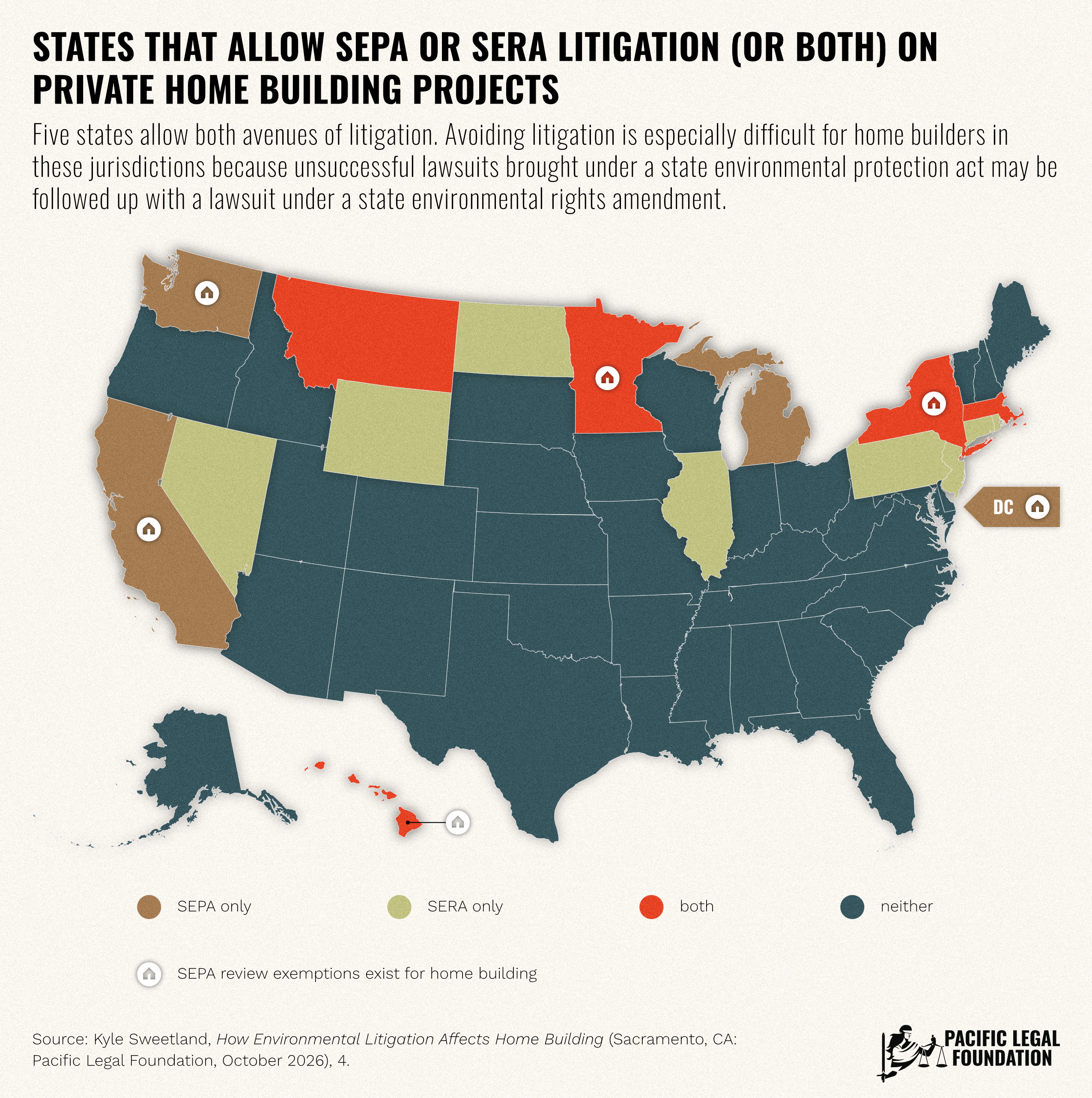
Environmental litigation under state environmental policy acts (SEPAs) and state environmental rights amendments (SERAs) can delay approved housing projects, raise development costs, and discourage construction amid a national shortage of roughly six million homes. This research in brief explains how these laws enable third-party legal challenges, identifies where such litigation is available, evaluates the effects of litigation on housing and environmental protection, and examines recent reforms.
Key Findings:
- Eight states and the District of Columbia allow SEPA litigation against private housing projects; eight states allow SERA litigation, and five states allow both.
- California Environmental Quality Act litigation typically delays California housing projects by four to five years and in 2020 affected nearly half of the state’s approved housing production.
- One Los Angeles challenge delayed 49 supportive and affordable apartments by more than four years and added nearly $9 million to development costs.
- Environmental benefits appear limited: only about 16 percent of Seattle SEPA studies required mitigation, while just 1 of 10 New York residential cases reviewed in 2024 found environmental harm.
- Recent reforms in California, Minnesota, New York, and Washington have expanded housing exemptions, accelerated review, or reduced permitting delays.
Policy Implications:
- States can accelerate housing production by exempting qualifying projects from environmental review, requiring fast resolution of challenges, limiting standing to directly affected parties, placing the burden of proof on challengers, and making unsuccessful objectors responsible for legal costs.
- The Third-Party Challenges to Development Permits Act, model legislation from Pacific Legal Foundation, would block third-party objectors from suing to stop an approved development permit unless the objector has an adjacent property and can prove by clear and convincing evidence that the approved development will create a particularized harm to the objector.