

The Supreme Court passed on lobster boat tracking. The question will return.
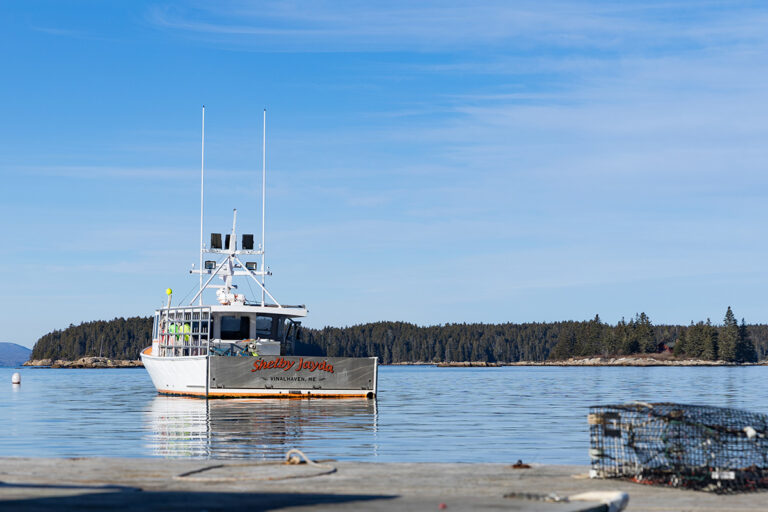
On Monday, the U.S. Supreme Court declined to hear Frank Thompson’s challenge to Maine’s rule requiring lobstermen to carry a government GPS tracker on their boats at all times. The denial leaves in place a lower court decision that lets the state track Frank, a fifth-generation lobsterman from Vinalhaven, without a warrant 24 hours a day, whether he is hauling traps or taking his family out for a day on the water.
The practical effect of the Court’s denial is clear. About 1,200 Maine lobstermen hold the federal permits that trigger the requirement, and every one of them can be tracked. The question Frank raised — whether the government can skip the Fourth Amendment’s warrant requirement because it has regulated an industry heavily — remains unanswered.
That question comes from the “closely regulated industry” exception, a judge-made rule that allows officials to search certain businesses without a warrant. The First Circuit applied the exception to lobstering, stripping the Fourth Amendment’s usual protections against warrantless searches.
A boat that doubles as a family car
Frank was two days old when he took his first boat ride. Born at home on Vinalhaven, an island of fewer than 1,300 people ten miles off the Maine coast, he rode to the mainland so his grandparents could meet him. More than 60 years later, he still lives there. He has lobstered for 55 of those years, and he runs Fox Island Lobster Company with his wife, Jean, and their two sons, who fish alongside him.
In December 2023, Maine began requiring all federally permitted lobstermen to install a GPS tracker on their vessels and never remove it. The device records the boat’s position every minute while it moves and every six hours while it sits at the dock. Lobstermen who refuse can lose their licenses. All this, even though they already report where and when they fish under rules that predate the tracker.

But on an island, a boat often does the work of a family car. Frank has carried neighbors to the mainland for medical care since 1978. About five years ago, he raced his pregnant daughter-in-law across the bay, and his granddaughter was born minutes after the family reached the hospital. Under the rule, the tracker logs every one of those trips, along with every family outing.
Frank also sees a cost beyond privacy. After 60 years on the water, he knows where the lobsters are — proprietary knowledge his family has built over generations. Combined with his daily landing reports, he said, the tracker shows the state where he fishes “every second.”
“It’s supposed to be a free country,” Frank said. “But where’s the freedom in this?”
A doctrine that runs backward
The Fourth Amendment requires a warrant before the government searches private property, and the Supreme Court has long held that this applies to businesses as well as homes.
Since the 1970s, though, the Court has recognized a handful of closely regulated industries where a long history of government oversight means owners don’t have the same level of property or privacy protections. Officials can inspect those businesses without a warrant as long as there is a substantial government interest, a need for warrantless searches, and enough limits on officials’ discretion to stand in for a warrant.
The Fourth Amendment exists to limit what officials can do. The closely regulated industry doctrine flips the Constitution on its head. Under the doctrine, the more rules the government writes for an industry, the fewer rights the people in it keep.
The Supreme Court meant the exception to stay narrow. In City of Los Angeles v. Patel (2015), the justices warned that if general regulation were enough, it would be “hard to imagine a type of business that would not qualify.”
Lower courts have run the other way. They have classified pharmacies, massage parlors, day care centers, nursing homes, jewelers, barbershops, and rabbit dealers as closely regulated. A friend-of-the-court brief from the Cato Institute collected 25 such industries, and the American Farm Bureau Federation warned that the First Circuit’s reasoning could reach farms and ranches.
But the justices have recently strengthened Fourth Amendment protections in certain cases. In United States v. Jones (2012), a unanimous Court held that attaching a GPS tracker to a suspect’s car is a search. In June, the Court held 6-3 in Chatrie v. United States that obtaining a person’s location history through a geofence warrant is a search. Justice Neil Gorsuch wrote separately to urge the Court to ground such cases in property rights rather than expectations of privacy. Protection for location data has grown for criminal defendants and cell phone users. Frank’s boat sits in the gap between those decisions and an exception that predates them. A lobsterman accused of nothing has less protection from a GPS tracker than the suspect in Jones.
The question will come back
 The next challenge may not come from a lobsterman. A farmer, a pharmacist, a barber, or anyone else in a field that courts have labeled “closely regulated” could face the same warrantless search and bring the same question back to the Court. The federal appeals courts already disagree about how far the exception reaches, and that disagreement will only grow as tracking technology gets cheaper and regulators get bolder. Sooner or later, the justices will have to choose a rule.
Frank, meanwhile, is still on the water, and the tracker on his boat still reports his position every minute.
“I’d like to have a few years — what I’ve got left — not looking over my shoulder,” he said.
A right that disappears once the government regulates a person enough is not much of a right. PLF will keep bringing these cases until the Supreme Court says so.