

Victory after two decades: Florida Supreme Court upholds victory for Shands family
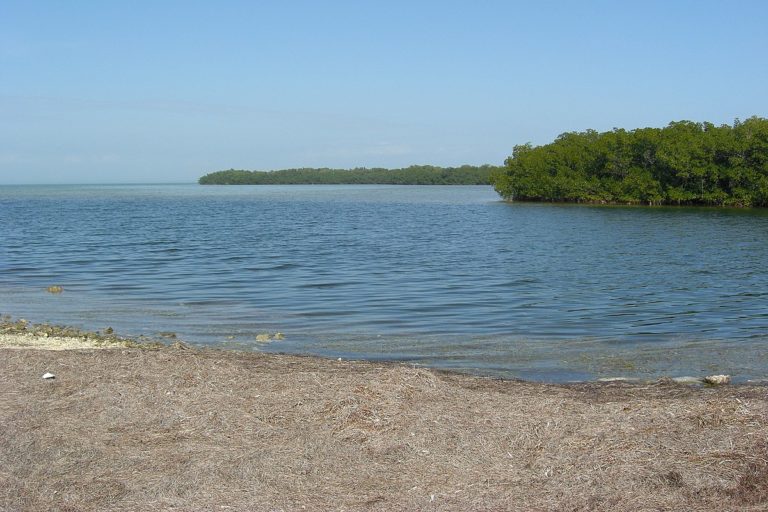
After 20 long years of legal battles, the Shands family has won their fight for justice. Last week, the Florida Supreme Court declined to review a lower court decision that vindicated the property rights of Rodney Shands and his siblings, paving the way for the family to finally make use of the island that bears their family name.
In 1956, Dr. R.E. Shands purchased what was then called Little Fat Deer Key from the federal government. Dr. Shands was a distinguished physician, known for operating Shands Hospital with a policy of treating all patients regardless of their ability to pay, years before Medicare and Medicaid existed. During World War II, he served as a military surgeon and demonstrated extraordinary compassion during the Battle of Okinawa, where he treated wounded soldiers from both American and Japanese armies with equal care. Dr. Shands’ accomplishments were so notable that more than 30 years after his death, Congress and the State of Florida officially renamed the small island he purchased “Shands Key” in his honor.
Dr. Shands had dreams of using the 7.9-acre island to build a vacation retreat — a spot where he could spend time with his family and appreciate the beauty of the Florida Keys. Tragically, Dr. Shands died in 1963 before realizing his vision, leaving the property to his wife and eventually to their four children.
From family retreat to legal quagmire
When the Shands children were finally ready to develop the key in 2004, they discovered that government regulations had transformed their island into a municipal nature preserve—effectively stealing their property like thieves in the night. Originally zoned to accommodate seven homes—one per acre—the property had been rezoned in 1986 to allow just one dwelling unit per ten acres. For their 7.9 acre property, this meant effectively zero development potential.
The regulations were so restrictive that when the family simply sought a permit to build a small dock for island access, city officials declared that “due to the quality of the habitat on this island, development permits cannot be issued.” The family was left with land they were told they could use for only minimal camping or beekeeping—uses that were practically impossible without even basic infrastructure like a dock.
Rather than pay the Shands family for confiscating their property rights, the city offered Transfer of Development Rights (TDRs)—government-issued certificates that property owners can theoretically sell to developers building elsewhere. When the family challenged the city’s decision through an internal administrative process, a Special Master concluded that the regulations constituted a taking and recommended that the city either allow the family to build one home or purchase the property for $3 million.
Despite the prudent recommendation, the Marathon City Council rejected both recommendations by a 3-2 vote.
That’s when the family — led by retired judge Rodney Shands — sued in state court.
A constitutional fight
When government regulations strip away all meaningful use of private property, the Fifth Amendment requires just compensation. Florida’s Third District Court of Appeals affirmed this principle in its precedent-setting en banc decision, ruling that the city had “regulated away all actual use of the property” and was therefore required to compensate the Shands family.
Crucially, the court held that the city’s TDR system was irrelevant to determining whether a constitutional taking had occurred. Governments cannot avoid their obligation to pay just compensation by creating paper alternatives that offer no real use of the property itself. When officials want to preserve private land as a nature preserve, they must pay for that public benefit rather than forcing individual property owners to subsidize it.
This victory creates important protections for property owners throughout Florida. It establishes that governments cannot simply impose development restrictions that destroy property values and then claim that transferable development rights satisfy constitutional requirements for just compensation.
The Shands family’s two-decade legal battle demonstrates remarkable perseverance in defending constitutional principles that Dr. Shands himself embodied—fairness, justice, and treating people with dignity regardless of their circumstances. Their hard-fought victory ensures that Florida property owners can continue to rely on constitutional protections that prevent government from taking private property without paying for it—no matter how creative the bureaucratic workarounds might be.