

With Jarkesy’s dire consequences unfounded, restoring due process is now both essential and manageable
In 2024, the Supreme Court handed down its ruling in SEC v. Jarkesy and held that when federal agencies seek to punish Americans, those Americans have the right to have their case heard by a real judge and jury—not the agency’s own in-house tribunal.
Some legal commentators predicted catastrophe. And some law professors warned the decision threatened the federal government’s capacity to do its “most basic jobs.” One widely read analysis warned of “generational upheaval” in government practice, with hundreds of thousands of agency adjudications thrown into question.
Two years later, the sky hasn’t fallen. And new research published by Pacific Legal Foundation shows that critics had the numbers wrong.
What makes a right ‘private’
The federal government conducts more than 900,000 agency adjudications every year. The vast majority—about 98%—deal with what are called “public rights,” or entitlements granted by government, such as Social Security benefits, immigration status, and veterans claims. These cases are beyond the scope of Jarkesy and will stay exactly where they are.
That leaves about 13,000 adjudications—1% to 2% of the total—that could be affected, even under the most expansive reading of the ruling. That includes about 1,900 agency enforcement actions that should, without question, be moved to independent courts. That’s because those adjudications concern private rights—not benefits the government created and can take back, but the fundamental rights to life, liberty, and property that belong to every American regardless of what any agency says.
The 1% that matters
This means that the only “job” Jarkesy threatens to disrupt is the federal government’s ability to play prosecutor, judge, jury, and collector in matters affecting the core private rights to life, liberty, and property—a disruption we should welcome.
Although the bulk of federal agencies’ adjudicative workload will remain untouched, this does not minimize the importance of the 1% to 2% of agency adjudications that are squarely affected by Jarkesy. These are the cases where the constitutional stakes are highest—where the government isn’t managing a benefit program but coming after someone’s livelihood, freedom, or property, and doing it unilaterally without an actual judge or jury.
PLF clients: The human face of agency overreach
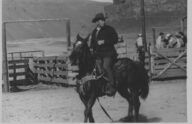
Joe Manis has been a longtime member of the North Carolina Walking Horse Association, a career he loves. When he was accused by the U.S. Department of Agriculture (USDA) of entering a “sored” horse in a walking show—a practice where a horse’s legs are purposely hurt to force a desired gait—Joe faced a steep fine and at least a one-year ban from the industry. The USDA prosecuted Joe through its own in-house tribunal, where there’s no jury and the “judge” works for the department.
In another case, Rosewood Care, a nursing and rehab facility, allowed union organizers to meet with employees in their breakroom but asked them to refrain from meeting on other parts of the property. After the union filed a complaint, the National Labor Relations Board investigated the alleged violations of the law, brought charges, and then adjudicated those charges with its own internal judge.
Many of the Americans caught in agency tribunals dispute the charges against them entirely. But guilt or innocence is only tangential to the constitutional stakes in each of these cases. Every American accused of wrongdoing is entitled to make that case before an actual judge and a jury of their peers—not before the same agency that investigated and prosecuted them.
These are the 1% to 2% of agency adjudications annually that must be moved to federal court.
State agencies play by the same broken rules
While Jarkesy affects only federal enforcement, the same denial of basic rights takes place at the state level too. State governments have their own state agencies that have their own in-house adjudication regimes.
In Louisiana, for example, the State Board of Cosmetology not only has broad power to impose fines as part of its licensing and enforcement powers, but it also has adjudicative powers as well.
When cosmetologists are hit with fines, they have two options: pay the fine or request an administrative hearing to challenge it. But these hearings are held before the Board that pockets the fines that it imposes. The Board is funded exclusively through license fees and fines, and 100% of its cases from July 2023 to June 2024 ended with the Board imposing monetary fines. Licensed cosmetologists Amy Cao, Hien Hoang, Jan Thoa Nguyen, and Linda Ho and licensed manicurist Bich Doan Vo are challenging this unconstitutional adjudication scheme that stacks the deck against them.
Wade and Teresa King are another example. Their family has ranched the same land in Washington state since the 1950s. When the state’s Department of Ecology hit them with more than $267,000 in fines—and an estimated $3.7 million in compliance costs—for digging stockwater ponds on their own property, the Kings had no path to a jury trial. Washington law forced them into an administrative tribunal, with no mechanism to transfer the case to a real court. The Kings deny that their stockwater ponds are regulated wetlands in the first place, and they’re fighting for the right to make that case before a jury.
Taking the fight to lawmakers
Litigation can vindicate these rights and set lasting precedent. But legislatures don’t have to wait for the courts. Pacific Legal Foundation’s Restoring the Right to Trial Act would restore the guarantee of defendants’ “day in court,” allowing them to “remove” administrative proceedings to a court of law with a jury where appropriate.
When a state agency comes after someone’s liberty or property, that person should have the right to demand their day in a real court. That’s the bare minimum of what the Constitution and the due process of law require.