

Anchorage Daily News: The day the music lived
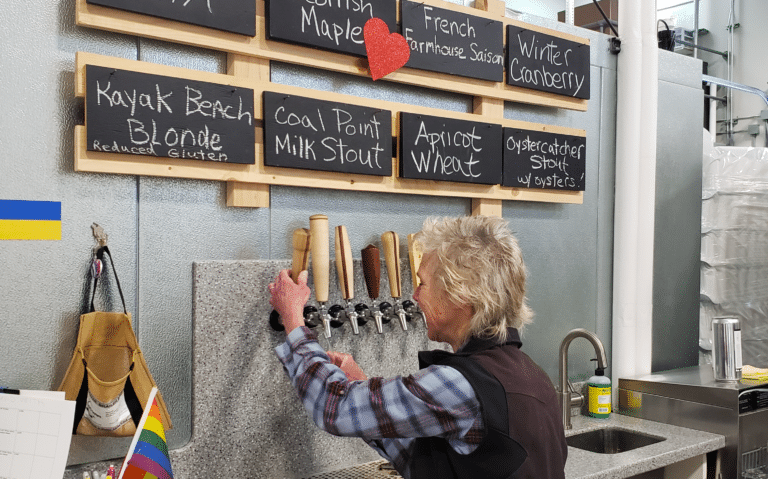
On a summer evening in Alaska, it’s not unusual to want a drink while enjoying some entertainment — a local musician, maybe a screening of a classic summer movie like “The Goonies” or “Jaws.” If you walk into a bar, you might be in luck. But until recently, if you walked into a brewery or winery, chances are you’d be out of luck.
Not because these venues don’t want to host entertainment for customers, but because the state restricted them from doing so. Prior to 2024, breweries and wineries were prohibited from providing entertainment on their premises. A legislative rewrite of the alcohol code threw these businesses a few breadcrumbs: It allowed them to host up to four events per year. For each of those events, breweries and wineries had to first obtain a permit, which of course came with fees and discretionary approvals. Bars, on the other hand, did not face any such limits.
This scheme was the heart of a lawsuit brought by Zip Kombucha, Sweetgale Meadworks & Cider House and Grace Ridge Brewing against Alaska’s Alcoholic Beverage Control authorities. Represented at no cost by the Pacific Legal Foundation, the businesses’ claim was simple: The state created a two-tiered system of free speech and economic liberty, and breweries and wineries were stuck in the wrong tier.
Last month, a trial court sided with these businesses, ruling that the law unconstitutionally targeted breweries and wineries in order to protect their perceived competitors. The state will not appeal the decision.
Had the court ruled otherwise, breweries and wineries would essentially be prohibited from allowing live music, performances, TVs and dancing in the spaces where their products are consumed. Bars, on the other hand, faced none of these restrictions. Supposedly, the state’s justification for this distinction was public health and safety but its rules didn’t apply evenly. Instead, they singled out one category of business and burdened it with rules that don’t exist for others.
Although the 2024 rewrite of the alcohol code increased the number of events breweries and wineries could hold — from zero to a whopping four — this wasn’t a meaningful fix. It required a permission slip in the form of a Live Music and Entertainment Permit. Each application cost money, had to be submitted days in advance and could be denied without explanation under a vague “best interests of the public” standard. Worse, there was no clear path for judicial review if permission was denied.
Remember the townspeople in the movie “Footloose” who didn’t let the kids dance? Town officials didn’t want the kids to have fun because they believed it was dangerous; in Alaska, state officials didn’t want brewery and winery customers to have fun lest they pull business away from bars.
The real-world consequences of this capricious law are easy to see. Zip Kombucha once operated under a restaurant license, where it could host open mic nights, dance lessons and the like without incident. When it transitioned to a winery license, all of that had to stop — not because the events became unsafe or unruly. The music didn’t get louder. The patrons didn’t get rowdier. The law just flipped a switch from “yes” to “no” when Zip stopped serving food and had to change licenses.
It’s striking how disconnected the entertainment restrictions are from their stated purpose. Alaska’s alcohol laws explicitly claim to promote health and safety. Yet the state allows unlimited live entertainment at bars while banning the same activity at breweries and wineries. If music or trivia truly posed a public danger, you would expect consistent rules across the board. Instead, the law drew arbitrary lines that made sense only as protection for specific business models. The trial court recognized that and declared economic protectionism an illegitimate government interest.
The Constitution — both federal and Alaska’s own — exists to prevent precisely this kind of government overreach. The First Amendment protects expressive activity, including live music and performances. It also guards against systems that require citizens to beg the government for permission before speaking. Conditioning a business license on the surrender of those rights turns regulation into coercion: You can keep your license but only if you stay quiet.
There’s also a fundamental fairness problem. Breweries, wineries and bars are all licensed retailers selling alcohol for on-premises consumption. Treating one group as uniquely dangerous while giving others free rein violates the principle that like cases should be treated alike. These small businesses aren’t asking for special privileges. They’re asking for the same freedom protected by the federal and state constitutions, freedoms their competitors have always enjoyed.
If the state is truly concerned with public safety where alcohol is consumed, it must justify its restrictions honestly and apply them evenly. If it can’t, the Constitution demands a rethink. The breweries and wineries correctly asked the court to restore a simple principle that the legislature turned a blind eye to: The government doesn’t get to pick winners and losers in free expression and hide behind the cloak of licensing.
This op-ed was originally published in Anchorage Daily News on February 17, 2026.