

In 1979, Bill Slayden began a small plumbing business out of his garage in Alaska. Over 40 years, his hard work grew Slayden Plumbing & Heating, Inc., into a leading mechanical contractor employing over 60 people. Today, the vast majority of Slayden’s revenue comes from large-scale federal construction projects, thanks to the company’s skilled workforce and record of delivering services on time and within budget.
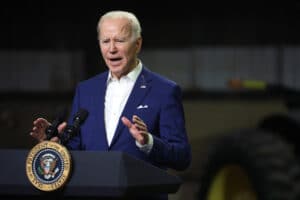
But when President Biden signed Executive Order 14063 in 2022, he torpedoed Bill’s business. The order directed all federal contractors to enter project labor agreements (PLAs)—collective bargaining agreements with unions—to even compete for large-scale federal construction projects. The Federal Acquisition Regulatory Council turned this into a binding regulation that took effect in January 2024. And the Trump administration is continuing to enforce this policy without change.
As a subcontractor, Slayden has no right to negotiate these union agreements. The company must sign contracts crafted entirely by others, with no leverage or negotiating power. The mandate has forced Slayden into a situation where its employees must affiliate with, and pay dues to, unions—something they do not want to do. Slayden offers paid holidays, sick leave, a generous 401(k) match, significant medical coverage, and profit-sharing bonuses, all of which have led employees to consistently choose independence.
The mandate forces Slayden to choose between competing for federal work and honoring its employees’ preferences. Slayden has already withdrawn bids for two projects at Joint Base Elmendorf-Richardson. The company continues to lose opportunities while the rule remains in place.
Both the Biden and Trump administrations have claimed authority under the Procurement Act to impose this mandate. But Congress only authorized the executive branch to oversee the government’s internal procurement process—not to impose regulatory mandates on contractors’ labor policies that Congress never contemplated or approved. And if the Procurement Act is the blank check the president claims, it violates the constitutional prohibition against delegating lawmaking power to the executive branch.
Slayden filed suit to challenge the mandate as exceeding statutory authority and violating the non-delegation doctrine. The company is fighting to restore both its right to compete for federal work and the proper separation of powers between Congress and the president.
What’s At Stake?
- The executive branch cannot exercise powers that the Constitution and Congress have not granted. The Procurement Act allows the President to manage federal property efficiently—not to impose sweeping labor policies that Congress never contemplated or approved.
- The Constitution forbids Congress from giving away its lawmaking power to executive agencies. When unelected officials write binding rules without clear legislative limits, they undermine democratic accountability and threaten the individual liberty that the separation of powers was designed to protect.