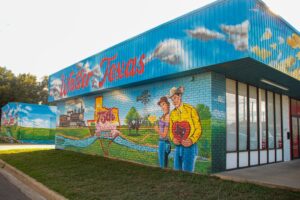


Kansas city wastes over $800,000 ordering local restaurant owner to abandon mural
A Kansas entrepreneur’s First Amendment lawsuit may present one of the most unconventional stories the U.S. Court of Appeals for the Tenth Circuit hears this year. Restaurant owner Steve Howard sued the City of Salina for violating his free speech rights after city officials ordered him to abandon a sci-fi-inspired mural on the side of his small business. The City alleges that Howard’s mural violated local signage laws by including burgers—and it’s reportedly spent over $800,000 in legal fees trying and failing to convince the courts of its claim. Today, Pacific Legal Foundation filed an amicus brief in support of Howard’s lawsuit.
A mural for the Cozy Inn
Howard runs the aptly named Cozy Inn, a restaurant that seats six and offers just three menu items: burgers, chips, and sodas. It may be a modest operation, but the restaurant is a beloved local fixture that has been serving onion-decked sliders to Salina residents since 1922.
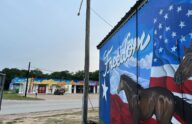
After a downtown revitalization effort led Salina to adopt a new identity as Kansas’s mural capital, Howard commissioned a local artist to paint the Cozy Inn’s exterior. The artist and owner decided on a playful design that featured UFO-like hamburgers among splashes of ketchup and mustard, and cheerfully poked fun at the restaurant’s liberal use of onions with the phrase, “Don’t fear the smell—the fun is inside!”
But not long after the painting began, the City ordered Howard to halt the project. Local government officials got together and decided that the artwork violated local signage laws. They claim that including burgers in the design and saying that something is inside the building transformed the mural into a regulated “sign” requiring prior government approval and subject to strict size limitations.
Howard paused work on the mural, applied for a sign permit, and kept running the Cozy Inn. The City placed his permit on hold while conducting a “comprehensive review” of its signage code and never gave him an answer.
Tired of waiting, Howard filed a federal lawsuit in February 2024, arguing that the City violated his First Amendment rights. The Kansas district court agreed—finding the City’s attempts to distinguish between murals and ads “arbitrary” and “discriminatory”—and ordered Salina officials to allow him to complete the mural. Instead, the City asked an appeals court to reconsider the ruling.
Today, friends of the court—including Pacific Legal Foundation—submitted amicus briefs in support of Howard’s First Amendment claims with the U.S. Court of Appeals for the Tenth Circuit.
Constitutional critiques
Pacific Legal Foundation’s amicus brief dissects some of the flaws in the City of Salina’s legal arguments, especially in its attempts to defend its uncodified mural-sign distinction. Despite ordering Howard to abandon his mural because the design incorporated images of a product he sells in his restaurant, the City claims that its signage code does not silence Salina residents based on the content of their speech. However, as PLF’s brief points out, claiming that the signage code is content-neutral on paper does not change the fact that government employees used it to silence Howard’s speech based on perceived commercial content.
The caveat of “perceived” commercial content is significant because the City’s signage code doesn’t lay out objective standards for what counts as an unregulated mural and what counts as a regulated sign. In fact, the code doesn’t even mention murals. Government employees decide for themselves whether speech should be silenced, then cite the signage code retroactively as confirmation of their decision, despite the absence of guidelines or limits on those decisions within the code itself.
And City officials don’t bother to hide it. During litigation, they repeatedly stated that they couldn’t determine whether proposed designs would be considered unregulated murals or regulated signs under the signage code until after they’d seen the design and assessed its relationship to any products on offer inside the building.
Silencing residents based on whether or not a bureaucrat decides their speech is commercial is an arbitrary and capricious exercise of power—and exactly the type of abuse the First Amendment is designed to defend against.
PLF’s amicus brief argues that the government violates the First Amendment every time it restricts commercial speech for “aesthetic” reasons or otherwise attempts to exclude it from the First Amendment’s protections. Both commercial and non-commercial speech are core forms of expression that deserve the Constitution’s full defense.
What’s next?
The City’s crusade has already cost Salina taxpayers over $800,000 in legal fees. Many residents, including a former mayor, have provided comments to local media supporting Howard or simply critiquing the City. But despite objections from all sides, the local government appears determined to defend its flawed reasoning no matter the cost.
Howard was right to take the City to task over its First Amendment violations, and the Kansas district court was right to rule in his favor. Now, the Tenth Circuit will have the opportunity to affirm the Constitution’s protections for free speech.