

Sheetz after Sheetz: An epilogue from El Dorado County

When George Sheetz asked for permission to place a modest manufactured home on his rural property in El Dorado County, California, the County demanded that he pay $23,420 for county-wide traffic improvements before it would say yes. The fee was not calculated by asking what traffic impacts George’s home would actually cause. It came from a countywide schedule adopted through the County’s General Plan, which makes property owners asking for new residential development pay for the traffic costs caused by commercial development. George paid under protest, built his home, and challenged the fee as an unconstitutional condition on his right to use his property.
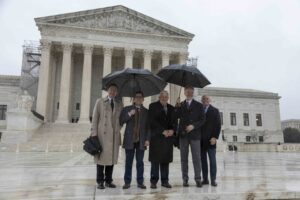
That challenge became Sheetz v. County of El Dorado, a case that reached the United States Supreme Court and produced a unanimous rule: the Constitution’s limitations do not disappear when a legislature uses the land planning process as a tool to extract money from owners. The Court held that the Fifth Amendment “prohibits legislatures and agencies alike from imposing unconstitutional conditions on land-use permits.” The Court vacated the California Court of Appeal’s earlier decision that had exempted legislatively imposed development fees from the established Nollan/Dolan requirement that any demand tied to an owner’s request to develop property must be logically related to the development and proportional to any proven impacts the project may cause.
That was the central victory in Sheetz and will have far-reaching impacts on property owners across the nation. Before the Supreme Court’s decision, many courts treated generally applicable impact fees differently from ad hoc permit conditions. If a planning official demanded land or money from one applicant, Nollan and Dolan applied. But if the same demand was embedded in an ordinance or fee schedule, several courts said the Constitution had less to say.
Sheetz rejected that distinction. The Constitution protects property owners from unconstitutional conditions imposed by government, not merely from unconstitutional conditions imposed by one branch of government rather than another.
The Supreme Court, however, left important questions for another day. It did not decide how specifically a class-based impact fee must be tailored, whether a fee imposed on a class of properties must be measured in the same way as a condition targeted at a single parcel, or how the lower courts should evaluate a scheduled impact fee after Nollan and Dolan are brought back into the analysis. Justice Neil Gorsuch wrote separately to emphasize that the same constitutional standard should apply whether the government acts against “the many” or “the few.” Justice Brett Kavanaugh, joined by Justices Elena Kagan and Ketanji Jackson, wrote separately to emphasize that the Court was not deciding whether reasonable formulas or schedules may be used to assess the impact of classes of development.
On remand, the California Court of Appeal took the latter path. It acknowledged that Sheetz required Nollan/Dolan review and even concluded that Justice Gorsuch best stated the law, but the court upheld the County’s traffic impact mitigation fee anyway. The court concluded that the fee had an essential nexus to the County’s interest in reducing traffic congestion and that the County’s formula satisfied rough proportionality because it relied on traffic studies, growth projections, geographic zones, and class-based estimates of trip generation. In doing so, the court effectively transformed Dolan’s “rough proportionality” requirement into a deferential review of the County’s methodology, rather than its impact on an individual owner. It held that the County met its initial burden by using what the court viewed as a valid method for imposing the fee.
That result was disappointing. The concern George raised from the beginning was not that local governments can never charge development fees. They can. But only if they do it in accordance with the Constitution. The problem was that the fee required him, as a condition of building one home, to pay a fee designed to subsidize other developments, including new commercial projects. That concern did not disappear merely because the County paid a consultant to comment on the general relationship between population growth and new commercial development, or because the County placed the fee in a generally applicable legislative schedule. A formula can be reasonable. But a formula can also obscure the government shifting the burdens for alleviating increasing traffic caused by others onto owners like George who had nothing to do with that.
The California Supreme Court was apparently uncomfortable with the decision as well, because it ordered the appellate opinion to be “de-published,” which rendered it non-citable and non-binding in California courts, robbing it of all precedential value to the government.
The case then returned to the U.S. Supreme Court in a second petition asking whether the Takings Clause’s proportionality rule allows the government to condition issuance of a residential building permit on a requirement that the owner pay for impacts attributable to another class of development. Unfortunately, the Court denied the petition, leaving that question for another day, in another case.
So what remains to be done?
A great deal. The Supreme Court’s Sheetz decision remains a landmark. It put a definitive stop to the legislative-exaction loophole. As a result, government may not avoid the Constitution simply by requiring owners to pay an exaction in a generally applicable ordinance, fee schedule, or ballot measure. That principle matters far beyond El Dorado County. It affects housing fees, transportation fees, park fees, affordable-housing exactions, and every other permitting system that conditions the right to build on the surrender of money or property.
But the epilogue in El Dorado County is revealing. While George’s own refund claim was rejected in his case, other El Dorado County traffic-fee litigation produced a very different practical outcome.
In Austin v. County of El Dorado, Thomas and Helen Austin challenged the County’s compliance with the California Mitigation Fee Act’s five-year findings requirement. The Superior Court found that the County had not made the required findings for several impact-fee funds. In reviewing roughly 1,000 pages of County materials, the court found no explicit or implicit consideration of the required Government Code section 66001(d) findings, no meaningful public notice that five-year findings were being considered, and no adequate finding demonstrating the required reasonable relationship between the fee and its purpose. The ruling treated those findings as more than paperwork: they are the statutory mechanism that prevents local governments from retaining development fees without periodically justifying the continued need for them.
The County later settled the Austin litigation, agreeing to issue partial refunds amounting to roughly $9.5 million in traffic impact fees collected in 2015 and 2016—a period that includes George’s fee.
And one final twist should not be missed. In a sister case, Alliance for Responsible Planning v. Taylor, a group of property owners successfully challenged a different provision of the El Dorado’s traffic impact fee program on the same grounds that Sheetz challenged the residential fee. There, California’s Court of Appeal held that a provision requiring new development to fund cumulative traffic improvements beyond its own impacts violated the unconstitutional conditions doctrine.
That decision remains a published California precedent. Put simply: the County-friendly Sheetz remand opinion is not binding precedent, while Alliance—which recognizes that government cannot make new development pay for more than its fair share—still is.
That makes Sheetz less an ending than a beginning. George’s case closed one constitutional escape hatch. The next generation of cases must ensure that the rule has teeth: impact fees may be imposed through legislation, but they still must be tied to the impacts of the development that triggers them. The public may fund public infrastructure. New development may be asked to pay for the burdens it creates. But the Constitution does not allow the government to use a building permit as the collection point for costs that belong to everyone.