

The Docket: May 29, 2026

The Docket is PLF’s weekly newsletter covering the cases, clients, and policy battles shaping the future of liberty in America. You can catch up on last week’s Docket here and subscribe below to receive future editions in your inbox.
PLF’s Anastasia Boden launches a new podcast, In Dissent; a Honolulu retiree files a lawsuit challenging $600,000 in fines over a website error; and the owners of two California malls petition the U.S. Supreme Court to restore their rights in the face of state-compelled speech.
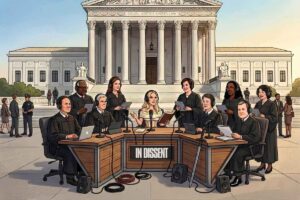
Introducing In Dissent with Anastasia Boden
PLF constitutional scholar and senior legal analyst Anastasia Boden launched a new podcast earlier this week. Season one of In Dissent traces the founding ideals of the Declaration of Independence from the revolutionary moment of their birth to the courtrooms where they’ve been tested, twisted, and sometimes abandoned.
Each episode pairs vivid historical storytelling—a man riding through the night to break a deadlocked vote, a printer setting type for a document that could get him hanged—with landmark Supreme Court cases that reveal the distance between America’s founding promise and its legal reality.
Honolulu fines retiree $600,000 for advertising a rental
When a car crash hospitalized 83-year-old Honolulu homeowner Sandra May, the last thing on her mind was her rental listing. She had been in and out of the hospital for months before she discovered that a website error had allowed would-be renters to inquire about short-term rentals.
That error caused her to unknowingly run afoul of a local ordinance that prohibits renting out any part of your property for fewer than 30 days. As a result, the City slapped her with $600,000 in fines, placed a lien on her home, and prohibited her from accessing any City services, even essential services like driver’s license renewal and vehicle registration.
Now, she’s fighting back with a lawsuit to challenge the City’s attempt to impose excessive fines in violation of her constitutional rights.
California mall owners ask U.S. Supreme Court to strike down state’s compelled speech requirement
On Tuesday, the owners of two California malls petitioned the U.S. Supreme Court to strike down the State’s compelled speech requirement. They argue that a recent appellate court decision—in favor of a self-identified “eMANcipation” activist who wants to promote his inflammatory rhetoric at their private shopping centers—violates their First and Fifth Amendment rights and should be reversed.
“For nearly 50 years, California has been forcing mall owners to abandon their free speech rights and property rights in order to run a business,” said PLF senior attorney J. David Breemer. “This case provides the Supreme Court an opportunity to overturn PruneYard and put an end to decades of state-compelled speech.”
Reason: The federal government tried to spy on your financial transactions. A Texas court just said no.
Let’s say you’ve worked hard, saved money, and decided to buy a house to rent out. You want to purchase it outright, with cash, through an LLC to save thousands on financing costs and limit your personal liability. You’re not laundering drug money. You’re doing exactly what millions of Americans do every year for perfectly boring, legitimate reasons.
Should that kind of transaction be automatically treated as “suspicious” and reported to the federal government? PLF attorney Luke Wake dives into that question and more in Reason.