

The making of John Locke—and the ideas that made America
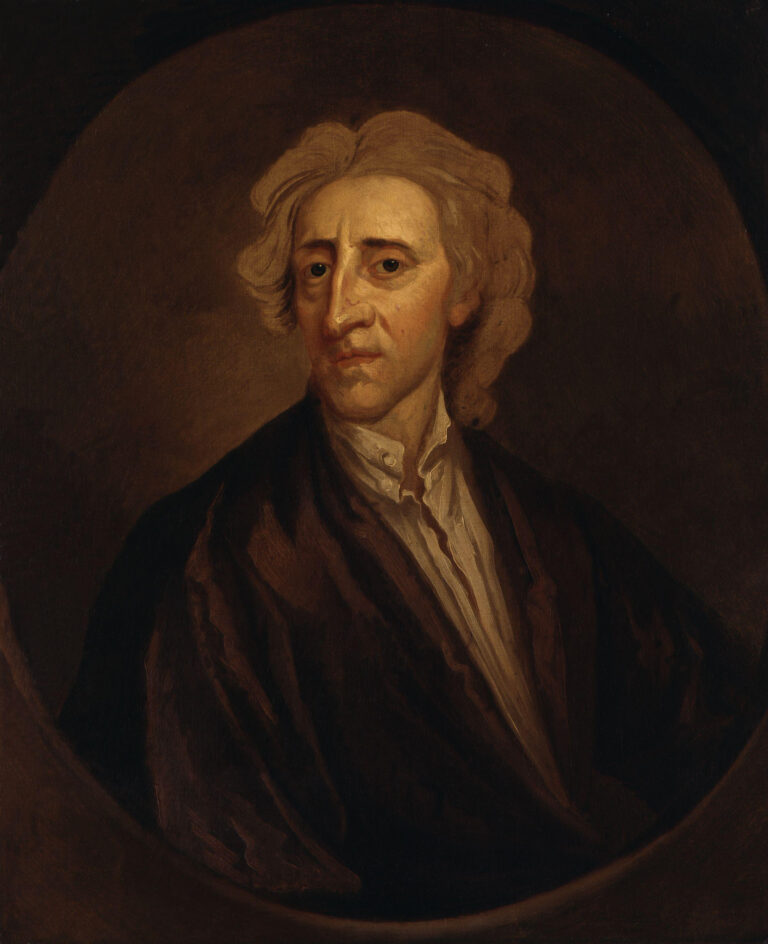
America’s 250th birthday has provided plenty of reasons to revisit the men and ideas behind the country’s Founding. But another birthday passed at the end of August with considerably less fanfare, despite belonging to a man without whom the American experiment might have looked very different.
On August 29, 1632, English philosopher John Locke was born in Somerset, England.
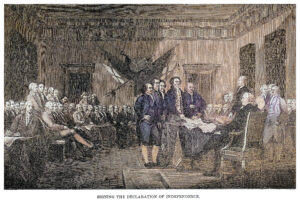
America was neither Locke’s cause nor his primary fascination. And yet, it is impossible when reading the Declaration of Independence to determine where Locke’s ideas end and the American cause begins. But Locke wouldn’t live to see his impact. He died in 1704—fourteen months before Ben Franklin, the oldest of the Founding Fathers, took his first breath.
The ideas Locke unknowingly bequeathed to America were answers to questions forced upon him by the political upheavals of his own time—questions about where power comes from, what makes government legitimate, and what rights no ruler may take away.
Locke spent much of his life searching for those answers, and the search came at a cost.
The return home
When his ship docked at Gravesend on February 12, 1689, it had been nearly six years since John Locke had stepped foot in England.
The voyage home offered a stark contrast to his departure in 1683, when Locke had left England a fugitive. Now he was arriving home as part of the entourage carrying Princess Mary to England, where she was expected to take the throne along with her husband, William of Orange. Mary was the daughter of James II—the very king whose government had sought Locke’s capture in the Netherlands.
Locke didn’t know at that moment that the ideas that made him a threat to monarchies would eventually help furnish the intellectual framework for a revolution he’d never live to see.
The England Locke inherited
From the time of his birth, Locke had a front-row seat to England’s political instability.
When Locke was ten, civil war erupted and his father took up arms against King Charles I, serving as captain in the Parliamentary army. Later, while attending Westminster, the King was executed mere yards away from where the 17-year-old was studying.
Charles I’s death did not solve England’s problems. After his execution, England abolished the monarchy and declared itself a commonwealth. When the commonwealth ultimately failed, Oliver Cromwell rose to become Lord Protector. After Cromwell died in 1658, England again descended into political turmoil.
Not yet 30, Locke had already been exposed to a lifetime’s worth of political chaos, which made the young man crave order. In a letter written to his friend in 1659, he expressed this longing, saying, “Oh for a Pilot that would steare the tossed ship of this state to the haven of happinesse.”
Eventually, when Charles II was invited to take the throne, Locke welcomed the restoration of the monarchy as a means of stabilizing the country.
During this time, England was also confronting another question—how much religious disagreement a peaceful society could tolerate.
In two essays written around the Restoration, later published as Two Tracts on Government, Locke argued that civil magistrate should have broad authority to regulate outward religious practices when disputes over them threatened the public peace. The young Locke who had watched competing claims to liberty dissolve into war was willing to sacrifice a considerable degree of individual freedom for order—a far cry from the Locke who inspired the Declaration.
Out of Oxford
One aspect of Locke’s life that always remained consistent was his perpetual quest for truth and knowledge.
Locke did not equate school with knowledge acquisition and even told his friend James Tyrrell that he believed they were “rather invented for wrangling or Ostentation than to discover Truth.” Eventually, he found a scientific counterculture at Oxford that emphasized experimental philosophy. This scientific way of thinking led Locke to the practice of medicine.
While at Oxford, he treated the 1st Earl of Shaftesbury, who had come seeking help for a serious liver condition. Shaftesbury was impressed by Locke and became his patron, drawing him out of academia and into the center of English political life.
Shaftesbury was a leader in the Whig movement, which had become increasingly disillusioned with Charles II. As much as they disliked Charles II, he was nothing compared to the nightmare they believed was waiting for them if his brother, the Catholic James, Duke of York, inherited the throne.
Exclusion Crisis
Fearing both absolute monarchy and Catholicism, the Whigs, led by Shaftesbury, tried to prevent James from succeeding Charles II in what came to be known as the Exclusion Crisis.
Locke was running in Whig circles at this time, but instead of actively participating in the Exclusion Crisis, he was exploring the deeper philosophical question at hand: Why does hereditary descent give anyone political authority in the first place? More broadly, where does legitimate political authority actually come from?
As Locke pondered these questions, Sir Robert Filmer’s book Patriarcha was published, arguing in favor of the divine right of hereditary monarchies. Locke, who historians widely believe composed much of his Two Treatises on Government during this time, uses his First Treatise to dismantle Patriarcha. Locke’s Second Treatise proceeds to address the origins of legitimate power.
In his Second Treatise, Locke arrived at the radical conclusion that humans are born free and equal, possessing inherent rights that are beyond the scope of government. Governments are instituted among men with the limited purpose of guarding individual rights, but their power is legitimate only if it comes through the consent of the governed. If governments stray from their limited boundaries, the people have the right to revolution so that they may abolish and replace tyrannical governments.
It was dangerous to question the legitimacy of the hereditary political authority in England, which may be why Locke didn’t immediately publish his Two Treatises. Even his powerful friend, Shaftesbury, feared for his safety and fled England for Holland, where he died two months later.
Everywhere in search of truth
In September 1683, less than a year after Shaftesbury died, Locke fled to Holland.
Despite a lack of evidence connecting him to any wrongdoing, Locke’s political affiliations had put a target on his back. A year into his exile, Charles II had Locke removed from his studentship at Oxford. The following year, the English government included Locke on a list of alleged plotters whose extradition it demanded from Holland.
Locke was forced into hiding, staying with family friends and adopting the alias “Dr. Van der Linden.” Despite being a wanted man, Locke was still engaging with Holland’s likeminded intellectual circles, writing, and continuing to reconsider ideas he had held since his youth.
In a dramatic example, Locke went from defending the civil magistrate’s authority to impose conformity in outward matters of religious worship in Two Tracts to arguing instead for religious toleration and sharply limiting the magistrate’s proper authority over religion in A Letter Concerning Toleration.
The Locke who had once seemed so far removed from the thinker who inspired the Declaration was coming into view.
Perhaps Locke explained his own evolution best in a letter to his friend Philipp van Limborch:
For myself, who am everywhere in search of truth alone and to the best of my understanding embrace it with equal readiness whether I find it among the orthodox or the heterodox.
A new political order
Back in England, the reign of James II was turning into everything the Whigs had feared.
The birth of James’ Catholic son raised the prospect of a Catholic dynasty, prompting seven prominent Englishmen to invite his Protestant son-in-law, William of Orange, to intervene. William landed in England in November 1688, James’ support quickly collapsed, and by December, the King had fled to France—clearing the way for William and Mary to take the throne.
The Glorious Revolution paved the way for Locke to come home as part of Mary’s personal entourage. It also created an opportunity for Locke to finally publish the answers he had arrived at years earlier.
Within a year of his return, Two Treatises on Government and A Letter Concerning Toleration were published anonymously. Under his own name, he also published An Essay Concerning Human Understanding.
Locke never publicly claimed authorship of Two Treatises. When his relative, Reverend Richard King, wrote to Locke in 1703 asking what he ought to read, Locke simply wrote:
Property I have nowhere found more clearly explained, than in a book entitled, Two Treatises of Government.
Six weeks after identifying Two Treatises as his own in a codicil, Locke passed away in High Laver, England, at the age of 72.
In grateful memory
Prior to his death, Locke insisted on constructing his own epitaph. While it was written in Latin, it translates in English to:
Stay, traveller: near this place lies JOHN LOCKE. If you ask what sort of man he was, the answer is that he was contented with his modest lot. Bred a scholar, he used his studies to devote himself to truth alone.
Locke’s search for truth had transformed his own ideas. What he could not know was how far those ideas would travel after his death.
Locke’s ideas found a home in the American colonies, where his work had already become widely read by 1750.
On the eve of the Revolutionary War, Americans found themselves confronting the same questions of rights and legitimate government that Locke had wrestled with nearly a century earlier.
In Two Treatises and An Essay on Human Understanding, the American patriots found the right words and reasoning to justify revolution and articulate the principles of a new nation. America would become, in many respects, a Lockean nation.
More than 336 years after Locke published his seminal works, and 250 years after the Declaration of Independence, Locke’s ideas continue to shape the work of Pacific Legal Foundation.
The Lockean principles of equality before the law, property rights, individual liberty, and limits on government power fuel the work we do at PLF. In courtrooms across the country, PLF works to ensure that governments are held accountable when they stretch their power beyond constitutional limits.
Locke’s original Latin epitaph was placed above his tomb outside the south wall of High Laver’s modest All Saints Church and was later removed for preservation.
The only real eulogy present at Locke’s High Laver grave today is a simple plaque that reads:
In Grateful Memory of JOHN LOCKE
1632–1704. Who Lies Buried Here.
His Philosophy Guided The Founders Of The United States Of America.
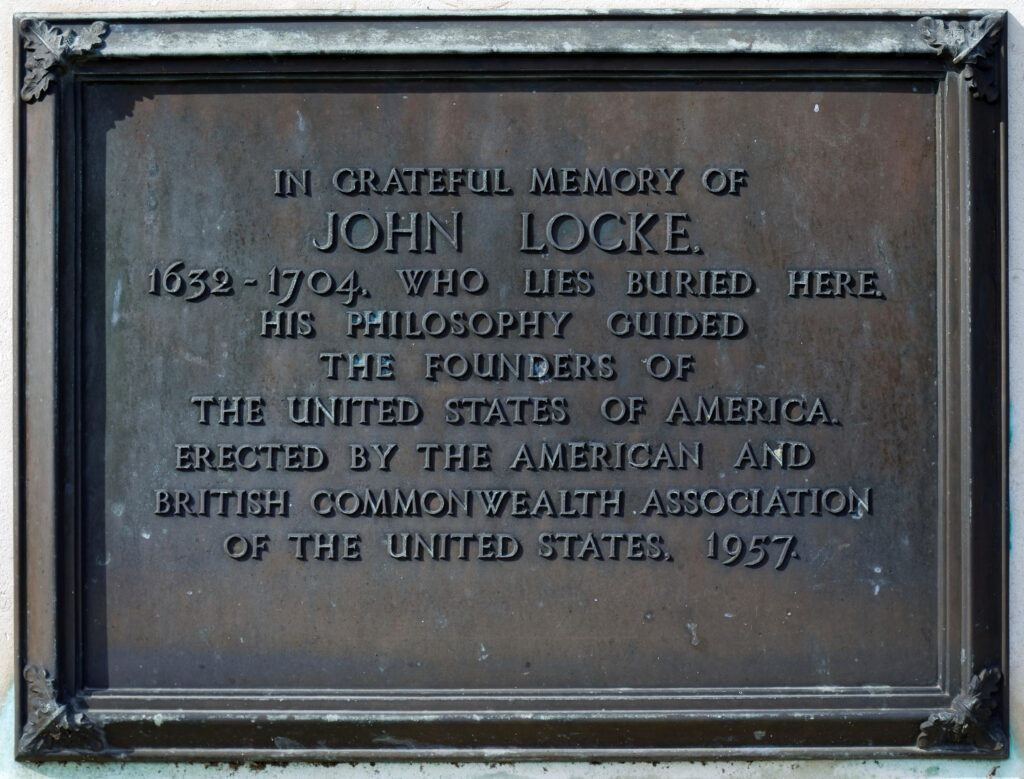
Photo: Acabashi / Wikimedia Commons, CC BY-SA 4.0