

Federal court hears case challenging state-sanctioned trespassing in New Mexico
Historically, New Mexico protected property owners’ right to restrict public access to their private land, including streambeds. But a 2022 New Mexico Supreme Court opinion gutted that right, allowing the New Mexico Game Commission and Department of Game and Fish to instead penalize landowners for posting anti-trespassing signage and fences—private rights that were previously protected.
To vindicate their constitutional rights, several New Mexico landowners sued in federal court with the help of Pacific Legal Foundation. Their claims were dismissed by the district court, so they appealed to the Tenth Circuit Court of Appeals. The Court of Appeals heard oral arguments last Friday, addressing whether trespassing on private property constitutes a taking.
New Mexico ranchers
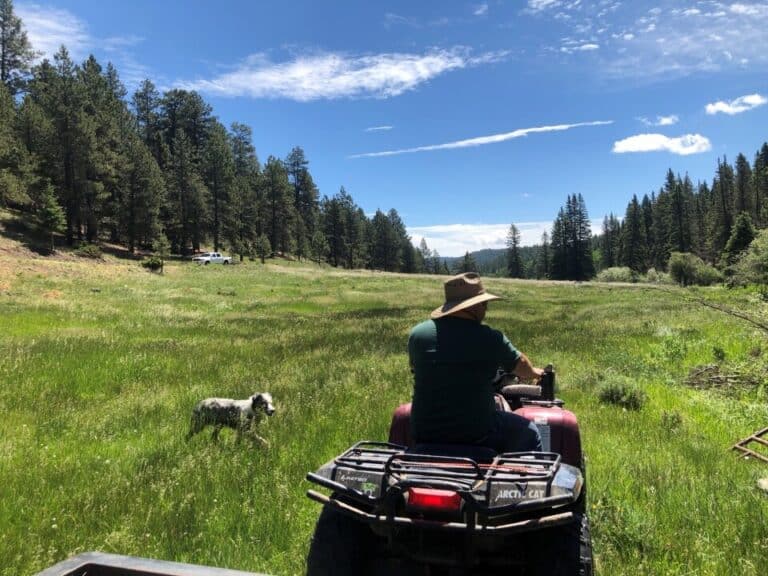
Since 1942, Lucía Sanchez’s family has owned land in Rio Arriba County, New Mexico. Their lush property includes several acres of forest and a non-navigable, knee-deep creek. Although the river is public, the streambeds along the creek are private and off limits to the public—and members of the community cannot walk or wade across private land to access it.
Several other New Mexico landowners have non-navigable, knee-deep creeks on their property, too. These landowners, including Lucía, want to protect the natural beauty of their land and preserve the fish that swim in the nearby streams.
Prior to the 2022 New Mexico Supreme Court opinion, all three branches of state government affirmed the private right to exclude the public from accessing private streambeds. The legislature passed a law protecting the right to exclude, meaning private property owners could restrict access to their land. The Commission issued a guidance order allowing landowners to post signage declaring that private right.
But the New Mexico Supreme Court held that the right to exclude the public from private land never existed in the state’s constitutional history, making it illegal for landowners to post signage or build fences around their property and allowing state-sanctioned trespassing.
The Department immediately changed course, issuing and enforcing a new regulation that makes it illegal for landowners to post anti-trespassing signage and build fences around their land. Landowners are now forced to allow state-sanctioned trespassers to walk and wade on their private streambeds.
By punishing landowners for displaying anti-trespassing laws and requiring them to allow the public to walk and wade on their private land, New Mexico state officials violated the Takings Clause of the Constitution.
But there’s another point at issue, too.
Because Sanchez v. Torrez was brought before a federal court, New Mexico state officials have sovereign immunity, meaning that they are protected from suits involving just compensation. On behalf of Lucía and other New Mexico property owners, Pacific Legal Foundation argued that the state actions constitute a taking of private property and that the Department’s regulation should be enjoined, protecting landowners’ ability to exclude the public from their land. Because the Department violated federal property rights, it cannot escape responsibility for its unconstitutional actions.
The right to exclude
During oral argument, Pacific Legal Foundation Senior Attorney Christopher Kieser argued that New Mexico’s state officials cannot enforce regulations that violate constitutional rights, such as private property protections.
“Asserting public rights over private rights constitutes a taking when just compensation is denied,” Christopher Kieser said. “New Mexico state officials cannot weasel their way out of accountability, especially when they are enforcing a law that violates the historical property right to exclude the public from access to private property.”
Despite overwhelming evidence, the prior New Mexico Supreme Court opinion said that there is no constitutional right to exclude under state law. Although that ruling is now state precedent, the court’s decision does not negate federal protection of private property, nor can it require the landowners to pursue every conceivable state remedy.
Private property rights are rooted in common law. The Court has long held that states cannot remove those longstanding rights unless they offer just compensation—regardless of which branch of government is involved.
The right to exclude is not a new right. Because the streambeds are private, no person can fish in public water accessible by trespassing on private property; there is a clear distinction between public water and private land.
The Department cannot target people who prohibit the public from trespassing on their land. “Landowners should be able to assert their right to exclude without fear of penalties and enforcement actions,” Christopher Kieser emphasized in his closing statements.
“On behalf of our clients, we are asking the Tenth Circuit Court of Appeals to permanently enjoin the Department’s regulation and allow private landowners to post anti-trespassing signage and build fences to protect their streambeds,” Christopher Kieser added.
The court is anticipated to issue an opinion in several months. In the meantime, Pacific Legal Foundation will continue to litigate these issues, ensuring that landowners have the right to enjoy their land and exclude trespassers.