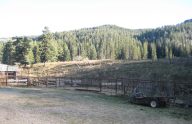


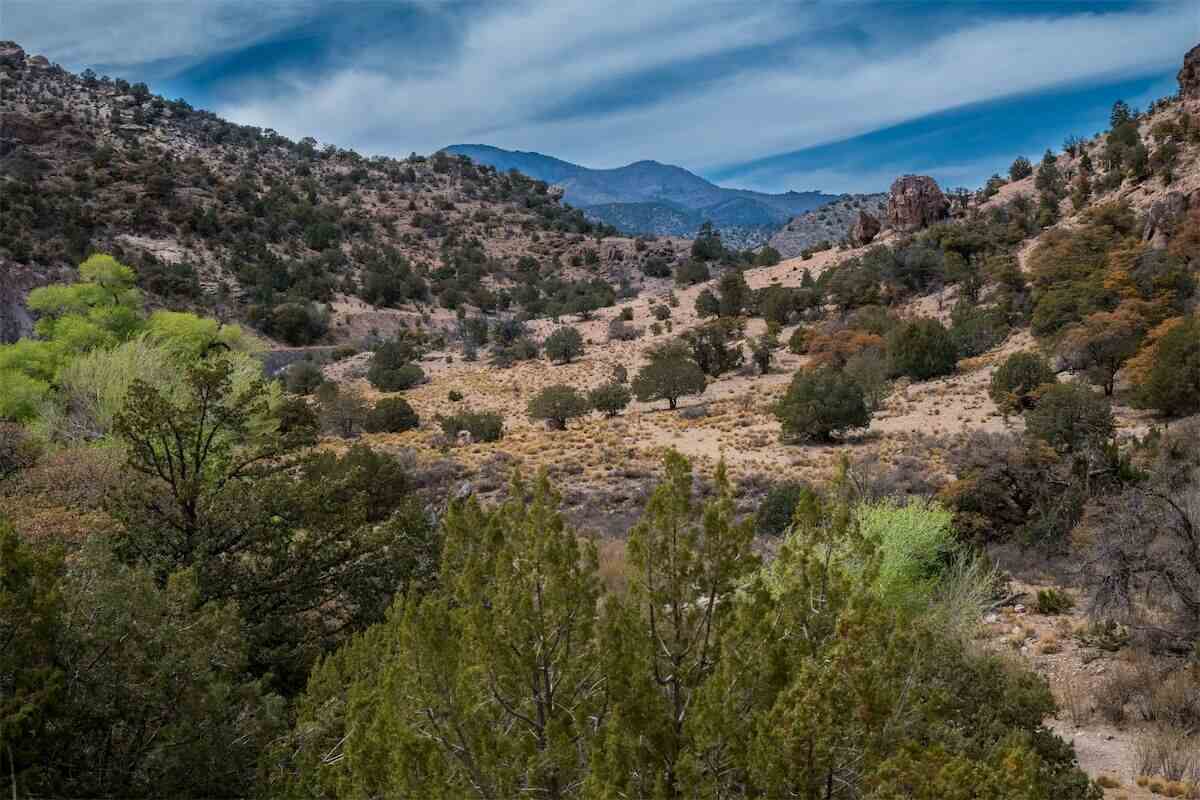
Hugh McKeen and his family have raised cattle on the rugged terrain of western New Mexico for generations. Today, Mr. McKeen’s 700-acre cattle ranch in Catron County represents his livelihood. Like all ranching families in the region, Mr. McKeen must contend with drought, wildfire, and the many other realities of raising cattle in the harsh conditions of the arid West.
Unfortunately, these hard-working ranchers must also contend with unlawful federal regulations that conjure new species and subspecies from thin air, declare them endangered, and establish draconian rules to “protect” them. In this case, it’s the so-called “southwestern” willow flycatcher.
The Willow Flycatcher is an exceedingly common bird throughout the United States. No one would claim that it is endangered. The U.S. Fish and Wildlife Service (FWS), however, claims that the “southwestern” willow flycatcher is a subspecies of the bird that must be protected under the Endangered Species Act (ESA). But the agency has not adequately explained why the “southwestern” willow flycatcher is anything more than a Willow Flycatcher that lives in the Southwest.
FWS has never established a definition for what constitutes a “subspecies”—instead, the agency makes it up as it goes along. Data that might support a subspecies determination for one species today might be rejected for another tomorrow. As a result, any predictability is lost and FWS is permitted to play a “numbers game” in which regional populations of common species may become entitled to the ESA’s significant protections, with little or no explanation as to why.
This is a microcosm of a problem that permeates the administrative state. Agencies make policy choices that dramatically affect the lives of ordinary Americans all the while insulating themselves from any scrutiny with a familiar retort: “Trust us, we’re the experts.”
Hugh McKeen’s predicament shows the real-world impact of this problem. In 2013, the FWS designated more than 200,000 acres of land as critical habitat for the “southwestern” willow flycatcher. The designation includes parts of California, Nevada, Utah, Colorado, Arizona, Texas, and New Mexico, regardless of who owns the land or how it’s used. This includes ranching land owned by Mr. McKeen and other members of the New Mexico Cattle Growers’ Association. In effect, this designation severely restricts the right of ranchers and other property owners to productively use their land in the name of protecting a subspecies of dubious provenance. And if they should run afoul of the FWS’ ever-shifting rules—even accidentally—they face potentially ruinous civil and criminal penalties.
In 2015, PLF petitioned FWS to delist the so-called Southwestern Willow Flycatcher. The petition explained that the best available science, including DNA evidence, concluded that the bird is not actually a valid subspecies and therefore has never belonged on the endangered list. PLF argued that the freedom of ranchers and property owners shouldn’t be sacrificed for the “protection” of a bird that isn’t even endangered in the first place.
FWS denied that petition in 2017, refusing to set forth an objective definition of “subspecies.” It ignored a study containing key information that contradicted its flawed subspecies claim and instead relied on its own preferred studies to guide its views on what might constitute a Willow Flycatcher “subspecies” in this particular case. Unsurprisingly, these studies confirmed the agency’s prior assumptions.
And therein lies the problem. Without clearly articulated standards for subspecies, the FWS can move the goalposts on property owners at will, imposing unnecessary and crushing land use regulations on a whim—exactly as they did in Mr. McKeen’s case.
New Mexico Cattle Growers’ Association membership is comprised of hard-working ranchers like Hugh McKeen who earn their livelihoods raising cattle. Represented free of charge by Pacific Legal Foundation, the New Mexico Cattle Growers’ Association filed a federal lawsuit challenging the unlawful ESA listing to defend livelihoods, property values, and property rights. Although the lawsuit was dismissed, PLF continues to fight for property owners’ rights and challenge government agency’s arbitrary actions across the country.
What’s At Stake?
- Agencies must not be allowed to abuse the Endangered Species Act to impose punishing regulations on property owners. ESA rules must be clear standards that are supported by facts, not bureaucratic whim.
- Sweeping delegations of lawmaking authority to regulatory agencies create problems like the ones presented in this case, violate the Constitution’s separation of powers, and transfer power from the people’s elected representatives to unaccountable bureaucrats.