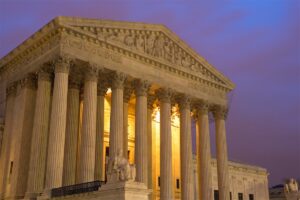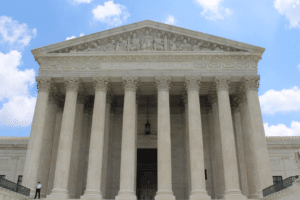


In 2024, the Supreme Court’s decision in Loper Bright v. Raimondo stripped federal agencies of the power to decide the limits of their own authority, restoring that job to the courts. For decades, agencies had been the ones interpreting ambiguous laws, including the boundaries of their own jurisdiction. That era was finally over.
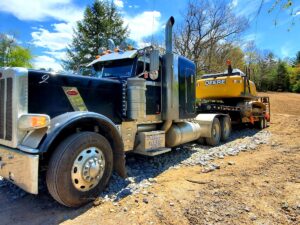
So KC Transport, a family-owned, independent trucking company, was surprised when a federal court upheld an $8,251 fine levied against it by an agency with no jurisdiction over its operations. In 2022, a federal mine inspector decided the company’s trucking facility qualified as a “mine” under the agency’s own definition of the word and was subject to regulations from the Mine Safety and Health Administration (MSHA).
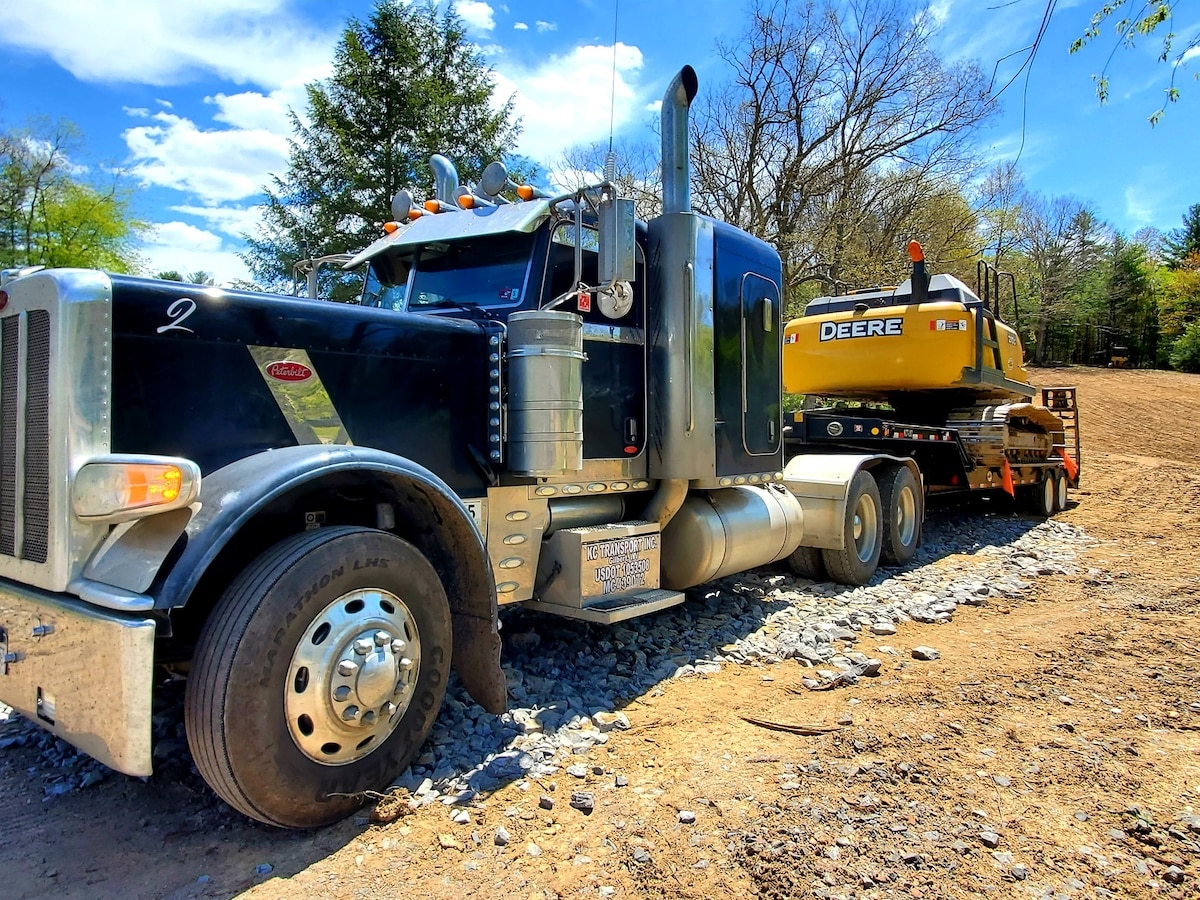
KC Transport operates a fleet of trucks and a truck repair shop in Emmett, West Virginia. It doesn’t mine anything. But the inspector showed up and issued citations for workers repairing trucks without putting blocks around the wheels.
KC Transport knew that, because it wasn’t a mine, it wasn’t subject to MSHA oversight at locations where no extraction, milling, or preparation take place. The company contested the citations before an administrative law judge (ALJ) with the Federal Mine Safety and Health Review Commission, arguing that its trucks and repair shop are not a “mine” under the Mine Act.
The ALJ disagreed, claiming the trucks and the repair shop were too connected to the mining process to be excluded from MSHA oversight. On appeal, a divided Commission reversed the ALJ’s decision and vacated the two citations. In turn, the Labor Secretary appealed that decision to the DC Circuit Court, which—in another divided decision—threw out the Commission’s ruling.
Rather than restrain agency overreach by deciding how far beyond the physical confines of mines MSHA may regulate, the court then tasked the department with deciding its own limits.
Under the Labor Secretary’s reasoning, federal jurisdiction attaches to a piece of equipment the moment it is used in mining and follows wherever it goes. By that logic, MSHA inspectors could follow equipment off mining sites and into private toolsheds, hardware stores, or diner parking lots, subjecting private citizens and businesses to surprise inspections and punishment with impunity.
KC Transport refused to let that abuse of power go unchallenged.
Represented at no cost by Pacific Legal Foundation, along with Pence Law Firm, PLLC, KC Transport asked the U.S. Supreme Court to strengthen the separation of powers by limiting MSHA’s grandiose view of its own power.
After the Loper Bright decision in 2024, the Court granted KC Transport’s petition, vacated the previous ruling, and remanded the case for the lower court to reconsider—this time, without undue deference to the agency.
In April 2026, a federal appeals court ruled that KC Transport’s West Virginia repair shop does indeed qualify as a “mine” and is thus subject to MSHA regulation. But a forceful dissent by Judge Justin Walker rejected all of the government’s arguments. The judge agreed that the Mine Act’s definition of “mine” has geographic and functional limits and that the president, not the courts, must decide disputes between two parts of the executive branch—as is the case here, where the Labor Secretary disagrees with the Federal Mine Safety and Health Review Commission.
“No amount of regulatory wordsmithing can turn a truck repair shop into a coal mine,” said Adi Dynar, an attorney with Pacific Legal Foundation.
KC Transport’s legal battle continues to challenge agency overreach and defend the separation of powers.
What’s At Stake?
- Federal courts have a duty to interpret the meaning of statutes—a duty they can neither outsource nor delegate to an agency.
- No amount of wordsmithing can turn a truck or a truck repair shop into a coal mine just because the truck happens to haul coal. The government cannot redefine statutory language to expand its regulatory authority.