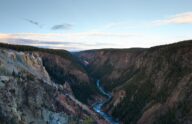



In December 2025, Tate Pulliam took a trip to Yellowstone National Park. He explored its trails and enjoyed its lakes. A young outdoorsman from Oregon, Tate had no idea his routine time outdoors would end in criminal charges.
Federal officers charged him with three petty offenses—two for fishing in Yellowstone’s rivers and a third for driving his standard pickup truck down a road that, according to park officials, was limited only to “over-snow” vehicles, such as snowmobiles.
The charges were based on restrictions imposed by a park superintendent, a career employee of the National Park Service. The superintendent claimed the authority to decide which activities were permitted within the park’s boundaries—and which were criminal.
That is not how the law is supposed to work.
The Constitution is clear: Congress makes the law, and it cannot hand over its lawmaking function to administrative agencies. This means only Congress, not unaccountable bureaucrats, can decide which actions are criminally punishable.
The National Park Service Organic Act, however, attempts to delegate lawmaking authority to the Secretary of the Interior by letting him promulgate any regulations he “considers necessary or proper” for park management and punishing any violations of those regulations with up to six months in jail. That sweeping, limitless delegation gives a single, unelected official the power to define criminal conduct. Under the Constitution, that arrangement is void.
The problem does not stop there. For a federal official to exercise significant authority like issuing regulations, the Constitution requires that the official be appointed by the president and confirmed by the Senate. That requirement ensures accountability in government. A career employee like the park superintendent does not meet that standard.
This case is not the first of its kind. In United States v. Sunseri, Pacific Legal Foundation defended a trail runner criminally charged after a Grand Teton superintendent restricted a path that had been used for years without consequence. That case exposed the same constitutional flaw: low-level park officials wielding criminal lawmaking power that the Constitution never gave them. Because Sunseri received a presidential pardon, the underlying constitutional problem—and resulting overcriminalization—remains unresolved.
Tate Pulliam’s case picked up the legal battle where Sunseri’s ended. He challenged the charges against him on the grounds that the superintendent lacked the authority to issue the restrictions, that the superintendent’s position was itself unconstitutionally established, and that the Organic Act’s broad delegation of rulemaking power to the Secretary of the Interior violates the Constitution’s separation of powers.
National parks need rules to ensure that they are properly maintained and continue to be enjoyable to everyone. But rules are effective and fair only when the punishment is proportional to the crime. The Framers of the Constitution understood that and gave the responsibility to write criminal law to the most deliberative and accountable body in the federal government—Congress.
Tate’s case has been resolved through a plea agreement, under which the government dismissed two of the three charges against him. PLF continues to fight against the unconstitutional power of unelected bureaucrats to create and enforce criminal law.
What’s At Stake?
- Only Congress can decide what is and isn’t a crime, and it cannot delegate that authority away.
- Only accountable executive officials—those appointed by the president and confirmed by the Senate—can take important actions like issuing regulations.