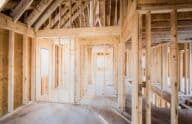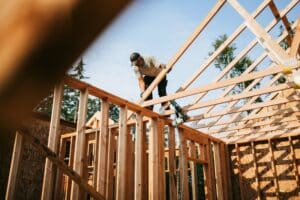


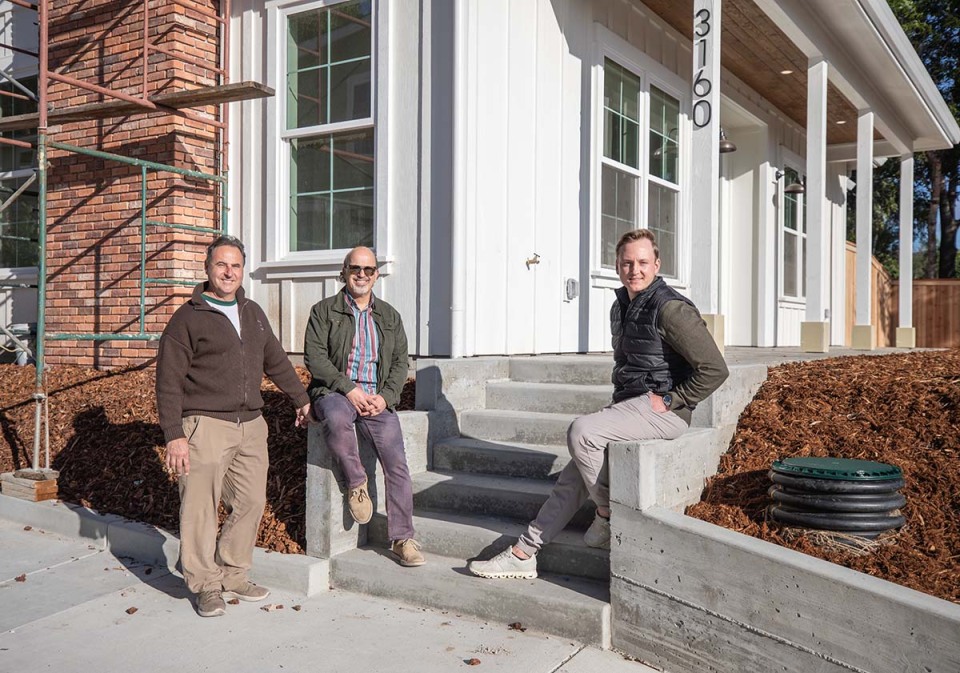
San Luis Obispo needs more homes. The City’s stagnant housing market is among the most expensive in the country, pricing out many young professionals, growing families, and would-be newcomers. To address the City’s lack of affordable housing, longtime friends John Ruda, Jordan Knauer, and Rami Zarnegar decided to build something new. They bought an uninhabitable house, demolished it, and subdivided the property to create four new homes and four accessory dwelling units for their community.
But no good deed goes unpunished. In September 2024, San Luis Obispo slapped a nearly $100,000 “inclusionary housing” fee on their project—ironically, under a policy the City adopted to respond to the high cost of housing. Ruda, Knauer, and Zarnegar were forced to choose between paying the fee or giving away one of the homes to be sold for half its worth to the City’s chosen buyers. They paid reluctantly.
This isn’t just bad policy. It’s unconstitutional.
The eyewatering $98,900 fee was an “exaction,” a condition imposed by the government on a routine permit. The U.S. Supreme Court has said that an improperly applied exaction is little more than “an out-and-out plan of extortion,” and repeatedly ruled that fees imposed on permits must be directly related to the impact and scope of a project in order to be valid. And, in 2024, the Court unanimously held that the government cannot impose extortionate fees as a condition for obtaining a building permit.
Represented at no cost by Pacific Legal Foundation, Ruda, Knauer, and Zarnegar filed a lawsuit arguing that the City can’t make housing more affordable by making it more expensive to build—and that it can’t fine property owners for problems they didn’t create.
What’s At Stake?
- The government can’t hold the right to use your property hostage so it can extract exorbitant fees. That’s akin to extortion.
- Inclusionary zoning fees make building more expensive. By definition, making something more expensive does not make it more affordable.
- The government cannot force homebuilders to pay for problems they do not create. Fees for new construction must be proportional and directly related to the impact of the development.