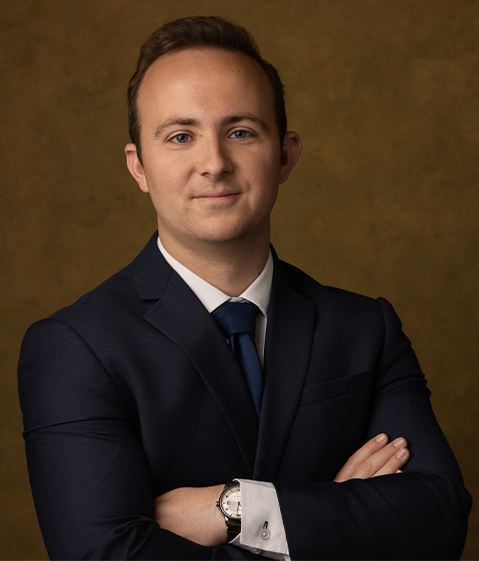



Erin Thompson is an Ohio thoroughbred horse trainer. In 2025, a sample taken from one of her horses, Motion to Adjourn, tested positive for clenbuterol, a decongestant that’s banned in horseracing without a prescription from a veterinarian. When the test result came back, Thompson was “completely baffled” and felt her “stomach just hit the bottom of the ground.” She denied ever giving it to her horses. And she does not keep clenbuterol in her stables or broader property.
Normally, a dispute over facts would go to a jury. But in thoroughbred racing, this constitutional right disappears. Every doping case in the sport is decided inside a private organization, which investigates trainers, brings charges, and decides the punishment.
Congress created the Horseracing Integrity and Safety Authority (the Authority) through the Horseracing Integrity and Safety Act of 2020, giving it power to propose rules for thoroughbred racing nationwide and to enforce them through investigations, hearings, and penalties, under insufficient oversight from the Federal Trade Commission.
The Authority’s anti-doping rules are enforced by another private entity, the Horseracing Integrity & Welfare Unit (HIWU). Through HIWU, the Authority investigated and charged Thompson. A private arbitrator then suspended her for two years and fined her $25,000—without a jury or an independent court ever hearing her case.
Thompson is fighting back. With free representation from Pacific Legal Foundation, she is challenging the sanctions through the FTC’s review process, first before an administrative law judge and then before the commissioners. If she is unsuccessful before the FTC, she will take her case to federal court.
Her challenge rests on constitutional principles that protect every American. When the government seeks civil penalties, the Seventh Amendment guarantees a trial by jury, as the Supreme Court confirmed in 2024 in SEC v. Jarkesy. The Constitution further mandates that cases like hers, which strip an individual of their money and career, be heard before an independent federal judge, rather than agency officials.
The Constitution also gives the power to enforce the law to the president, not private corporations. Private entities can advise the government, but they cannot decide on their own to take away someone’s career when enforcing federal law.
Thompson wants her case heard before a neutral judge and a jury of her peers. A win would affirm that Americans keep their constitutional rights when Congress attempts to hand enforcement power to a private corporation, and that the government must prove its case in court before it takes away someone’s money and livelihood.
What’s At Stake?
- All Americans are entitled to a neutral judge in federal court when the government seeks to financially penalize them and strip them of their livelihood for alleged violations of the law.
- Congress cannot hand law enforcement authority to a private entity. Law enforcement that deprives people of their money and livelihood should not be handled by unelected, self-interested private actors, but by politically accountable government agencies.