

Thoroughbred racehorse trainer filed a lawsuit in federal court to vindicate his Seventh Amendment rights

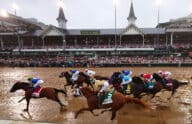
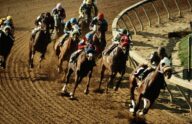
Horse training is in Phil Serpe’s blood. He grew up volunteering at the Meadowlands Sports Complex and walking horses after school—and he has worked in the horse racing industry for almost 50 years, winning races in some of the country’s biggest competitions.
But in 2024, his successful career was scratched. The veteran horse trainer quickly found himself embroiled in a complex and confusing legal battle against unaccountable bureaucrats.
An unconstitutional delegation of power
Congress set the wheels of Phil’s prosecution in motion four years before he was accused of wrongdoing.
In 2020, Congress created the Horseracing Integrity and Safety Authority, delegating it the power to create binding rules and hire third parties to investigate, prosecute, and punish alleged offenders. The Authority is a private, nonprofit corporation run by nine board members accountable to the Federal Trade Commission—but even then, the FTC provides minimal oversight.
Under the Horseracing Integrity and Safety Act (HISA), the Authority was authorized to impose civil penalties up to $100,000, create strict anti-doping rules, prosecute actions both in federal court and before its own in-house tribunals, and ban participants from the industry.
The Authority is also required to contract with an anti-doping agency to enforce its anti-doping rules—it selected the Horseracing Integrity & Welfare Unit (HIWU)—another private, independent entity. HIWU has the authority to investigate horse trainers, issue charge letters, adjudicate alleged violations, and fine and suspend anyone found liable.
27 trillionths of a gram and a career on hold
At Saratoga Springs in 2024, one of the horses that Serpe trained—Fast Kimmie—placed first in a race. But post-race testing showed trace amounts of an equine decongestant—just 27 trillionths of a gram per milliliter—in a sample of the horse’s urine.
In October 2024, HIWU sent Serpe a charge letter alleging that he violated its anti-doping regulations. Rather than bring Serpe before an independent court for a jury trial, HIWU forced him through its unconstitutional arbitration proceeding. A single private arbitrator ruled against Serpe, issuing a two-year suspension from training horses, effective immediately.
Serpe was effectively put out of business; he had to transfer the 20 horses he had been training to another trainer. The suspension also forced him to forfeit racing opportunities and winnings, causing incalculable harm.
Serpe had only one recourse under HISA’s unconstitutional statutory scheme: appeal the HIWU arbitrator’s decision to an administrative law judge at the Federal Trade Commission. But the ALJ upheld Serpe’s suspension and added a $25,000 fine. And throughout, Serpe was denied his constitutional right to a jury trial.
Serpe appealed the ALJ’s ruling to the FTC commissioners themselves, which is where his case is currently pending. But there is still a glaring issue: An administrative agency is reviewing the rulings of a private entity to determine whether a horse trainer will continue to be deprived of his right to his chosen profession and subjected to a hefty fine. These questions belong before an independent court with a neutral judge and an independent jury.
HISA’s enforcement scheme is an unconstitutional delegation of government enforcement power—one that Congress should never have enacted in the first place.
Vindicating constitutional rights
Serpe simultaneously filed a lawsuit in federal court, challenging the constitutionality of the HISA enforcement scheme. On February 6, Serpe asked a federal judge to end the unconstitutional agency proceedings and overturn his sanctions.
HIWU’s arbitration violates the private non-delegation doctrine. Congress cannot empower private entities to issue and enforce legally binding rules, nor can it empower private entities to adjudicate rule violations without a jury trial. Yet that is exactly what Congress did when it created the Authority.
The Framers created a constitution with three separate branches to guard against tyranny and promote individual liberties: Congress legislates, the executive enforces, and the judiciary adjudicates. But when these three powers are given to a private entity, such as the Authority, individual liberties suffer.
Because of Congress’ failure, many thoroughbred trainers, including Serpe, are forced through unconstitutional enforcement proceedings in a private entity and are thereby stripped of their Seventh Amendment right to a trial by jury.
Through this federal lawsuit, Serpe is fighting to vindicate his constitutional right to a jury trial in an Article III court, not in a private entity. And a win will help ensure that all Americans have access to a neutral judge and a jury of their peers when they are accused of violating the law.