

For over three decades, the City of Santa Rosa, California, has imposed a rent control law on owners of mobile home parks. The law has avoided constitutional challenge only because it purports to allow park owners an automatic annual rent increase to keep up with the cost of living. The City’s law stresses that its purpose is to “allow reasonable annual rent increases which protect mobile home owners while providing a fair return.”
When a state of emergency is declared, California state law also temporarily imposes price controls to prevent the gouging of consumers. But under those same emergency laws, properties that are already “subject to a local rent control ordinance”—like Santa Rosa’s mobile home parks—are not subject to the additional price controls imposed during a state of emergency.
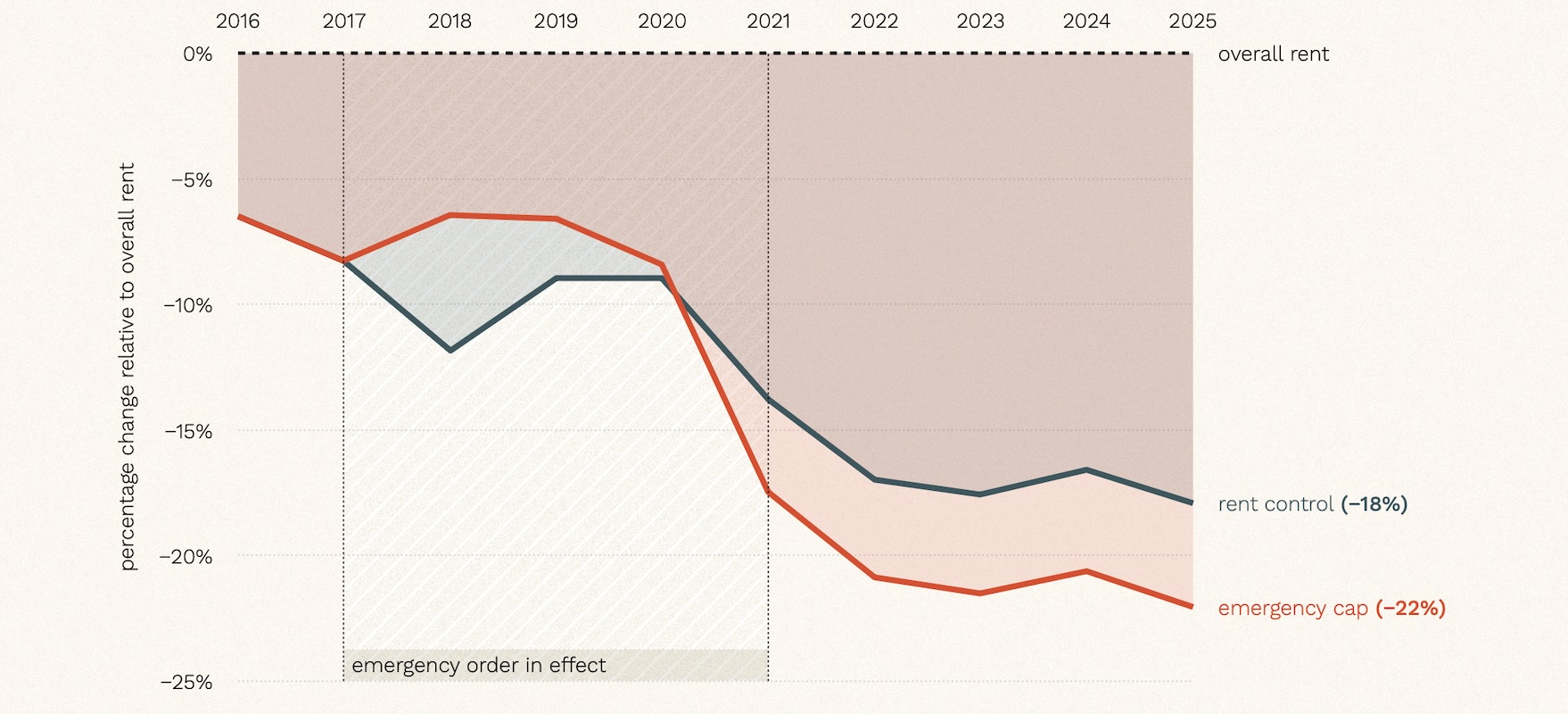
But despite this exemption, during a state of emergency that stretched from 2017 to 2021, the City enforced the emergency statute’s second rent cap on local mobile home park owners and denied the automatic cost-of-living increases provided by its own law. Then, when the emergency was declared over, the City specifically prohibited mobile home park owners from raising rents to the levels they would have been if the rent control law had operated normally—even though other properties, like apartment complexes, were permitted to do just that.
New research shows that Santa Rosa’s actions have taken a severe toll on the operability of local mobile home parks. The City’s failure to follow state law and its own rent control ordinances froze mobile home rents below the rate of inflation, artificially forcing them 22% lower than other rental properties across the city. When governments put such burdens on mobile home park owners, they can’t afford to keep operating. By violating state law, Santa Rosa has ultimately threatened to destroy the affordable housing options it claims to protect.
The Western Manufactured Housing Communities Association (WMHCA), a group of California mobile home park owners, along with a Santa Rosa property owner, sued to challenge the City’s actions as a violation of state law and a threat to property owners’ rights. Pacific Legal Foundation stepped in to represent them at no cost in a petition before the California Supreme Court.
Their petition argued that Santa Rosa violated state law and infringed on WMHCA members’ property rights by using emergency orders to impose additional rent control caps on top of the City’s existing rent control law. They asked the court to clarify the conflict between these state and local rent-control laws during emergencies to create a clear standard for mobile home parks across the state. Unfortunately, the court denied the petition on July 29, 2026.
What’s At Stake?
- Property owners have the right to use their property without the government imposing arbitrary and conflicting restrictions on them.
- When state law preempts local ordinances, those local ordinances are unenforceable. That means that local governments cannot enact restrictions that violate your rights under state law or the U.S. Constitution.
- Emergency powers are temporary by design. A government that uses a declared emergency to perpetually eliminate property owners’ rights has stretched a short-term tool into a permanent violation.