


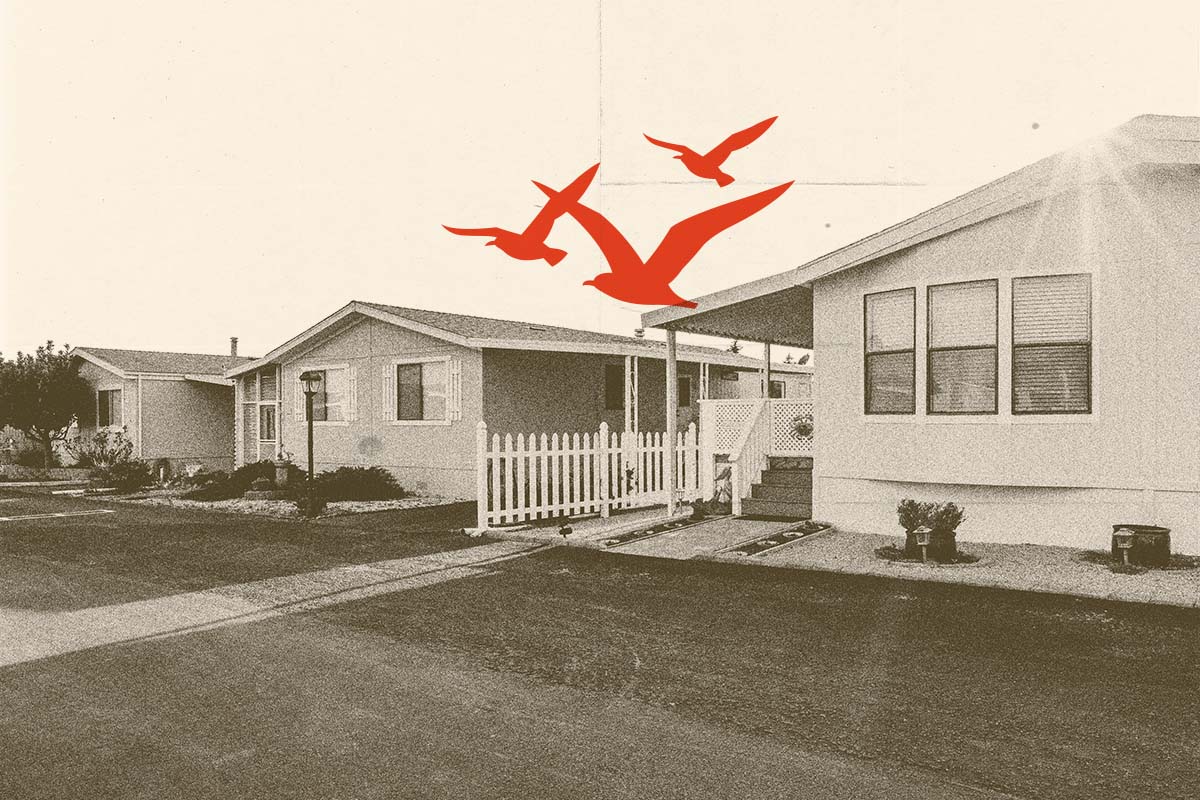
When 1210 Cacique Street, LLC, purchased the Flamingo Mobilehome Park in Santa Barbara in 2018, it knew exactly what it was buying into. The city’s rent ordinance—on the books since 1984—capped annual rent increases, required long-term leases, and limited evictions to good cause. 1210 Cacique accepted those terms and reasonably expected to earn a return under them.
Three years later, Santa Barbara changed the rules.
In 2021, the city enacted a series of new ordinances. It capped rent increases to 10% whenever a mobilehome in the park changed hands—eliminating the owner’s ability to set market-rate rents for incoming tenants. It rezoned the park to prohibit any other use of the property. And it imposed crushing exit costs: if 1210 Cacique ever sought to close the park, it would be required to pay relocation benefits and, if no comparable housing could be found within 25 miles, buy out each tenant’s mobilehome outright.
The financial damage was severe and well-documented. The new ordinances caused a $7 million loss in property value—a 92.5% reduction. Annual lost rental income stood at $40,293 at the time of filing, and is projected to reach $340,000 by 2027 and $595,000 by 2030. To earn the same rate of return it expected at purchase, 1210 Cacique would have needed to pay $6.9 million less for the park.
The city claimed the ordinances would make housing more affordable. The data said otherwise. Before the new rules, mobilehomes in the park sold for an average of $72,400. Afterward, that figure jumped to $223,786—a 300% increase. A 1982-era mobilehome that sold for $52,800 before the ordinances sold for $387,500 after. The city had delivered a windfall to existing mobilehome owners while forcing 1210 Cacique to absorb the cost.
1210 Cacique filed suit, arguing the ordinances amounted to an unconstitutional regulatory taking under the Fifth Amendment. The district court dismissed the case right out of the gate. Its reasoning: a 92.5% loss in property value which 1210 Cacique alleged the new regulations caused were legally meaningless, and because housing is a “regulated industry,” 1210 Cacique should have anticipated the new, more onerous rules all along.
But the right to own and control property is not a bureaucratic technicality—it is the foundation of individual freedom and economic opportunity. When government rewrites the rules of a private investment mid-stream and forces one property owner to bear the cost of a public benefit, the Constitution demands compensation. A legal standard that treats a 92.5% loss as insufficient to even raise that claim offers property owners no meaningful protection at all.
1210 Cacique appealed to the Ninth Circuit. If the court upholds the dismissal, PLF will ask the Supreme Court to revisit the regulatory takings standard.
What’s At Stake?
- Property owners have the right to make economic use of their property—and when the government destroys that use by changing the rules after the fact, the Constitution requires just compensation.
- The government cannot single out one property owner to bear the cost of a public benefit that belongs to everyone, regardless of how worthy its goals may seem.