

Experienced architect targeted by Nevada’s State Board of Architecture for allegedly practicing without a license
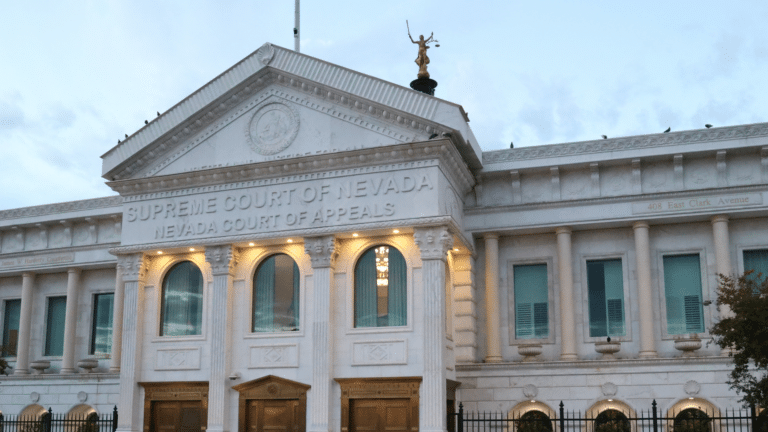
Last week, Pacific Legal Foundation filed a reply brief with the Nevada Supreme Court on behalf of Jeffrey Hagen—an experienced architect based in Sacramento, California.
After alleging that he practiced without a license in Nevada, the Nevada State Board of Architecture fined Hagen $29,000, stripped him of his constitutional right to a jury trial, and forced him through an unconstitutional administrative hearing.
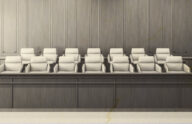
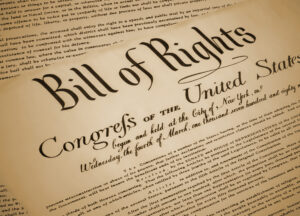
But the Nevada and U.S. Constitutions include explicit protections for a jury trial in civil cases like this. Hagen appealed his case to vindicate his constitutional rights and hold agencies accountable for their unconstitutional practices.
A unique project
Hagen earned his bachelor’s degree in architecture and his master’s in construction management. After an internship and graduate school, Hagen eventually settled in his home state of California, where he founded JAHA Architecture. Since 2005, he has owned and operated JAHA Architecture, which has completed construction projects for apartments, warehouses, residential homes, pool houses, and ADUs throughout the state.
Hagen’s reputation for quality and integrity has led many clients to return over the years. One client, who frequently purchases and refurbishes properties, has worked with Hagen in California for more than 20 years. But in 2023, the client asked Hagen to draw construction plans for an interior remodel of a property in Las Vegas, Nevada.
A former professional singer sold their house to Hagen’s client, presenting an exciting architectural challenge for Hagen. Hagen has always loved a challenge—that’s why he chose to pursue a career in architecture. When this unique project arose, he welcomed the opportunity to prepare concept plans for remodeling the home.
Before drawing construction plans and submitting official forms to the Nevada State Board of Architecture, Hagen traveled to the property in Las Vegas. He wanted to observe what needed to be fixed and how he could best support his client’s wishes. Whether the house would be remodeled for sale or short-term rentals, Hagen wanted to give his client the best estimate for the building project.
After visiting the property in Las Vegas, Hagen created the concept plans, applied for license reciprocity, and submitted all proper forms to the Nevada State Board of Architecture. He admitted that he was working with a client and submitted his construction proposal at the request of the Nevada State Board of Architecture. However, the Board halted the process and assigned an investigator to Hagen’s application.
Although the National Council of Architectural Registration Boards issues licenses that allow architects to practice in all 50 states, each state has the authority to deny license reciprocity and add additional requirements for license transfers; Nevada is one of those states. Even though Hagen paid the processing fee and passed the Nevada license exam, the state Board tried to coerce him into signing a settlement for allegedly practicing and advertising his architectural services in Nevada without a license.
Hagen tried to negotiate with the Board, but they wouldn’t budge. So he refused to sign the settlement. The Board’s response to Hagen’s refusal transformed a routine professional licensing matter into a constitutional battle.
Vindicating the right to a jury trial
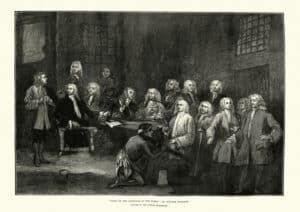
Instead of bringing Hagen before an independent court with an independent judge, the Board prosecuted him before its partial tribunal, hired a former state deputy attorney general to represent itself, and stripped him of his right to a jury trial—a right protected by the Nevada and U.S. Constitutions. From the outset, the odds were clearly stacked against him.
Nevada’s enforcement scheme unconstitutionally concentrates investigative, prosecutorial, adjudicatory, and punitive power in a single agency, undermining the separation of powers.
With the help of Pacific Legal Foundation, Hagan and JAHA Architecture appealed to the Nevada district court, arguing that he was entitled to a jury trial. The Board alleged that Hagen waived his right to a jury trial by failing to raise constitutional claims during the administrative hearing, but the Board lacks the competence and authority over such claims.
Agencies, like Nevada’s State Board of Architecture, lack authority to declare what the law is—that is simply the province of the judiciary, as Justice John Marshall wrote in Marbury v. Madison.
The district court ruled in favor of the Board, upholding the $29,000 in fines for Hagen’s alleged misconduct and claiming that the right to a jury trial does not exist within administrative proceedings. Hagen appealed to the Nevada Supreme Court, seeking restoration of his jury trial rights.
Civil cases involving monetary penalties require a jury trial, which Hagen did not receive. Moreover, where monetary penalties are punitive, they are legal remedies implicating the right to a jury trial, as the Supreme Court held in Jarkesy v. SEC. In Hagen’s case, the Board clearly intended to punish him for his alleged misconduct.
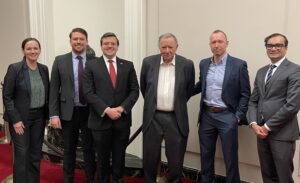
“The Board has no authority to empanel a jury even if it wanted to,” Cameron Halling, an attorney with Pacific Legal Foundation, said. “Agencies lack the expertise to determine matters of constitutional law. Here, Jeffrey Hagen should have received a jury trial under the Nevada and U.S. Constitutions.”