

Montana man fights zoning law to house his veteran brothers
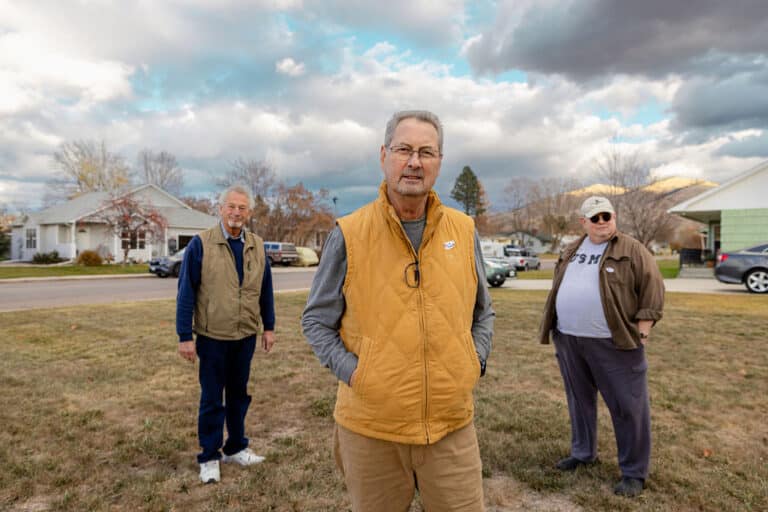
Clancy Kenck fought the State of Montana for nearly three years before he was allowed to build a duplex for his two brothers. Still, he’ll tell you he got the easy end of the deal.
Clancy was born and raised in Missoula, Montana, along with three brothers and three sisters. His parents instilled a sense of self-reliance and patriotism in their children, prompting Clancy’s two older brothers to enlist in the military to serve in Vietnam, one as a Recon Marine and the other as a door gunner on a helicopter. They both felt a duty to serve and, at 18 years old, left small-town Montana to travel overseas and defend their country.
“They changed when they came back,” Clancy recalls. “They were remarkably different boys.”
Clancy himself did not enlist—“they told me to stay home”—but feels immense pride on their behalf. He also feels a responsibility to look out for them now that his older brothers are in their mid-70s.
“I have an obligation,” he says. “I was able to stay home and get a college education. I didn’t have to put my life at risk or my psyche at risk. I didn’t get spat on when I came home. I didn’t get ridiculed after having sacrificed myself for my country.”
In 2023—more than 50 years after his brothers had returned home—Clancy saw an opportunity to try to repay them for their service.
At the time, both brothers were living roughly 30 miles outside of town. One was diagnosed with bladder cancer due to Agent Orange exposure. The other was fighting prostate cancer and diabetes. They resisted city living for as long as possible, but with their diagnoses, Clancy knew they needed to move closer to medical facilities.
The ‘Montana Miracle’
Luckily, earlier that year, Montana had passed a package of zoning reforms known as the “Montana Miracle,” which included allowing residents to construct duplexes and accessory dwelling units (ADUs) in single-family residential neighborhoods. It received bipartisan support from statewide groups, with the goal of alleviating the state’s housing shortage.
The wheels in Clancy’s head began to turn: He could buy two neighboring lots, build one home for himself and his wife, and build a duplex for his two brothers, who could maintain their autonomy while being closer to family and to medical facilities. He would build them to suit his brothers’ needs: one floor, no stairs, and doorways wide enough to fit a wheelchair.
Clancy bought the lots and sketched out a rough plan before the Montana Miracle was challenged in court by a group called Montanans Against Irresponsible Densification (MAID), who alleged the housing reforms unfairly benefitted some property owners over others, and that more homes would slash their own property values.
Unwilling to abandon his plans, or his brothers, Clancy teamed up with PLF and another prospective ADU-builder, David Kuhnle, to file a lawsuit protecting property rights and the right to build.
On March 3, 2025, a Montana court ruled in favor of the Montana Miracle, a victory that allows Clancy to move forward with his duplex. Although MAID filed an appeal to challenge that victory, the Montana Supreme Court upheld the lower court’s ruling and handed a second major victory to Clancy—and property owners across Montana—on March 17, 2026.
From Missoula to the rest of the country
Clancy is not alone; Americans across the country would benefit from meaningful housing reform, especially at a time when homelessness and housing prices are at an all-time high.
Unfortunately, for the past century, government obstacles to building more housing have only grown, and courts have overlooked constitutional protections to use property peacefully and productively. That’s why PLF advocates daily in courtrooms and capitol buildings to restore this fundamental right.
State legislators are best equipped to reform land use laws and address local concerns, and there are meaningful steps they can take—and are taking now. PLF’s suite of model policies gives legislators a roadmap:
The Private Property Restoration Act. Requires courts to apply the highest standard of review to government infringements of private property rights, similar to other fundamental rights such as free speech. (FL 2026)
The Safe Harbor from Excessive Exactions Act. Ensures that requirements or conditions imposed on development are proportional to a project’s potential impacts. (AZ 2026)
Ending Housing Extortion Act. Bans unconstitutional housing exactions—fees, conditions, allocations, and other concessions intended to provide or offset the cost of restricted housing (housing that is subject to government-imposed limits on sales or rent price). (WY 2026)
Third-Party Challenges to Development Permits Act. Blocks third-party objectors from suing to stop an approved development permit unless the objector has an adjacent property and can prove a clear harm. (KY 2026)
Permitting Approval Timeliness Act. Requires permitting authority to process permit applications and issue decisions within 60 days. If the permitting authority does not do so, the permit is automatically granted. (NE, WY, and KY 2026)
By-Right Housing Development Act. All proposed housing developments, including ADUs and multifamily housing units, shall be approved by-right without additional review or permitting if the development meets existing zoning code and land use regulations. (KS and KY 2026)
Fair Zoning Act. Prohibits or limits zoning protests against changes to zoning regulations that allow for the expanded use of private property. (KS, MI, and WY 2026)
Golden Girls Act. Protects individuals’ freedom to choose their household companions by preventing local governments from restricting how many unrelated people may live together. (PA 2026)
States across the political spectrum are leading on these and other meaningful reforms. In Michigan, 11 bills are being considered—from minimum lot size and zoning protest reform, to allowing ADUs and duplexes by-right and reducing parking minimums. Wyoming has already passed and enacted a permitting timelines bill, and the Kansas HOME Act, which requires review boards to approve “by right” projects that already meet criteria laid out in local zoning codes, passed both chambers. ADU bills are also moving in Pennsylvania, Idaho, and Virginia. In Arizona, protections against unfair exactions, government-forced HOAs and aesthetic requirements, and malicious permitting delays are awaiting final votes.
Across the country and across the aisle, legislators are answering the call of constituents like Clancy to protect their constitutional rights. For more information on PLF’s property rights policies, visit our legislation page or contact .