

New Orleans social worker continues fight for her right to earn a living
In the fall of 2023, New Orleans entrepreneur Ursula Newell Davis received disheartening news: The Supreme Court had declined to hear her case, signaling the disappointing end to her legal battle against Louisiana.
For years, Ursula had been fighting for her right to open her business—Sivad Home and Community Services—to offer in-home respite care that would provide relief to families and caretakers of special needs children.
Sivad’s mission is deeply personal for Ursula, who spent over two decades as a social worker, serving vulnerable families in need of extra support. She is also the mother of a special needs son with autism, giving her firsthand knowledge of the difficulties these families face.
In her experience, Ursula noticed that many families with special needs children faced similar challenges. Parents often had to work long, odd hours, which meant the kids were home alone for long stretches of time. During these hours, children struggled with basic tasks like preparing meals for themselves and even bathing.
Ursula wanted to teach these skills, provide homework help, and create a support system the families can always rely on. Providing teens with supervision also helps keep them off the streets and out of trouble.
Years ago, Ursula’s eldest son was shot and killed. In the wake of the tragedy, she constantly thought about the kids who shot her son and what would have happened if someone had intervened in their lives sooner. With juvenile crime on the rise, Ursula knew Sivad was needed now more than ever.
All that was required to get the business up and running was the government to give her the green light.
But that green light never came.
Permission denied
For entrepreneurs, starting a business is daunting and usually requires working your way through a barrage of government regulations. In Louisiana, respite care providers, like Ursula, face additional hurdles. The State requires all new respite care providers to apply for a Facility Needs Review (FNR). FNRs act as permission slips from government that are granted once you meet specific criteria, including proving there is a community need for your services.
Ursula’s qualifications were impeccable, her experience hard-earned, and her passion unmatched. Yet, despite the mountain of supporting evidence, the government denied Ursula’s FNR, claiming that there were plenty of respite care services available and the community had no need for Sivad.
The government’s claim doesn’t add up.
In Louisiana, half of the families in need of respite care are unable to find it. While on paper the state appears to have several providers, few of these businesses actually offer respite care, despite being licensed.
Families searching for care face a grim reality. Thirty-six percent of licensed respite care providers could not be reached by phone, and of those who did answer, 44 percent weren’t accepting clients from the population Ursula would serve.
The problem could be easily solved if Ursula were allowed to fill this gap in the marketplace. But there is a broader issue at stake—why does Ursula need to seek the government’s permission in the first place?
The government should not be in charge of determining who is allowed to start a business. Even if they don’t see a need for new competitors, willing entrepreneurs should be allowed to try and let the market determine whether there is a need for their services.
The Fourteenth Amendment and Louisiana’s state constitution protect an individual’s right to earn an income. Louisiana’s FNR process completely ignores this fundamental right. Ursula stood up for her economic liberty and sued in federal court with Pacific Legal Foundation by her side.
Her fight would ultimately end when the Supreme Court declined to hear her case. But around the same time, change was brewing in the state legislature that would give Ursula a new leg to stand on.
The Louisiana legislature gets a redemption arch
Louisiana, and New Orleans specifically, have a sordid history when it comes to protecting economic liberty.
In 1868, the Fourteenth Amendment was ratified and includes the Privileges or Immunities Clause of Section 1, which states that “No State shall make or enforce any law which shall abridge the privileges or immunities of citizens of the United States.” Section 1’s primary author, Representative John Bingham, said that the clause was intended to protect “the liberty … to work in an honest calling and contribute by your toil … to the support of yourself [and] your fellowmen, and to be secure in the enjoyment of the fruits of your toil.”
Even though Bingham’s own words leave little room for ambiguity, the government has largely failed to recognize and uphold the Privileges or Immunities Clause’s promise to protect the right to earn an income.
In 1869, the Louisiana State Legislature passed a law granting one private company the exclusive right to operate slaughterhouses in New Orleans and surrounding areas. The monopoly had devastating effects on local butchers, whose financial livelihood was now in the hands of the all-powerful Crescent City Livestock Landing and Slaughter-House Company.
The butchers, forced to choose between shutting down their businesses or renting stalls from Crescent City, sued, arguing that Louisiana had violated their Fourteenth Amendment rights.
The lower courts were split on the issue, and the case went before the Supreme Court.
The justices now had their first opportunity to strengthen the Fourteenth Amendment’s promise to protect economic liberty. Instead, they chose to gut its protections, narrowly applying it to national rights like access to federal ports and holding that it did not shield fundamental freedoms like economic liberty.
Since then, the Court has stayed away from addressing economic liberty, leaving the right to earn an income vulnerable to the whims of government.
A case that originated with a bill in the Louisiana legislature continues to haunt us today. But in June 2022, the Louisiana legislature redeemed itself by passing the Right to Earn a Living Act.
The law provides relief from occupational regulations by mandating that they be “necessary and narrowly tailored to fulfill legitimate” government interests. By this standard, the FNR process used to keep Ursula from opening her business is illegal.
A new path forward
The same summer the new law was passed, Ursula was grappling with the Supreme Court’s refusal to hear her case. Like any great entrepreneur, she got creative.
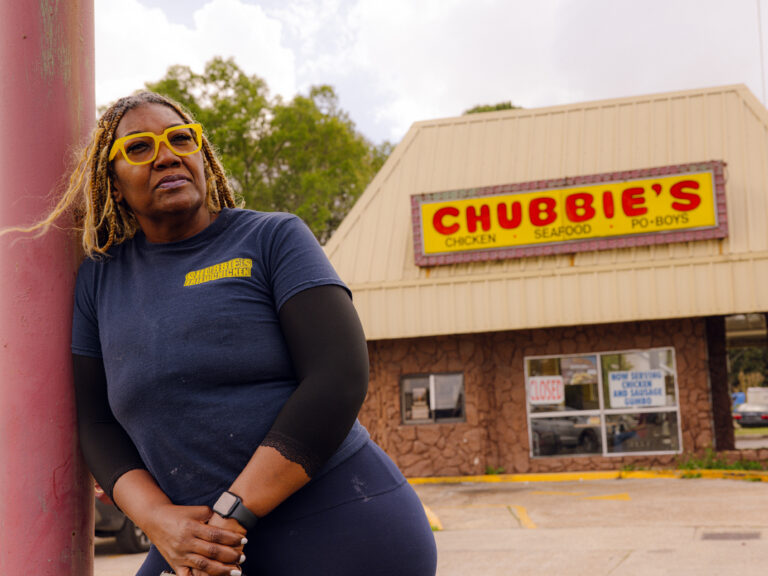
Ursula and her husband purchased Chubbie’s Fried Chicken, a local fast-food restaurant that had been a community staple for 40 years. The government may have stopped her from opening Sivad, but they couldn’t stop her from using Chubbie’s to further her work.
At Chubbie’s, Ursula makes it a point to hire special needs teens. Like Sivad, Ursula says her goal is to “create a place where teenagers can work and learn social skills.” She added, “I will teach and mold them with the right employment services.”
It’s also important to her that parents know that while their kids are working at the restaurant, someone is watching over them and making sure they never feel like outcasts.
While Chubbie’s has given her a new outlet to serve, the new law has given her another shot at opening Sivad.
In 2025, Ursula once again applied for an FNR. And once again, she was denied. But thanks to Louisiana’s new law, Ursula’s fight can continue, this time in state court.
Ursula and Pacific Legal Foundation have reunited to challenge Louisiana’s FNR process on the grounds that it violates the state’s new law that specifically protects the fundamental right to earn a living.
During the first legal battle, Ursula once said, “As a social worker, it is not my job to give up; my job is to fight until the end.” Now, years later, she is living up to that statement, continuing to fight for her right to open her business and earn a living.