

Ninth Circuit rejects campus censorship after PLF amicus brief
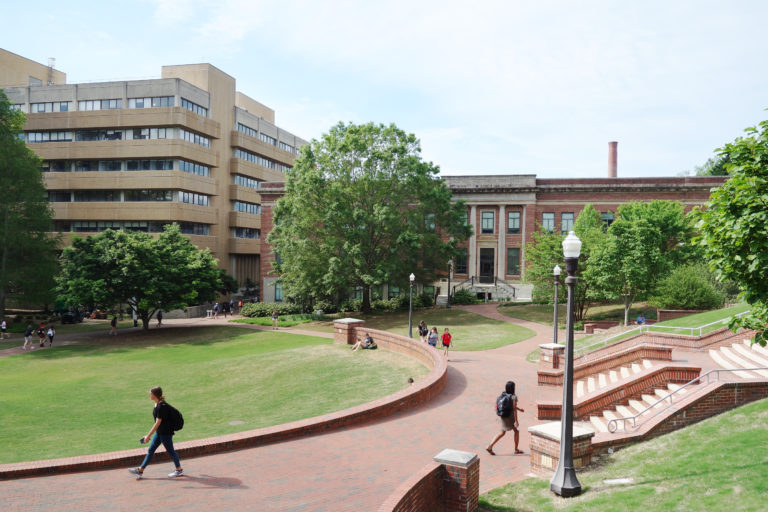
In January 2022, longtime computer science professor at the University of Washington, Stuart Reges, posted his course syllabus. Buried among the usual course policies was a parody of the university’s recommended “land acknowledgment”—a statement recognizing that the campus sits on land once inhabited by Indigenous tribes—in which Reges questioned the political and historical assumptions behind the practice.
In posting his parody, Reges was engaging in a conversation the university itself had invited by encouraging faculty to incorporate such acknowledgments into their syllabi. But he quickly learned it was not a conversation at all; there was only one acceptable opinion at UW, and it came directly from the administration.
Within days, the university, citing complaints from a few offended students, erased Reges’ statement, publicly denounced the professor, and launched a months-long disciplinary investigation.
Reges has a long history of standing up for free speech. He has been openly gay since 1979 and was fired from Stanford University in 1991 for controversial comments on drug policy. Reges later authored the much-debated article “Why Women Don’t Code,” which sparked protests and petitions but also contributed to a broader discussion about gender in computer science. Reges has never tailored his views to avoid controversy—and the Constitution protects that choice.
Faced with censorship and the threat of discipline once again, Reges turned to the courts with representation from the Foundation for Individual Rights and Expression. A federal district court sided with the university, reasoning that students’ hurt feelings outweigh a professor’s right to express a dissenting view. Reges appealed.
Pacific Legal Foundation filed an amicus brief in support of Reges, urging the United States Court of Appeals for the Ninth Circuit to reject viewpoint discrimination and restore academic freedom on campus and arguing that “a university without debate and dissent is not a university.” On December 19, 2025, in a major win for free speech, the Ninth Circuit reversed.
The appellate court held that the University of Washington violated the First Amendment by retaliating against Reges for his protected speech. Reges, the court emphasized, was speaking for himself—not on behalf of the university—and he was addressing a matter of public concern and ongoing discussion.
Applying the Supreme Court’s Pickering balancing test, which weighs a public employee’s free speech rights against the government’s interests as an employer, the court held that the university’s interests did not outweigh Reges’ constitutional rights and rejected the idea that offended listeners can justify punishment. Such reasoning, it warned, amounts to a “heckler’s veto,” suppressing speech based on hostile audience reactions—an argument PLF raised in its amicus brief.
The court also revived Reges’ First Amendment challenge to the university’s vague nondiscrimination policy, which allows discipline for anything administrators deem “unacceptable or inappropriate,” remanding the issue for further review.
“I didn’t see anybody—student, staff or faculty—try to meet this head on,” said UW computer science student Simon McFarlane. “Maybe it’s too much to ask for the students to have … productive conversations about issues that they’re passionate about.”
The university’s censorship rests on a deeply flawed premise that college students must be shielded from controversial topics. But universities exist to test ideas, not to suppress them. They can’t fulfill their mission if disagreement is treated as misconduct and dissent is punished rather than debated.
The Ninth Circuit’s decision restores that principle, reaffirming that the First Amendment still has force on campus.