Real Clear Energy: Permitting Reform Could Be a Victory for the Environment
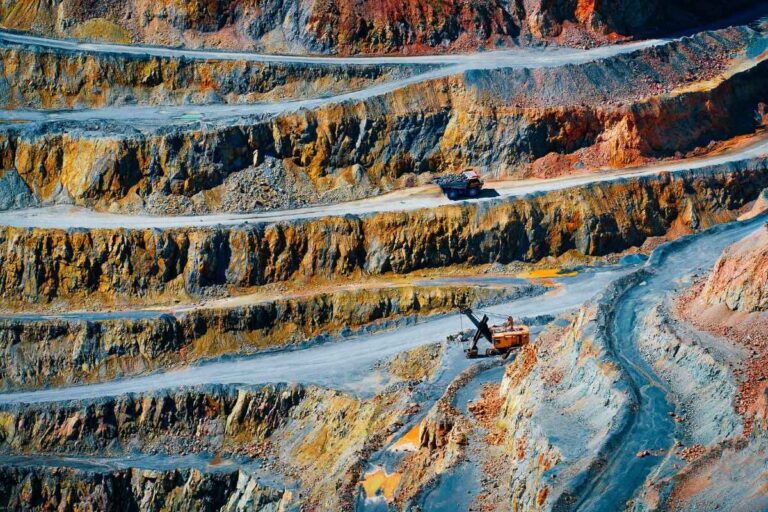
America has the seventh-largest known unmined copper reserves in the world. Those reserves alone could meet current U.S. demand for more than two decades, supplying the copper needed for electricity, buildings, and other critical infrastructure. Yet we still import 57% of the copper we use—much of it from Chile.
American environmentalism often asks us to leave valuable resources untouched for the sake of protecting the landscapes housing them. This might be reasonable if foregoing natural resources altogether were an option. But it is not. Modern society depends on natural resources. Indeed, living itself requires the disturbance of land and use of natural resources in some form.
That is why four senators just unveiled a major permitting bill aimed at accelerating energy and resource development by streamlining environmental reviews. Many environmental groups pushed back. Some warn the bill would weaken the environmental authority “used to stop projects like the Pebble [copper] Mine in Alaska.”
The environmentalists’ concern is straightforward. Development comes with environmental costs. But so does refusing to develop the resources we continue to consume. Therein lies a lesson that American environmentalism has yet to learn: moral victories for some are not moral victories for all. A blocked resource project can be celebrated as an environmental victory at home even as foreign landscapes continue supplying the same resource.
Enormous mines operate in the Atacama Desert, the driest non-polar place on Earth. In Antofagasta, mining accounts for nearly half of all water consumed, further depleting the region’s scarce groundwater. Copper production also requires moving immense amounts of rock, storing mine waste, and permanently altering portions of the landscape.
Chile’s environment has been altered to extract the copper making American life possible. To read this article, turn on the lights, or drive a car, we depend on copper extracted in Chile.
But that dynamic is not inevitable. America has abundant copper of its own. In some cases, we elect to leave viable deposits underground — often for environmental reasons. Chile, by contrast, has been more willing to extract its copper. And Americans benefit.
Consider Pebble Mine, the very proposed copper project that environmental groups cite both as an example of what current permitting laws can stop and as a reason Congress should reject permitting reform.
Pebble sits atop an enormous copper, gold, and molybdenum deposit in Alaska. Copper is critical for nearly everything electric, gold for many electronic devices, and molybdenum for construction. But in 2023, a federal agency used a rarely invoked provision of the Clean Water Act to effectively restrict development of the deposit.
That decision may have protected a portion of American nature, but it left our demand for copper unchanged. So long as we continue to need natural resources, wouldn’t it be more just for Americans to develop our own abundant resources?
Doing so would not entail rubber-stamping every project. As New Mexico Senator Martin Heinrich, one of the bill’s authors, put it, the goal is “to have the same standards, but to get to ‘yes’ — or if it’s a bad project, get to ‘no’ — a whole lot faster.”
Currently, federal permitting burdens can delay domestic resource production for decades—or prevent it altogether—as found by a recent suite of research from Pacific Legal Foundation.
PLF’s review of major mining projects found that some of the very burdens Congress is now looking to fix can trap mineral deposits underground for decades. One copper-nickel project, for example, has been stalled by regulations for more than 20 years. Across the country, opening a new mine takes an average of 29 years.
Separate PLF research found major mineral deposits locked away on federal lands (often for environmental reasons), including nickel equal to roughly 56 years of current U.S. production and copper equal to more than five years.
But what if developing those resources could reduce pressure on islands in Indonesia and deserts in Chile while helping power America’s economy and meet environmentalists’ climate goals?
Both nickel and copper are crucial for everything electric and environmentalists’ decarbonization goals, and a significant copper supply shortage driven by increasing electrification is projected by 2035. The problem is not that copper does not exist — it is that too little is being developed.
Yet a coalition of environmental groups has mobilized to stop the permitting bill. In a leaked strategy call, organizers discussed spurring opposition to the bill while hiding their strategy from the senators involved. One organizer said the goal is “to stop this bill, not to make it better.”
Before decrying permitting reform’s potential environmental effects, objectors should consider the consequences of continuing to rely on foreign countries to produce the materials American environmental policy makes exceedingly difficult to produce at home.
This op-ed was originally published in Real Clear Energy on October 20, 2026.