

Since 2016, border agents have searched George Anibowei’s cell phone without a warrant five times. During the first search, in October 2016, agents copied everything that was on his phone. Nearly a decade later, the government still has that data.
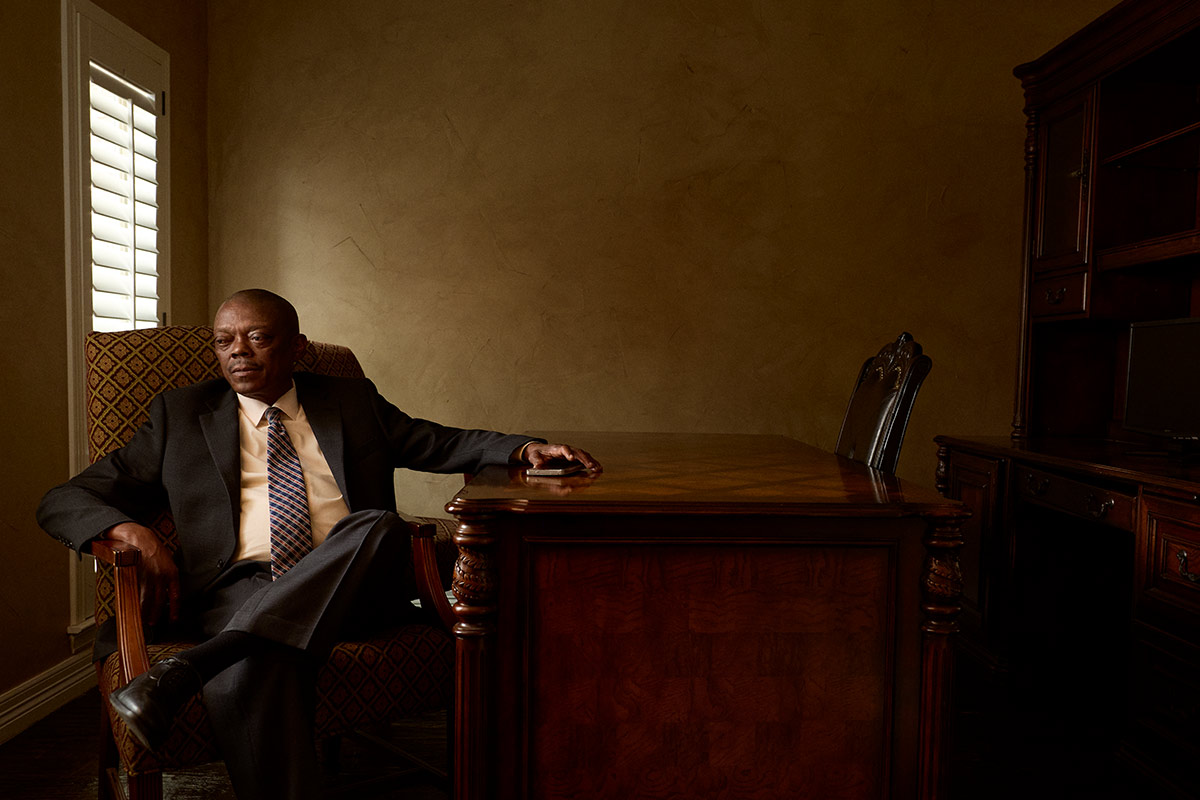
Anibowei is a Dallas immigration attorney and a naturalized U.S. citizen. His phone carries privileged conversations with his clients—case files, call logs, confidential emails. He also uses his phone to stay in touch with friends and relatives around the world.
Another search, in February 2017, was typical. Returning from a trip to see relatives in Nigeria, agents pulled Anibowei into secondary inspection for three hours, then searched his phone in front of him—presumably scrolling through his text messages, his WhatsApp conversations, his email. He watched it happen and could do nothing to stop it. Every search has taken between two and five hours, resulting in delays and missed flights.
Worried that the next search could expose privileged conversations with clients, Anibowei now must leave his phone—vital to his work—behind whenever he travels abroad.
Anibowei sued the Department of Homeland Security, Customs and Border Protection, and Immigration and Customs Enforcement, challenging the government directives that permit agents to search travelers’ phones without a warrant or any suspicion at all.
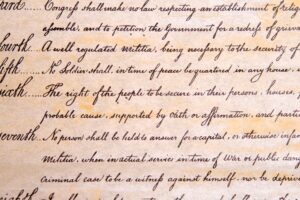
The Fourth Amendment to the U.S. Constitution protects people from unreasonable searches and seizures of their “persons, houses, papers, and effects.” The Supreme Court has already recognized that Fourth Amendment protections for cell phones must be strong because a modern phone holds the sum of a person’s private life. For that reason, in Riley v. California, the justices held that even when arresting someone, the police need a warrant to search their cell phone.
But more than a decade after the Court’s ruling in Riley, federal courts of appeal haven’t uniformly applied the holding. Two federal circuits hold that a warrant is generally required at the border, while six—including the U.S. Court of Appeals for the Fifth Circuit, which covers Texas, where Anibowei brought his case—hold that a warrant is never required. Today, a traveler’s Fourth Amendment rights turn on which port of entry they happen to use.
Anibowei is asking the Supreme Court to fix that and uphold the Fourth Amendment’s protections. The Constitution doesn’t disappear at the customs line, and neither should the warrant requirement that protects what’s on every American’s phone. Pacific Legal Foundation has joined attorneys from Trial Lawyers for Justice, the Texas Civil Rights Project, and Arnold & Porter to represent Anibowei free of charge.
Photography by Rick Wenner.
What’s At Stake?
- The Fourth Amendment’s warrant requirement does not evaporate at the border. Rather, it protects the digital contents of a cell phone from warrantless government searches. The border search exception was never designed to reach the private papers Americans now carry in their pockets.
- Privacy is what lets free people think, speak, and live without looking over their shoulder. A government that can search and seize one American’s private life without a warrant holds that power over every American.