


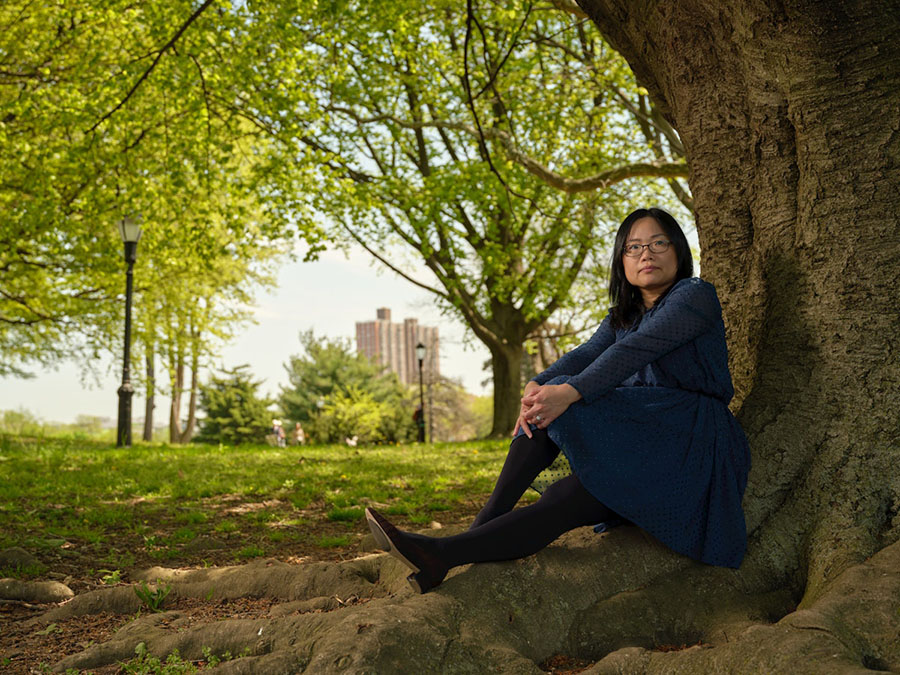
Yi Fang Chen came to the United States from China in 1996 as a teenager, speaking little English. She went on to earn a Ph.D. in statistics from Stanford University and today works as a data scientist in New York City. Like many immigrant parents, Yi Fang has poured her energy into building a better life for her family—and she wants the same opportunity for her children.
Yi Fang’s oldest son recently took the Specialized High School Admissions Test (SHSAT), the competitive exam that serves as the gateway to New York City’s eight elite Specialized High Schools. These world-class institutions have produced many Nobel laureates and launched countless students into top colleges and successful careers. Yi Fang’s son set his sights on Stuyvesant High School, one of the most prestigious public high schools in the nation.
He scored a 558 on the SHSAT, which is in approximately the 95th percentile. It would have earned him a seat at Stuyvesant the year prior. But this year, the cutoff was 561, and his application was denied.
Under New York state law, admission to the Specialized High Schools must be based “solely and exclusively by taking a competitive, objective and scholastic achievement examination, which shall be open to each and every child in the city of New York.” State law also allows for the Discovery program, which historically offered a small number of seats—less than 5% of total admissions—to low-income students who scored just below the cutoff.
Beginning in 2019, the City overhauled that program. Each specialized school was required to reserve 20% of incoming seats for Discovery-eligible students. The eligibility rules were also rewritten: Instead of being open to all low-income students, the program was restricted to students from middle schools with an “Economic Need Index” of 60% or higher.
Nearly three-quarters of Asian American students in New York City come from low-income families, yet most attend schools that fall below that threshold and are therefore locked out of the program.
This is no accident. Supporters of the changes made public statements revealing their purpose was to alter the racial composition of these schools. The evidence shows the admissions changes were adopted with the intent of decreasing the number of Asian American and white students admitted.
Yi Fang is no stranger to such unjust laws. She was originally a plaintiff in Chinese American Citizens Alliance of Greater New York v. Adams, which challenges the same discriminatory policy. But the court dismissed her as a party after it ruled her child—who was in first grade at the time—did not have a ripe claim. Ironically, that case is still ongoing, and in September 2024, the U.S. Court of Appeals for the Second Circuit ruled that an equal protection claim can move forward when an individual student has been harmed by a racially discriminatory policy. Her son is now exactly such a student, and his claim is unquestionably ripe. Were it not for the 20% Discovery requirement, his score would have been high enough for admission to Stuyvesant.
Accordingly, Yi Fang Chen has filed a new federal lawsuit to defend her son’s constitutional rights. Represented by Pacific Legal Foundation free of charge, she argues that New York City’s admissions policy violates the Equal Protection Clause because it was adopted with the intent to discriminate against Asian American students. And under the rule in the Second Circuit, because her son was harmed by this intentionally discriminatory policy, it violates the Equal Protection Clause.
If successful, this lawsuit would prevent public schools from rewriting admissions criteria to suppress enrollment of students from particular racial groups. A victory would also guarantee that Yi Fang Chen’s son will be judged on his own merit—not by race.
 Yi Fang Chen, New York City mom and plaintiff in Chen v. Mamdani. (Photo: Rick Wenner)
What’s At Stake?
- All students deserve equal consideration for educational opportunities based on their individual merit, not group membership or racial identity.
- School districts cannot design admissions criteria to intentionally suppress the enrollment of students to engineer racial outcomes. Using a student’s race—whether directly or by proxy—as part of public school admissions criteria violates the Equal Protection Clause.