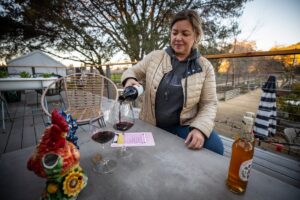


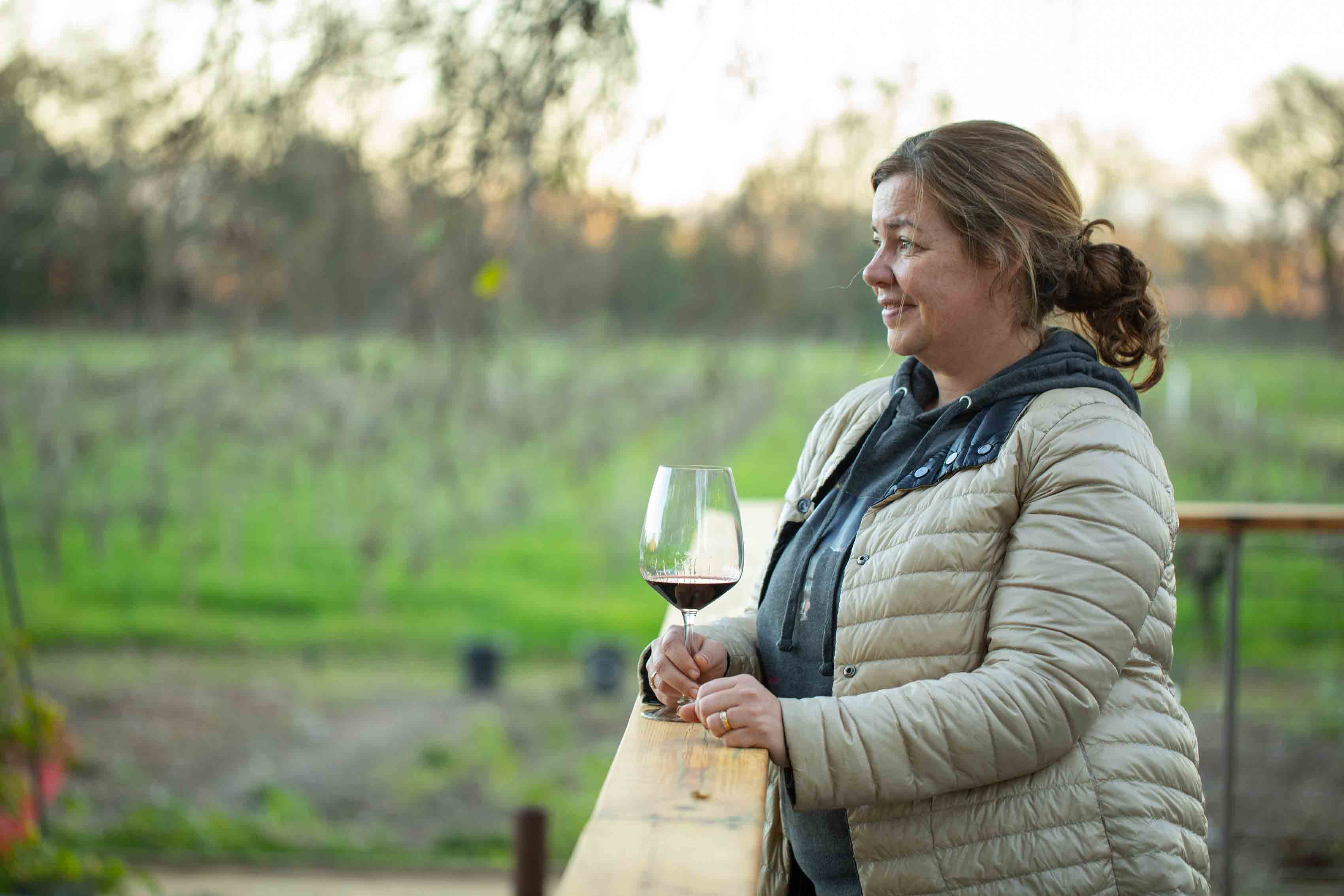
When Lindsay Hoopes took over her family’s winery—purchased by her father four decades ago—she expected a collaborative partnership with Napa County to support local agriculture and the regional economy.
She even hoped to expand, purchasing another winery—Hopper Creek—in 2017. That expansion required permits and approvals, which Lindsay readily obtained. She did not seek a new use permit because Hopper Creek had operated under a Small Winery Exemption since 1984.
A Small Winery Exemption (SWE) is a historic permit exemption that allows wineries established between 1981 and 1989 to operate without obtaining a conditional use permit. Although SWEs limit tastings—without clear standards—Napa County has long allowed them in practice. The County’s own records show Hopper Creek was explicitly authorized to conduct tastings.
Unfortunately, Napa County decided to change the rules on the Hoopes family.
The County labeled the winery’s routine operations—hosting guests, serving wine, selling wine-related items—a “public nuisance” and imposed a fine, alleging those uses fell outside the SWE and violated land use restrictions.
Lindsay was perplexed. Beyond the SWE, she held a California Department of Alcoholic Beverage Control (ABC) license and an ABC outdoor tastings permit—both reviewed by Napa County. The ABC was required to confirm that the permits complied with local land use law, and Napa confirmed she had all required approvals. So how could she be violating local law?
As Lindsay fought for her rights in court, the County’s fine kept growing. By November 2025, it had ballooned to more than $3.5 million in fines and attorney fees—exceeding the property’s total lifetime revenue. The County hired outside counsel rather than litigating the case itself and charged Lindsay and the Hoopes family for those private attorney fees for simply defending themselves.
Such an exorbitant fine violates the Excessive Fines Clause of the Eighth Amendment and the California Constitution because it is punitive and grossly disproportionate to the alleged offense. As established in the 1998 case United States v. Bajakajian, “The amount of the forfeiture must bear some relationship to the gravity of the offense that it is designed to punish.”
In determining proportionality, courts must consider both the nature of the offense and whether it will deprive a person of the ability to earn a livelihood.
As to harm, the winery’s operations caused none: In more than 40 years, the property has never generated a single public complaint. Wine tastings and vineyard tours occur daily throughout Napa—including at SWEs—to the benefit of tourists and local businesses alike.
Regarding ability to pay, the fine would bankrupt Lindsay and destroy her family’s legacy.
Lindsay and her team refuse to be fined into submission. Represented at no cost by Pacific Legal Foundation, they are fighting back to save their winery—and to prove that the government can’t use excessive fines as a revenue tool against those who dare to run a business.
What’s At Stake?
- The government must impose fair, affordable fees—not crushing ones.
- Courts should consider a person’s ability to pay when imposing fines.